Only ‘sanatanis’ will touch Durga idols during immersion: Bengal CM Suvendu
Source Entity
SAIKAT RAY, KRISHNENDU BANDYOPADHYAY, KAUSHIK PRADHAN
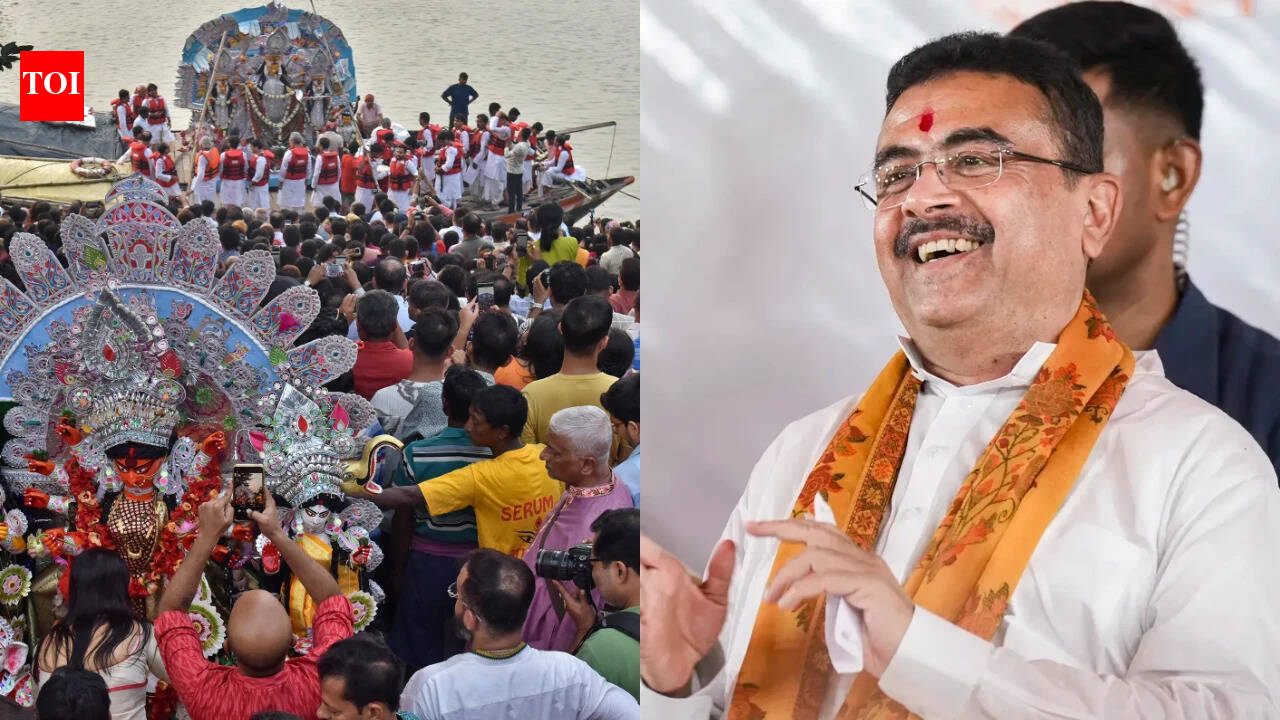
West Bengal Chief Minister Suvendu Adhikari has mandated that only individuals identifying with Sanatan Dharma may handle Durga idols during immersion. This directive has sparked significant political controversy, raising questions about religious inclusivity and constitutional adherence.
The Intersection of Ritual and Governance in West Bengal
West Bengal Chief Minister Suvendu Adhikari has issued a significant administrative directive concerning the immersion of Durga idols, stipulating that only individuals who subscribe to Sanatan Dharma are permitted to handle the idols during the ritual process. This announcement, made during an inspection at Baje Kadamtala Ghat, represents a notable shift in the management of one of the state's most prominent cultural and religious festivals. By explicitly linking the physical handling of religious iconography to specific religious beliefs, the administration has moved to centralize the oversight of traditional practices under the purview of state security apparatus.
Administrative Oversight and Security Protocols
To enforce this mandate, Chief Minister Adhikari has instructed the Kolkata Police Commissioner, Ajay Nand, to maintain a detailed registry of all individuals involved in the immersion process. The requirement for the police to record and identify participants adds an unprecedented layer of bureaucratic surveillance to a public religious event. Adhikari maintains that this measure is strictly intended to preserve the sanctity of the rituals and ensure that traditional protocols are respected throughout the immersion process, dismissing allegations that the policy carries a communal or exclusionary intent.
The Shift in Logistical Practices
Beyond the identity-based mandates, the immersion process itself has undergone a procedural change. The transition from using traditional cranes to utilizing trolleys for the movement of idols marks a departure from established logistical norms. While the administration frames these changes as necessary for the current iteration of the festival, the combination of new logistical methods and strict identity verification has altered the operational landscape of the event, necessitating a heightened level of coordination between local law enforcement and festival organizers.
Constitutional and Political Implications
Opposition leaders have been swift to criticize the directive, arguing that it promotes religious exclusion and stands in direct contradiction to constitutional principles regarding secularism and equal access. Critics contend that by mandating a religious litmus test for public participation in a state-sanctioned event, the administration is effectively blurring the lines between private religious observance and public governance. This development has intensified the existing political friction in West Bengal, transforming the Durga Puja immersion into a focal point for broader debates on religious freedom and state intervention.
Future Trends and Social Cohesion
Looking ahead, the implementation of these protocols could set a precedent for how religious festivals are managed in the region. If the state continues to prioritize the enforcement of specific religious criteria for participation in public rituals, it may lead to further legal and societal scrutiny. The success—or failure—of this policy in maintaining order at Baje Kadamtala Ghat will likely influence future administrative decisions regarding public festivities. The tension between preserving cultural sanctity and upholding inclusive constitutional values remains a critical challenge for the state’s political leadership as they navigate the complexities of a diverse electorate.