Tamil Nadu government order seeking steps to prevent students from protesting withdrawn after row
Source Entity
India Latest News: Top National Headlines Today & Breaking News | The Hindu
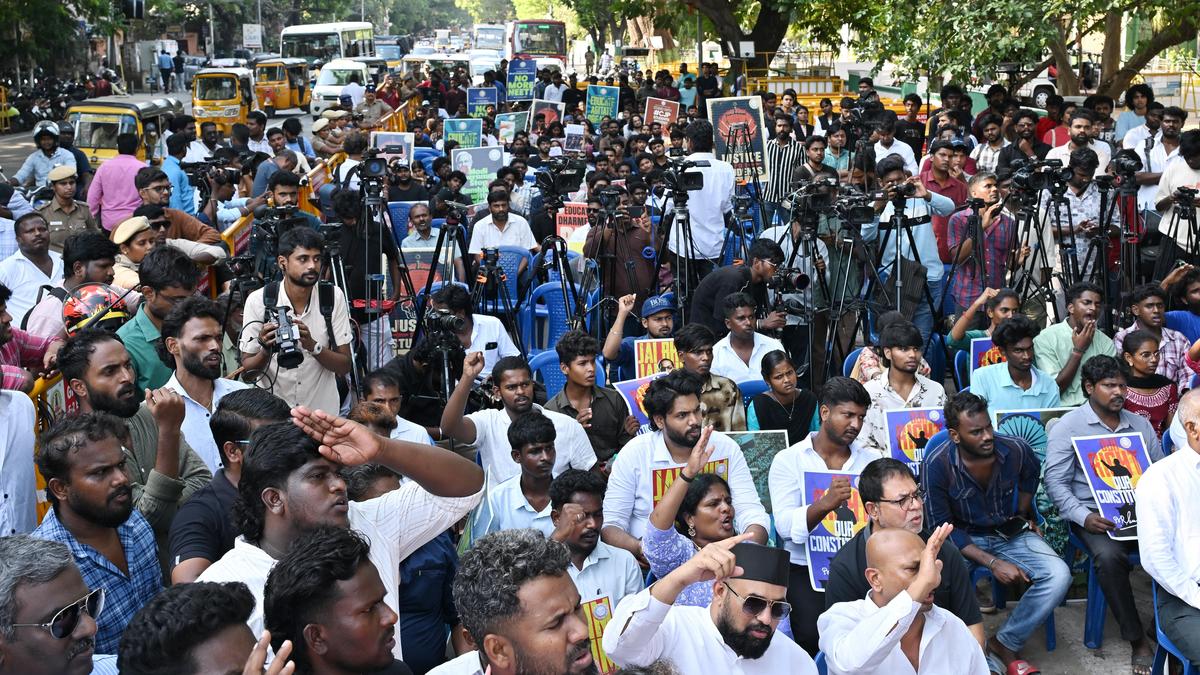
The Tamil Nadu government has withdrawn a controversial directive that sought to restrict college students from participating in protests organized by Left-wing parties and the Cockroach Janata Party. The reversal follows significant public and political backlash regarding the suppression of student activism.
The Tamil Nadu Student Protest Controversy: An Overview
On August 17, 2026, the Directorate of Collegiate Education (DCE) in Tamil Nadu issued a directive that sparked immediate public and political outcry. The order, which was sent to the principals of all Government Arts and Science Colleges and Colleges of Education, explicitly instructed administrators to take coordinated action to prevent students from participating in protests or demonstrations. This move was framed as a administrative measure but was quickly perceived as an attempt to curb the political agency of the student body.
The Target of the Directive
The controversy intensified significantly when it was revealed that the order specifically identified protests organized by Left-wing parties and the Cockroach Janata Party (CJP). By singling out specific political entities, the government's directive moved beyond general campus discipline and into the realm of political gatekeeping. The inclusion of these specific groups in an official state document suggested a targeted approach to managing political discourse within the higher education landscape.
Origins of the Order
The origins of this directive can be traced back to a letter sent by the Special Secretary of Higher Education on August 14, 2026. This administrative correspondence served as the catalyst for the DCE to issue the subsequent instructions to college principals. The requirement for principals to submit an 'action-taken report' indicated a top-down mandate designed to ensure compliance across all state-run institutions, effectively placing the burden of political policing onto academic administrators.
The Rapid U-Turn
Following the widespread controversy and criticism regarding the infringement on democratic rights, the Tamil Nadu government officially withdrew the order. The reversal represents a significant U-turn for the administration, which found itself under fire for attempting to stifle student involvement in civic life. The withdrawal effectively nullifies the requirement for college heads to monitor or suppress the political activities of their students as stipulated in the original August 17 communication.
Broader Implications for Student Activism
This event highlights the ongoing tension between state administrative control and the role of universities as hubs for political expression. In India, student activism has historically been a cornerstone of political engagement, and any attempt to restrict this participation often meets with intense resistance. The government's decision to rescind the order acknowledges the potential for such measures to be viewed as undemocratic and overly restrictive of fundamental freedoms.
Future Outlook and Conclusion
While the immediate crisis has been averted through the withdrawal of the order, the incident leaves questions regarding the future of political discourse on Tamil Nadu campuses. The episode serves as a reminder of the sensitivity surrounding political activities in educational settings. Moving forward, the administration will likely face increased scrutiny regarding how it balances the maintenance of academic order with the preservation of students' rights to engage in peaceful protest and assembly.
Verification Required?