Why Tamil Nadu does not need privatisation of power distribution
Source Entity
India Latest News: Top National Headlines Today & Breaking News | The Hindu
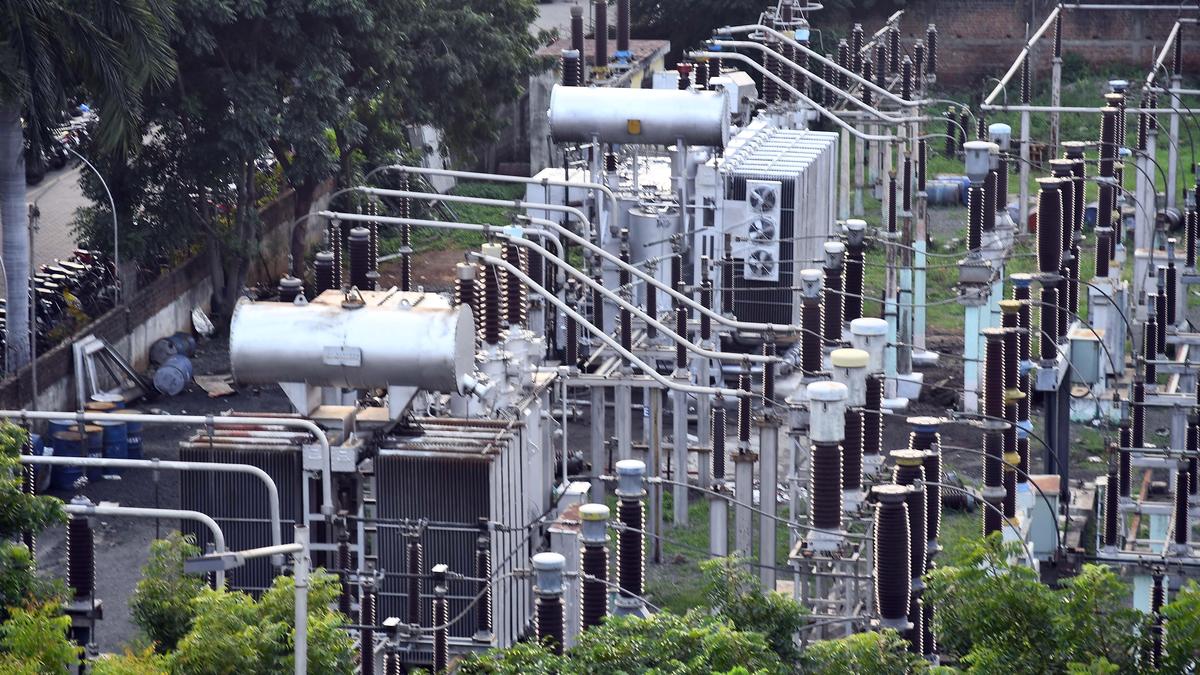
Government funding narrows the gap between average cost of supply and average revenue realisation of the TNPDCL, says the White Paper
Analysis of Tamil Nadu's Stance Against Power Privatization
Introduction
The Tamil Nadu government has recently asserted its commitment to maintaining state-controlled power distribution, as detailed in a comprehensive White Paper. The central argument posits that the privatization of the Tamil Nadu Power Distribution Corporation Limited (TNPDCL) is unnecessary because the state government is capable of managing the financial discrepancies inherent in utility operations. By focusing on the relationship between the cost of supply and the actual revenue collected, the government aims to protect consumers from the potential volatility of a profit-driven private market.
Understanding the ACS and ARR Dynamics
To understand the core of this policy decision, one must analyze the technical gap between the Average Cost of Supply (ACS) and the Average Revenue Realization (ARR). The ACS represents the total expenditure incurred by the utility to procure, transmit, and distribute electricity to the end-user. Conversely, the ARR is the actual amount of money the utility recovers through tariffs. In many Indian states, the ACS is significantly higher than the ARR due to subsidized tariffs for agricultural and domestic consumers. The White Paper highlights that the Tamil Nadu government's direct funding narrows this gap, ensuring that the TNPDCL remains solvent without needing to hike tariffs to market levels, which is often the primary driver behind privatization efforts in other regions.
The Socio-Economic Rationale for Public Control
From a socio-economic perspective, the decision to eschew privatization is rooted in the state's commitment to social welfare. Electricity is viewed as a fundamental right and a critical input for Tamil Nadu's massive agricultural sector and its burgeoning industrial hubs. Privatization often leads to "cherry-picking," where private firms prioritize high-revenue urban and industrial areas while neglecting rural distribution networks where costs are higher and returns are lower. By maintaining public ownership, the government ensures equitable access to power across all demographics, regardless of the immediate profitability of the specific distribution zone.
Broader Implications and Historical Context
Historically, India has seen various states experiment with power sector reforms, some of which involved introducing private competition to reduce Aggregate Technical and Commercial (AT&C) losses. However, these transitions have often been met with public resistance due to rising electricity bills. Tamil Nadu's approach suggests a preference for a state-led efficiency model over a market-led one. By utilizing government funding to bridge the financial gap, the state is effectively treating the deficit as a public investment in infrastructure and social stability rather than a corporate loss that must be eliminated through price hikes.
Predicting Future Trends and Challenges
Looking forward, the sustainability of this model will depend on the government's ability to maintain fiscal health while continuing to fund the TNPDCL. As energy demands grow and the state shifts toward more renewable energy sources, the cost of grid modernization will increase. The government will likely face pressure to improve internal operational efficiencies—such as reducing transmission leaks and improving billing accuracy—to lower the ACS. If the gap between cost and revenue widens beyond the state's budgetary capacity, the debate over privatization may resurface, but for now, the emphasis remains on public utility management.
Conclusion
In summary, the Tamil Nadu government's White Paper serves as a strategic defense of the public sector's role in essential services. By demonstrating that government funding can successfully offset the financial deficits of the TNPDCL, the state argues that the perceived benefits of privatization—namely financial efficiency—can be achieved through state intervention without sacrificing affordability or equity. This move reinforces the state's role as the primary guarantor of energy security for its citizens.
Verification Required?