Residents affected by rising road levels demand action
Source Entity
India Latest News: Top National Headlines Today & Breaking News | The Hindu
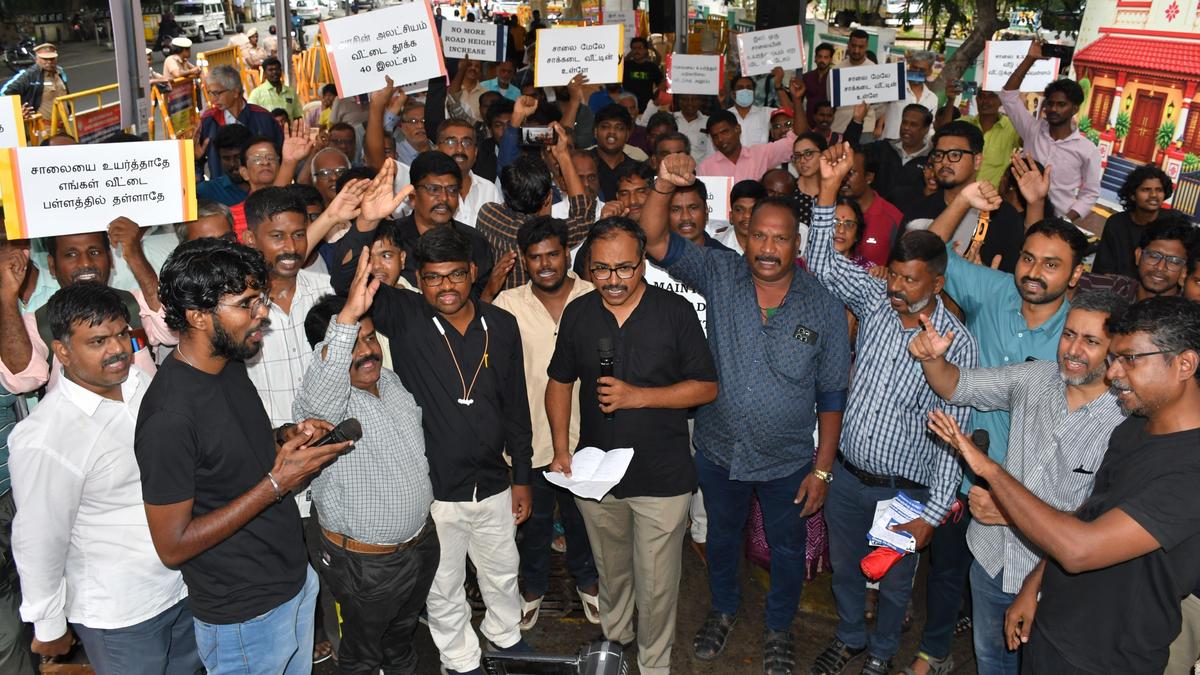
Residents across Tamil Nadu are protesting against the recurring issue of road levels rising above their homes due to improper resurfacing practices. Organized by Arappor Iyakkam, the movement demands accountability from contractors and authorities to prevent flooding and infrastructure hazards.
The Crisis of Rising Road Levels in Tamil Nadu
The ongoing protest movement, titled ‘Kelu T.N. Kelu’ (Listen/Ask T.N.), highlights a critical infrastructure failure affecting homeowners across Tamil Nadu. Organised by the anti-corruption advocacy group Arappor Iyakkam, the protest near Rajarathinam Stadium in Egmore serves as a focal point for citizens whose properties have been effectively submerged below the level of newly paved roads. This phenomenon is not merely an aesthetic grievance but a severe structural issue that has forced some residents to contemplate renovation expenses reaching as high as ₹40 lakh to elevate their home floors.
The Root Cause: Improper Milling Practices
At the heart of this issue is the systematic failure of contractors to adhere to standard engineering protocols. Arappor Iyakkam attributes the rising road levels to a blatant disregard for road maintenance guidelines, specifically the failure to mill (or scrape off) damaged or existing asphalt layers before applying fresh coats. When roads are repeatedly resurfaced without removing the old, degraded material, the elevation of the road naturally increases with every cycle of repair, gradually creating a 'trough' effect where adjacent buildings sit significantly lower than the public thoroughfare.
Broader Implications: Flooding and Public Safety
This engineering negligence has dire consequences for urban living. During the monsoon season, roads that sit higher than residential foundations inevitably funnel rainwater directly into homes and businesses. This leads to property damage, the destruction of household assets, and the infiltration of sewage into living quarters, posing significant public health risks. Furthermore, the mismatch between road levels and infrastructure leads to sunken manholes and improperly aligned silt catch pits, which create dangerous hazards for two-wheeler riders and pedestrians navigating these transit corridors.
Socio-Economic Impact on Residents
The financial burden placed on individual homeowners is immense. For many families, the cost of raising the floor level of a home is prohibitive, often exceeding their life savings. The protest highlights the frustration of citizens who are being forced to pay for the consequences of poor municipal oversight and contractor greed. The fact that residents from several districts have joined this movement underscores that this is a systemic problem across the state, rather than a localized or isolated incident.
Future Trends and Accountability
As urbanization continues to intensify in Tamil Nadu, the demand for better urban planning and infrastructure accountability will only grow. The ‘Kelu T.N. Kelu’ movement signals a shift toward more active civic engagement, where citizens are holding government bodies accountable for the long-term maintenance of public assets. Moving forward, authorities will face increased pressure to enforce strict milling mandates for contractors, ensuring that future road works prioritize long-term stability and residential safety over the speed of completion.
Verification Required?