Kashmiri Woman Slams Pakistan's Bloody Crackdown Of Protests In PoK At UN
Source Entity
NDTV News Search Records Found 1000
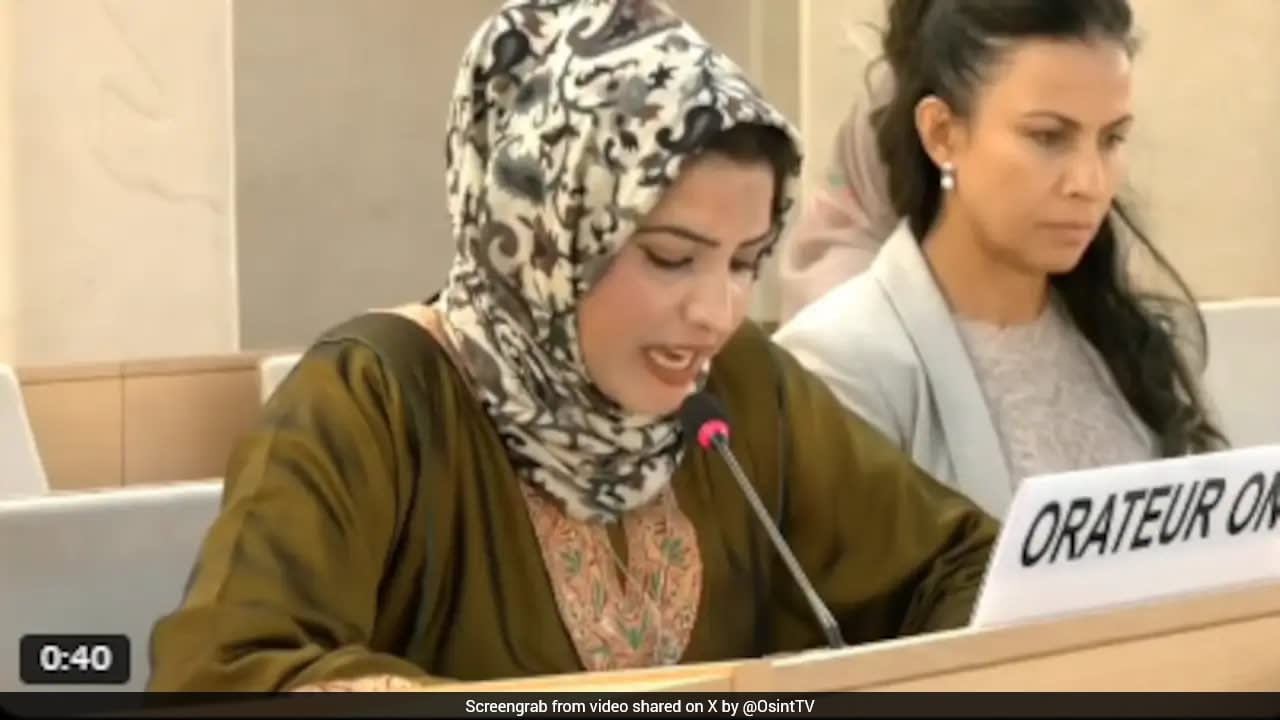
Kashmiri activist Tasleema Akhtar has denounced Pakistan at the UNHRC for its brutal crackdown on protests in PoK. She contrasted the region's decline with the developmental progress seen in the Jammu and Kashmir Union Territory.
Activist Tasleema Akhtar Challenges Pakistan at the UNHRC
In a significant development at the United Nations Human Rights Council (UNHRC), socio-political activist Tasleema Akhtar delivered a scathing critique of Pakistan's administration in Pakistan-occupied Jammu and Kashmir (PoK). Her testimony centered on the state's violent response to civilian protests, which she described as turning the region into a "graveyard." This intervention highlights the growing international scrutiny regarding the governance and civil liberties within the disputed territory.
Contrasting Developmental Trajectories
Central to Akhtar's address was the stark comparison between the living conditions in PoK and the rapid development observed in the Jammu and Kashmir Union Territory (JKUT). She argued that while the Indian government has prioritized the integration of the Union Territory into national development frameworks, PoK remains mired in systemic neglect. This disparity serves as a focal point for critics who argue that Pakistan has failed to fulfill its obligations to the local population, leaving them without the foundational support systems necessary for modern life.
The Infrastructure and Healthcare Divide
Akhtar specifically highlighted the deep-seated lack of basic infrastructure and essential services in PoK. She pointed to a fundamental divergence in healthcare access, noting that residents of the Indian Union Territory of Jammu and Kashmir benefit from robust national health schemes that extend even to the most remote, mountainous areas. Conversely, she asserted that for the people of PoK, such essential services remain a distant and unattainable prospect, exacerbating the humanitarian crisis in the region.
Education and Civil Rights Concerns
Beyond physical infrastructure, the activist raised alarms regarding the broader socio-economic conditions, including access to quality education and the fundamental right to protest. By highlighting the "bloody crackdown" on demonstrators, Akhtar emphasized that the suppression of dissent is inextricably linked to the region's lack of development. The inability of the local population to voice their grievances without fear of state violence underscores a systemic failure to uphold human rights standards.
Broader Geopolitical Implications
This testimony at the UNHRC brings the situation in PoK to the forefront of global human rights discourse. By juxtaposing the development of JKUT with the stagnation and repression in PoK, Akhtar is challenging the narrative often presented by the Pakistani state. As international observers continue to monitor the region, the demand for accountability regarding the treatment of PoK residents is likely to grow, potentially influencing future diplomatic engagements concerning the stability of the Kashmir region.
Conclusion
Tasleema Akhtar’s intervention serves as a poignant reminder of the human cost of political instability and developmental neglect. By focusing on the tangible differences in healthcare, infrastructure, and civil liberties, her testimony provides a critical perspective on the ongoing crisis. The international community’s response to these claims will likely play a role in how the human rights situation in the disputed territory is handled in the coming years.
Verification Required?