Bid To Get Behind The Wheel? Why TCS' Rs 3,700 Crore Porsche Deal Isn't What It Seems
Source Entity
NDTV News Search Records Found 1000
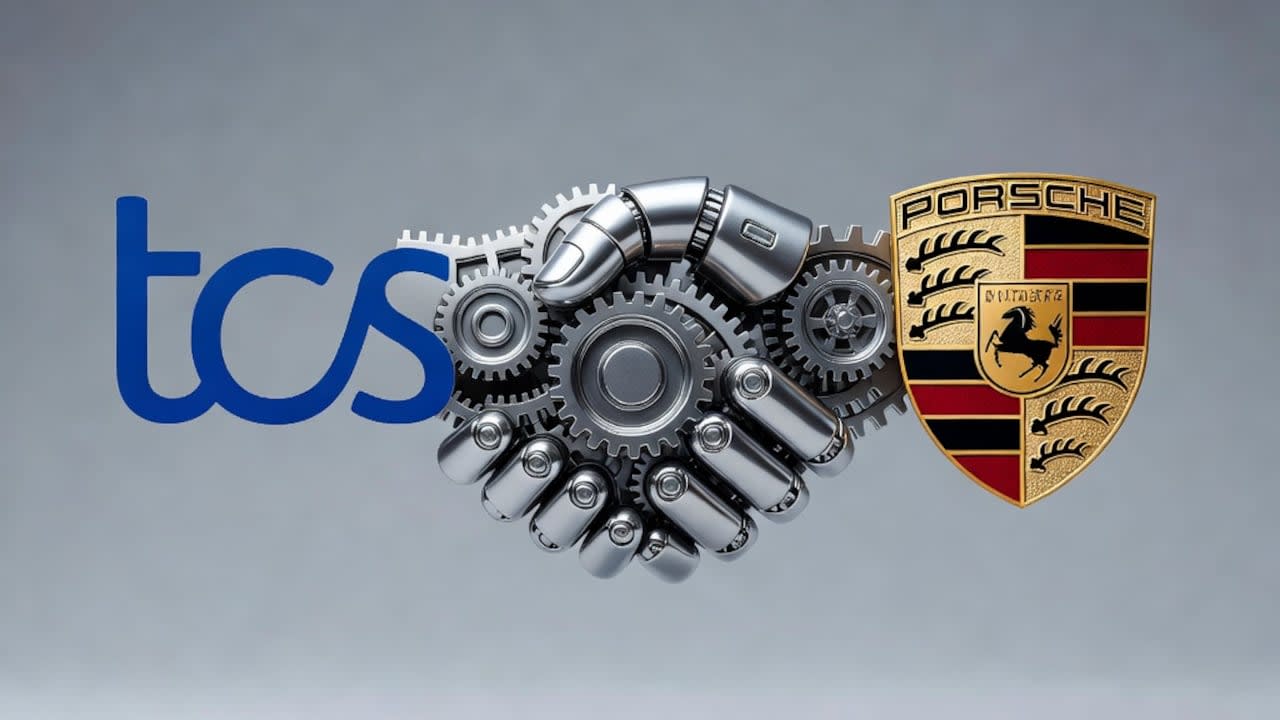
TCS has secured a $1.5 billion, five-year AI deployment contract with Porsche, marking a strategic expansion into the European automotive sector. The deal includes the acquisition of Porsche's IT consulting arm, MHP, for 320 million euros to bolster digital innovation.
Strategic Pivot: Decoding the TCS-Porsche Partnership
The recent announcement that Tata Consultancy Services (TCS) has secured a $1.5 billion, five-year contract with German sports car manufacturer Porsche represents a significant milestone for the Indian IT services sector. By integrating its AI and digital capabilities with Porsche’s automotive expertise, TCS is moving beyond traditional service models to become a core partner in the software-driven mobility revolution. This deal is not merely a service contract; it is a strategic maneuver to cement a foothold in the competitive European automotive market.
Challenging the 'Reverse AI Trade' Narrative
For months, global brokerages have maintained a cautious, often contrarian, view of India’s IT sector. Institutions like Jefferies have characterized Indian IT stocks as a “reverse AI trade,” suggesting they were poorly positioned to benefit from the current global AI boom. However, the TCS-Porsche agreement serves as a direct rebuttal to this skepticism. By securing high-value, long-term contracts centered on AI deployment, TCS is demonstrating that Indian firms can pivot from legacy IT support to high-stakes, technology-led innovation, potentially forcing a re-evaluation of the sector by market analysts.
The Acquisition of MHP: A Strategic Acquisition
A critical component of this deal is TCS’s acquisition of Porsche's IT consulting unit, MHP, for 320 million euros. This acquisition provides TCS with immediate domain expertise and an established footprint within the German automotive ecosystem. By absorbing MHP, TCS effectively short-circuits the traditional learning curve, gaining direct access to the complex engineering workflows and data requirements that define modern vehicle manufacturing. This inorganic growth strategy is a clear signal that Indian IT giants are willing to invest heavily to capture the high-margin digital transformation market.
Driving Future Mobility
As the automotive industry shifts toward becoming data- and software-centric, the need for advanced AI integration has become a competitive necessity. Porsche’s chairman, Michael Leiters, noted that the partnership is designed to boost innovation, efficiency, and competitiveness in the face of rapid industry changes. For TCS, this provides a blueprint for future engagements; by positioning themselves as essential partners in the 'connected car' and autonomous driving space, they move from being external vendors to indispensable components of the client's internal R&D infrastructure.
Broader Implications for Indian IT
This deal highlights a broader trend: Indian IT firms are increasingly looking to move up the value chain. While the global market continues to watch the AI bubble for signs of volatility, companies like TCS are opting for a defensive yet offensive strategy—securing long-term stability through deep integration with global industrial leaders. This shift suggests that the future of Indian IT lies in deep-tech partnerships rather than just scalable, labor-intensive outsourcing. If successful, this model could serve as a template for other Indian firms looking to hedge against market volatility while simultaneously capitalizing on the global AI transition.
Multiple Citing Sources
Verification Required?