Teacher treks 5km through dense forest one way to keep 2 girls in school
Source Entity
RAHUL GAYAKWAD
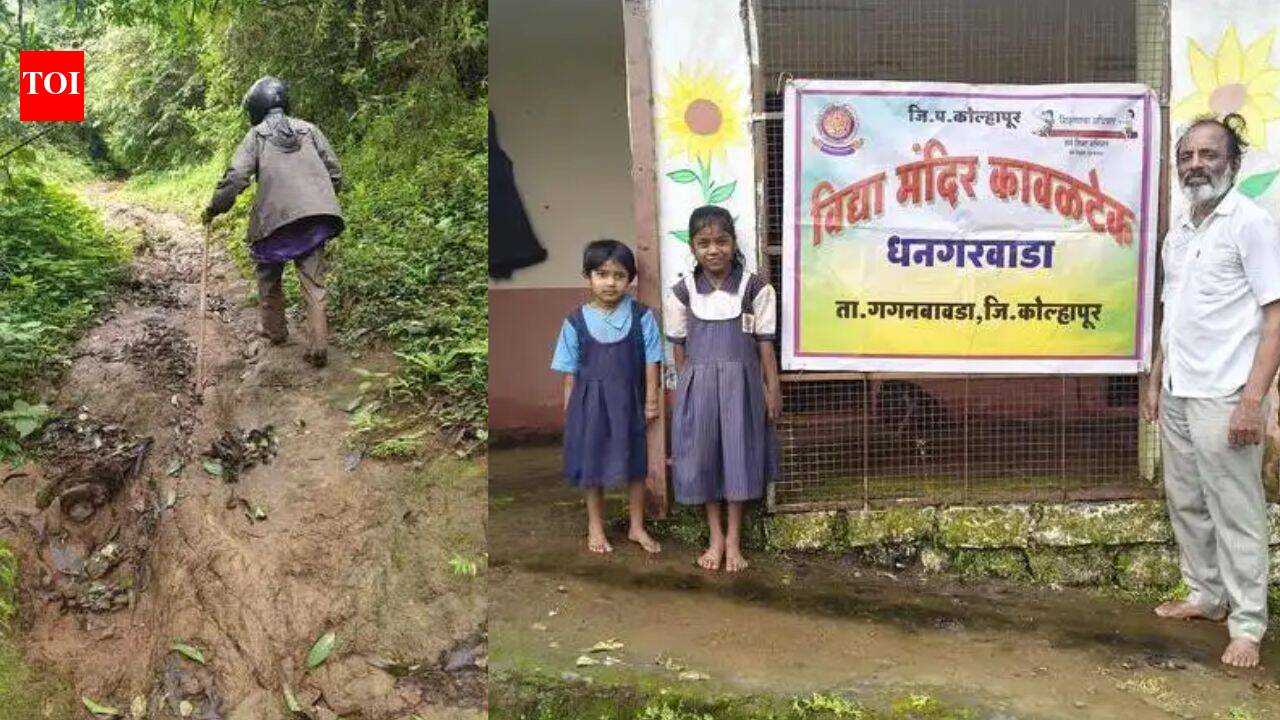
A dedicated teacher in Kolhapur, Jeevan Mithari, treks 5km through a dense, wildlife-inhabited forest daily to educate two sisters in a remote, off-grid hamlet. His commitment ensures these children maintain access to schooling despite the lack of infrastructure and geographic isolation.
A Heroic Commute for Education
In an extraordinary display of pedagogical commitment, Jeevan Mithari, a Zilla Parishad teacher in the Kolhapur district of Maharashtra, has become a beacon of dedication. Every day, Mithari navigates a grueling five-kilometer trek through dense, rugged forest terrain to reach a remote schoolhouse located in Kavaltek Dhangarwada. This hamlet, situated in Gaganbawada taluka, remains one of the most isolated regions in the district, characterized by its lack of electricity and extreme weather conditions.
The Reality of Remote Education
The school at Kavaltek Dhangarwada serves only two students—sisters aged eight and five. Mithari chose to accept this posting specifically because other educators were unwilling to face the logistical challenges of such a remote assignment. By stepping into this role, he has single-handedly prevented the educational marginalization of these children, ensuring that their right to learn is not eclipsed by their geographical circumstances.
Navigating Perilous Terrain
The journey to the school is not merely long; it is hazardous. The path is inaccessible to motorized vehicles, forcing Mithari to traverse the forest on foot. The surrounding environment is a known habitat for significant wildlife, including gaurs, wild dogs, leopards, and sloth bears. These environmental risks highlight the profound gap between urban educational infrastructure and the reality faced by teachers in India's most remote corners.
Infrastructure and Inequality
The hamlet itself consists of only three houses and remains disconnected from the electrical grid, representing a broader struggle for rural development in India. The school, perched on a hillock, serves as a vital community hub for the sisters. Mithari's presence is the only link these children have to formal state education, illustrating how individual agency often compensates for the lack of systematic infrastructure in underdeveloped regions.
Implications for Future Policy
This case underscores the critical need for better connectivity and safety measures for rural teachers. While Mithari’s dedication is inspiring, it also exposes the vulnerability of the current system. Future trends in education policy must focus on providing logistical support, such as improved pathways or technological integration, to ensure that teachers do not have to risk their safety to provide basic schooling to the most vulnerable populations.
Conclusion
Jeevan Mithari’s daily trek is a testament to the transformative power of education. By prioritizing the needs of two sisters over his own convenience and safety, he serves as a reminder that the most essential element of education is the relationship between the teacher and the student. His story remains a poignant example of grassroots dedication in the face of significant systemic adversity.