The forgotten battle of East Lansing
Source Entity
Hacker News
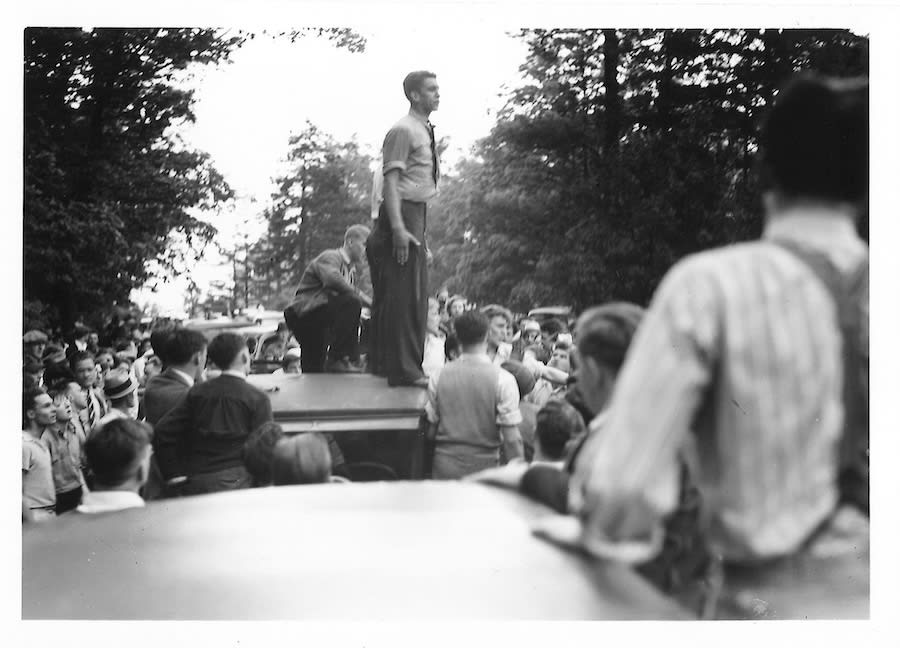
The 1937 Battle of East Lansing was a brief but intense clash between Michigan State College students and Lansing labor union members. This forgotten conflict reflects the height of labor tensions during the industrial era of the American Midwest.
The Forgotten Clash: Retracing the 1937 Battle of East Lansing
On June 7, 1937, the quiet streets of East Lansing became the stage for a brief but violent confrontation known as the 'Battle of East Lansing.' This conflict, largely absent from modern historical discourse, saw Michigan State College students arming themselves with three-foot-long concrete reinforcing rods to confront an influx of labor union members from neighboring Lansing. The event serves as a stark reminder of the volatility that defined the American labor movement during the 1930s.
The Industrial Powder Keg
To understand the gravity of this confrontation, one must look at the economic climate of the era. Lansing was a critical hub of automobile production, anchored by the massive 52-acre Oldsmobile assembly plant. At the time, the city was a center of intense labor organization and industrial strife. The union movement, represented by groups like the United Auto Workers (UAW) Local 182, was gaining significant momentum, having secured a series of successful victories that shifted the balance of power between labor and management.
A Collision of Interests
According to accounts provided by UAW Local 182 president Lester Washburn, the tension reached a boiling point due to these union gains. The presence of union members in East Lansing was viewed by the local student population as an encroachment. This friction culminated in a direct physical confrontation, highlighting the deep-seated ideological divides between the burgeoning industrial labor force and the academic community, which often maintained its own distinct societal interests during the Great Depression.
Contextualizing the Violence
The use of improvised weaponry—specifically construction materials like concrete reinforcing rods—underscores the spontaneous and desperate nature of the brawl. This was not a pre-planned military operation but a visceral reaction to the presence of organized labor in a student-centric environment. The fact that this event remains a 'forgotten' piece of history reflects how localized labor skirmishes were often overshadowed by the larger national narratives of the Great Depression and the eventual transition to a war-time economy.
Historical Legacy and Reflection
Nearly five decades after the event, historical records preserved through interviews with figures like Lester Washburn offer a rare glimpse into the mechanics of the battle. While it lacks the cultural immortalization that a folk song might provide, the Battle of East Lansing remains a significant case study in the social history of Michigan. It illustrates the reach of labor disputes, which transcended factory walls and spilled into the public spheres of surrounding towns, testing the social cohesion of the time.
Conclusion: Why We Remember
Ultimately, the Battle of East Lansing is more than a footnote; it is a snapshot of an era where labor rights were fought for in the streets with tangible force. By re-examining these events, we gain a deeper appreciation for the complex history of labor relations in the United States and the often-unseen frictions that shaped the development of modern industrial cities like Lansing.