Salad Theory
Source Entity
Hacker News
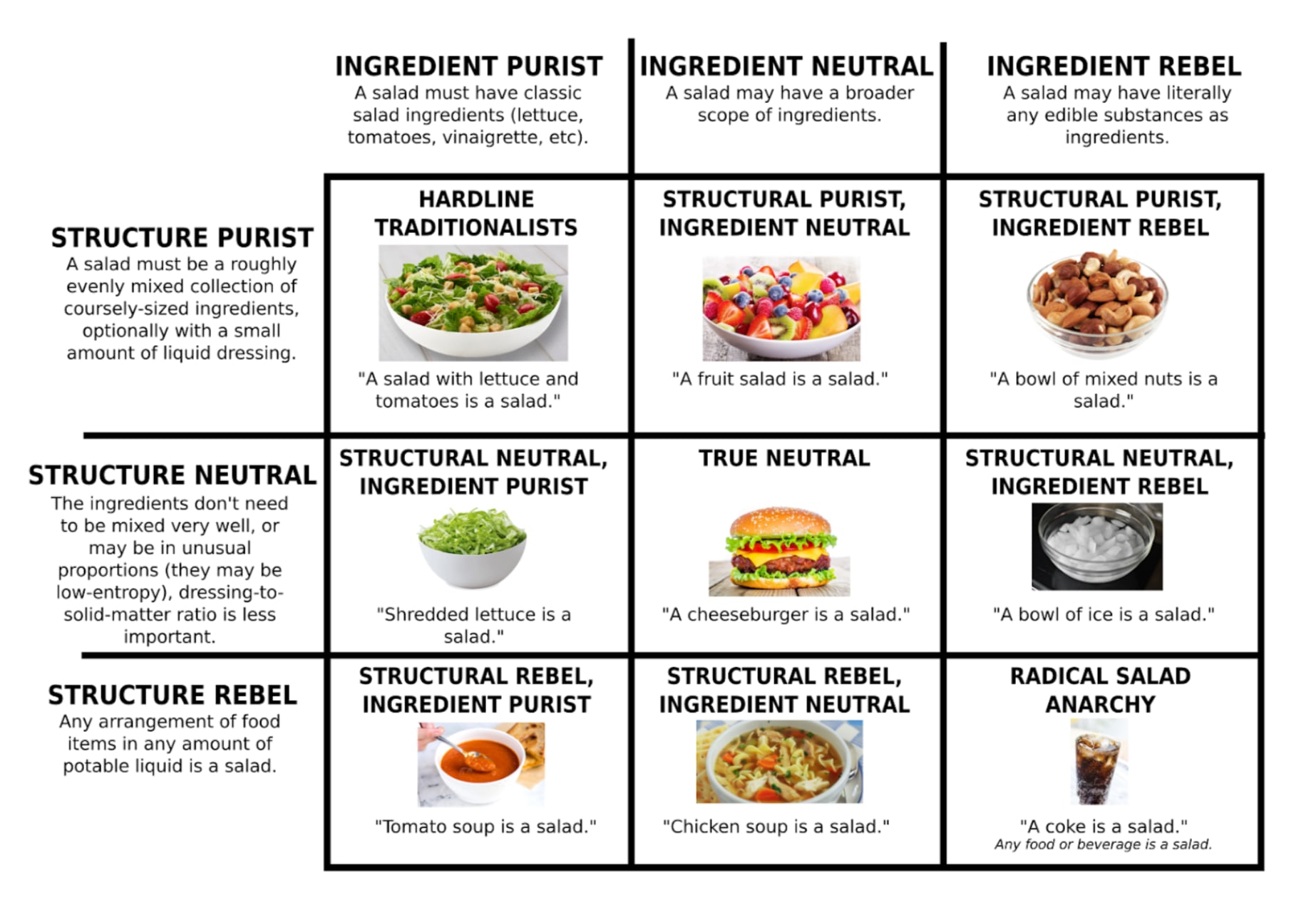
A lighthearted office debate regarding food taxonomy has led to the controversial 'Salad Theory,' which posits that a pizza is technically a salad. This exploration of linguistic and culinary categorization reflects a growing trend of challenging traditional definitions in modern discourse.
The Origins of Culinary Taxonomy
Modern discourse often finds itself navigating the murky waters of semantics, a phenomenon highlighted by the 2016 global obsession with defining the parameters of a 'sandwich.' This cultural moment served as a catalyst for deeper, more pedantic investigations into how we classify the foods we consume daily. What began as a casual office conversation quickly evolved into a rigorous, if somewhat obsessive, exercise in taxonomy, challenging the rigid boundaries of culinary terminology.
The Birth of the Salad Theory
The central inquiry that sparked this specific intellectual conflict was the question of whether a salad could be considered a pizza. Through a process of elimination and structural analysis, the proponents of this theory arrived at a conclusion that they found both shocking and unavoidable: a pizza is, in fact, a salad. By deconstructing the components—base, toppings, and the method of assembly—the participants shifted their perspective from traditional culinary categories to a more abstract, structural definition.
The Social Friction of Pedantry
As with many intellectual pursuits that challenge the status quo, the propagation of the 'Salad Theory' was not without social cost. The intensity of these lunchtime debates created a rift within the office environment. Colleagues who were once casual acquaintances found themselves polarized by the radical reclassification of their meals. This friction highlights the human tendency to guard established definitions as a form of social and cultural stability; when those definitions are challenged, it often leads to genuine interpersonal discomfort.
Deconstructing Culinary Logic
The methodology employed by the group involved attacking the problem from multiple angles, debating the merits of novel definitions, and refusing to accept conventional wisdom. This mirrors broader trends in linguistic and philosophical circles where the 'essential' nature of an object is questioned against its functional or component-based reality. By stripping away the label of 'pizza' and looking at the raw composition, the group forced a cognitive dissonance that proved difficult to resolve.
Broader Implications of Classification
This debate serves as a microcosm for how we categorize the world. Whether it is the 'sandwich controversy' of 2016 or the current exploration of the 'Salad Theory,' these discussions reveal that our definitions are often arbitrary and based on consensus rather than objective truth. When we challenge these norms, we are not just talking about food; we are examining the flexibility of human language and the structures we use to organize our reality.
Concluding Thoughts
Ultimately, the Salad Theory stands as a testament to the human desire for order and the inevitable chaos that ensues when we try to enforce that order on ambiguous subjects. While the conclusions drawn by the office team may seem absurd or 'appalling' to many, the process itself remains a fascinating look at how we process information. Whether or not one accepts a pizza as a salad, the debate itself reminds us that even the most mundane aspects of our daily lives are ripe for re-examination.