Opinion: Opinion: An Ode To Tim Cook Who Made Apple Boring
Source Entity
NDTV News Search Records Found 1000
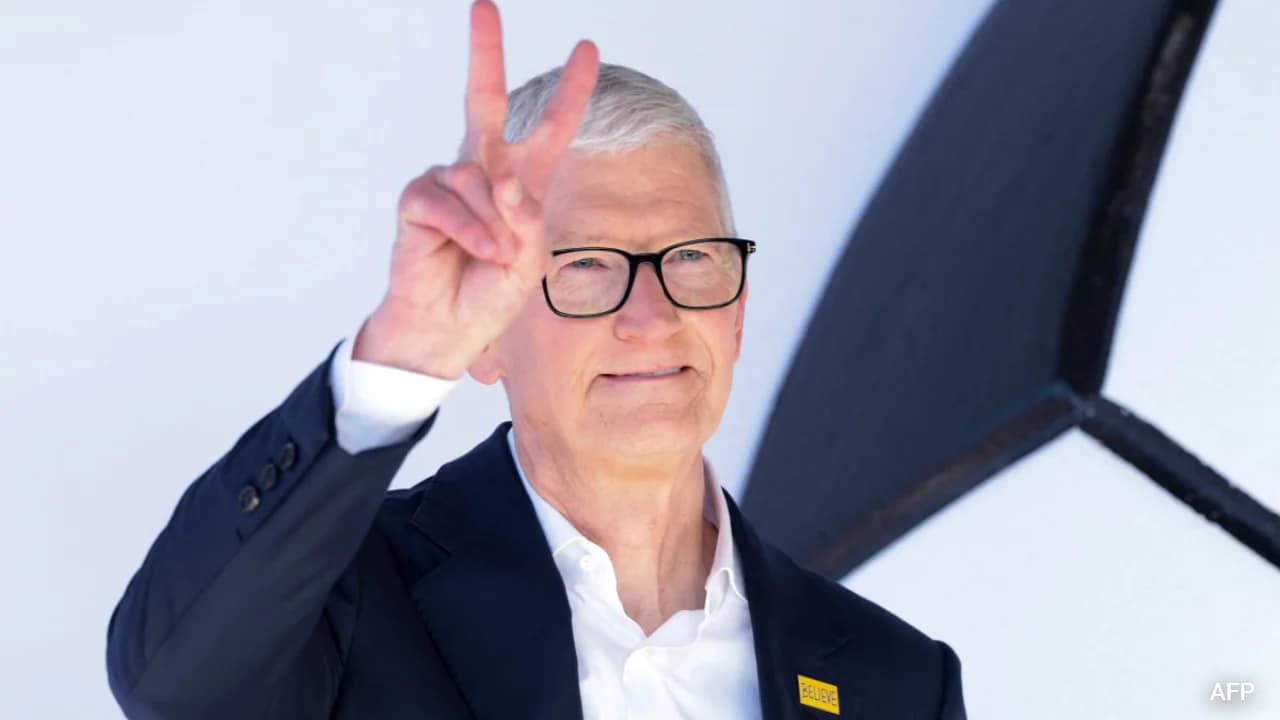
After 15 years as CEO, Tim Cook is stepping down to become executive chairman, passing the leadership of Apple to hardware veteran John Ternus. Cook leaves behind an institutionalized, resilient company, leaving Ternus with the challenge of reintroducing innovation and addressing lingering product hurdles.
The End of the Cook Era: A Transition of Institutional Resilience
After fifteen years at the helm, Tim Cook is transitioning from his role as CEO of Apple to become the company’s executive chairman. His tenure, which began following the passing of Steve Jobs, transformed Apple from a company defined by high-stakes product bets into a global institution of unparalleled operational durability. Cook’s legacy is defined by his meticulous construction of a supply chain and a services ecosystem that allowed Apple to absorb external shocks—ranging from international tariffs and complex legal battles to the recent challenges of a botched AI launch—without wavering from its corporate trajectory.
The 'Boring' Genius of Operational Stability
Critics and analysts alike have often remarked that Cook made Apple "boring," but this characterization ignores the strategic brilliance of his approach. By prioritizing consistency, margins, and operational efficiency, Cook built a machine that is vastly larger and more stable than the Apple of the Steve Jobs era. His daily ritual of reading customer emails—a practice he maintained for 15 years—served as a grounding mechanism, keeping him connected to the user experience while he focused on the macro-level stability of the firm. This transition marks the end of a period where the primary goal was to survive and scale rather than to constantly surprise.
John Ternus: The Hardware Engineer's Mandate
As Cook steps into his new role, he hands the reins to John Ternus, a long-time Apple insider and the first hardware-focused executive to lead the company in thirty years. The appointment of a "hardware man" is a clear signal from the board regarding their future priorities. Where Cook mastered the art of the supply chain and financial scaling, Ternus is tasked with building things. His mandate is to move Apple beyond its current state of institutional stability and back toward the product-centric innovation that originally defined the brand.
Challenges in the Pipeline
Despite the strength of the company he inherits, Ternus faces significant hurdles. He assumes control of Cook's existing pipeline and must navigate the complexities of a company that has become so optimized for durability that it risks stagnation. Furthermore, he will be working with Cook still present in the building as executive chairman, a dynamic that necessitates a delicate balance between respecting the past fifteen years of leadership and forging a new identity for the company.
Future Trends: Innovation vs. Institutionalization
The shift in leadership suggests a pivot for Apple. While Cook’s era proved that Apple could survive almost any market pressure, the market is now demanding a return to the visionary product launches that once defined the tech giant. Ternus’s success will likely be measured by his ability to maintain the financial health Cook established while successfully integrating new, disruptive technologies. The next few weeks will provide little insight into this cultural shift, as the company enters a transition period defined by the continuity of its current leadership while slowly pivoting toward a new product-led strategy.
Verification Required?