T.N. food Minister Venkataramanan meets Union Food Minister Pralhad Joshi
Source Entity
India Latest News: Top National Headlines Today & Breaking News | The Hindu
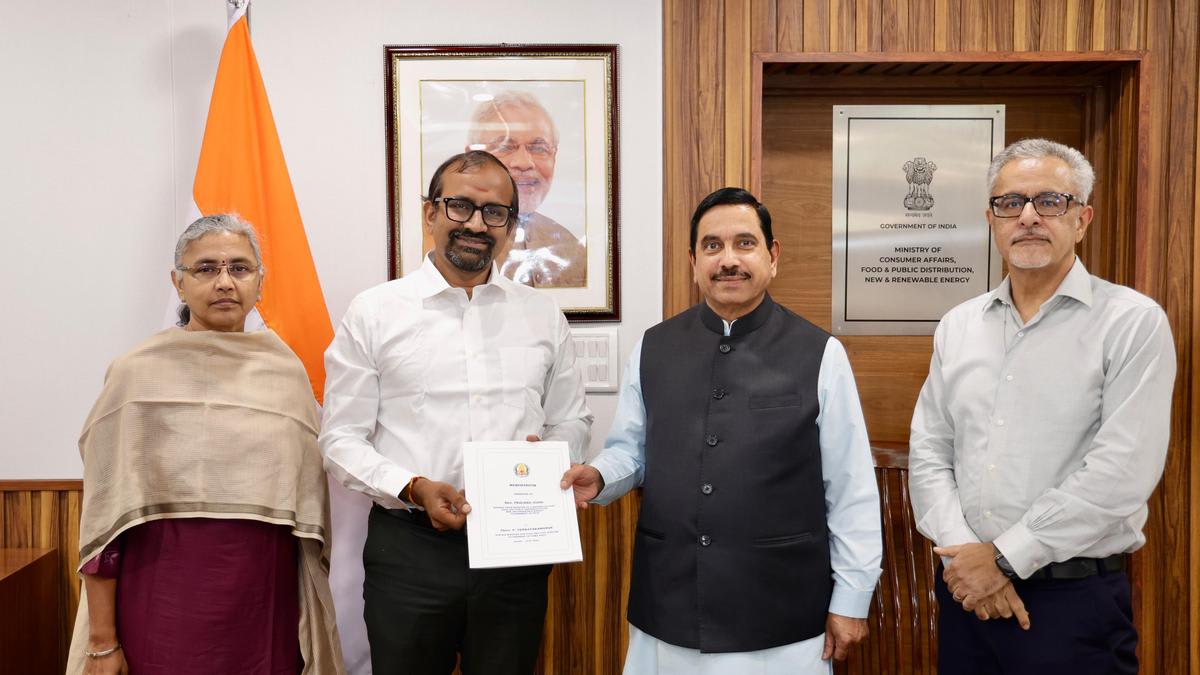
Tamil Nadu Minister for Food and Civil Supplies P. Venkataramanan met with Union Minister Pralhad Joshi in New Delhi to advocate for increased allocations and support for the state's food and civil supplies system.
Strengthening Food Security: Analysis of the Meeting Between TN and Union Food Ministers
In a significant move to ensure the stability of the state's essential commodity supply chain, Tamil Nadu Minister for Food and Civil Supplies, P. Venkataramanan, recently held a high-level meeting with the Union Minister for Consumer Affairs, Food and Public Distribution, Pralhad Joshi, in New Delhi. The primary objective of this interaction was to urge the central government to increase allocations and provide enhanced support for the state's food and civil supplies. This meeting underscores the critical nature of state-center coordination in managing the logistics and procurement of essential grains, which are vital for the socio-economic stability of millions of citizens in Tamil Nadu.
The Strategic Importance of the Public Distribution System (PDS)
To understand the weight of this meeting, one must look at the robust nature of Tamil Nadu's Public Distribution System (PDS). Unlike many other states, Tamil Nadu has historically maintained a highly efficient and inclusive PDS that serves as a primary safety net against hunger and malnutrition. Because the state relies heavily on the central pool of grains managed by the Food Corporation of India (FCI), any fluctuation in the quota allocated by the Union government can lead to immediate shortages at the ration shop level. Minister Venkataramanan's push for increased allocations is likely a preemptive measure to ensure that the state's unique distribution model remains uninterrupted despite any national supply chain pressures.
Navigating the Dynamics of Cooperative Federalism
This meeting is a textbook example of the operational side of cooperative federalism in India. While the Union government handles the overarching policy, procurement, and storage of food grains, the actual distribution is a state subject. This creates a dependency where state ministers must frequently lobby their central counterparts to ensure their specific regional needs are met. By engaging directly with Minister Pralhad Joshi, the Tamil Nadu government is attempting to align its state-level demand forecasts with the Union's supply capabilities, ensuring that the bureaucratic process of allocation does not hinder the delivery of essential goods to the underprivileged.
Economic Pressures and Inflationary Concerns
Beyond simple volume, the request for increased support is likely tied to the broader economic context of food inflation. Rising costs of staples in the open market place immense pressure on state governments to maintain subsidized prices through the PDS. When the Union government increases the allocation of grains or provides better pricing terms, it allows the state to mitigate the impact of market volatility on its most vulnerable populations. This interaction is therefore not just about quantity, but about the economic viability of food security programs in the face of global and domestic price hikes.
Logistics and the Role of the Food Corporation of India (FCI)
The success of the requests made by Minister Venkataramanan depends heavily on the logistical efficiency of the Food Corporation of India (FCI). The movement of grains from central warehouses to Tamil Nadu's depots involves complex rail and road logistics. The dialogue between the two ministers likely touched upon the need for streamlined transport and storage facilities to prevent wastage and ensure that the increased quotas actually reach the end consumer. Improving this pipeline is essential for reducing the gap between central procurement and state-level distribution.
Future Trends: Digitalization and One Nation One Ration Card
Looking forward, these high-level meetings will increasingly focus on the integration of technology. The implementation of the 'One Nation One Ration Card' (ONORC) initiative has transformed how food security is managed, allowing migrants to access grains across state borders. This shift necessitates a more dynamic and real-time allocation system rather than static quarterly quotas. The discussions between the TN and Union ministers are likely precursors to a more digitized, demand-driven allocation model that can respond more fluidly to the movements of the population and seasonal demand spikes.
Conclusion
In summary, the meeting between P. Venkataramanan and Pralhad Joshi is a vital administrative exercise aimed at safeguarding Tamil Nadu's food security. By advocating for higher allocations, the state government is working to protect its citizens from food instability and inflation. The outcome of these negotiations will directly influence the availability of essential commodities across the state, reinforcing the critical link between central policy and grassroots implementation.
Verification Required?