Trump administration bans new Chinese humanoid robots
Source Entity
BBC News
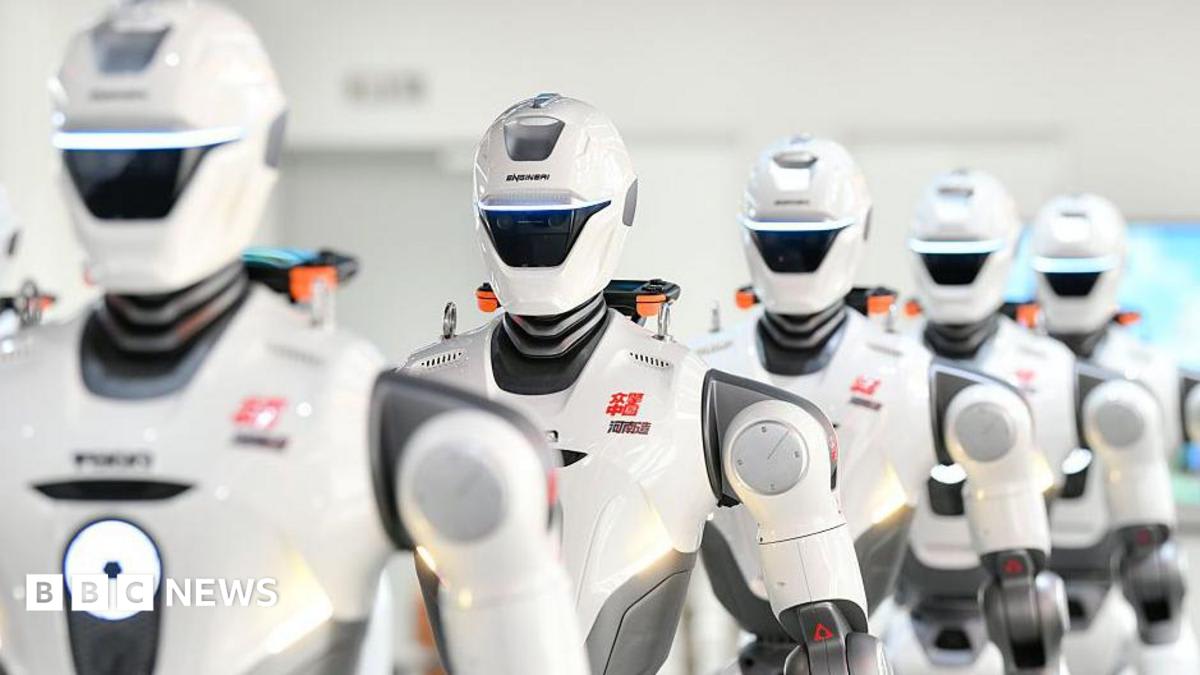
The Trump administration has enacted an import ban on Chinese-made humanoid robots and power inverters citing national security risks. The FCC aims to secure critical supply chains by targeting advanced mobile robotics and renewable energy hardware.
The Strategic Pivot: US Restrictions on Advanced Robotics
The Trump administration has formally announced a ban on the import of new foreign-made humanoid robots and specific power inverters, marking a significant escalation in the ongoing technological competition between the United States and China. By targeting advanced mobile machines—including both humanoid and quadrupedal models—the administration is explicitly positioning robotics as a critical domain of national security. This regulatory action, spearheaded by the Federal Communications Commission (FCC), reflects a growing anxiety regarding the integration of foreign-manufactured autonomous systems into the American infrastructure.
National Security and Supply Chain Integrity
FCC chairman Brendan Carr has framed this policy as a vital measure to "secure America's critical supply chains." The justification centers on the "unacceptable risks" posed by these devices, suggesting that the connectivity and data-processing capabilities inherent in advanced robotics could be exploited. By restricting these imports, the U.S. government is attempting to decouple its domestic robotics ecosystem from foreign influence, specifically targeting the rapid advancements being made by Chinese firms like Unitree and UBTech.
Beyond Robotics: The Power Inverter Ban
While the focus on humanoid robots captures public attention, the inclusion of power inverters is equally significant. These devices are essential components in data centers and solar panel arrays, serving as the backbone for modern energy distribution. Because China dominates the production of these inverters through companies like Sungrow and the previously blacklisted Huawei, the FCC's move aims to mitigate vulnerabilities in the U.S. power grid and digital infrastructure. This suggests a broader strategy to prevent foreign entities from gaining potential remote access to critical energy hardware.
The Geopolitical Context of Innovation
The United States and China are currently engaged in a high-stakes race to lead the world in artificial intelligence and robotics. As these technologies evolve from theoretical research into practical, mobile applications, the ability to control the supply chain becomes a lever of geopolitical power. The U.S. government’s decision to preemptively ban these devices indicates a shift toward protectionism, prioritizing domestic control over global market efficiency to ensure that future autonomous systems align with U.S. security standards.
Future Implications and Market Outlook
This ban sets a restrictive precedent that will likely force a reorganization of the global robotics market. Manufacturers will now face extreme hurdles in entering the U.S. market, potentially leading to a bifurcation of robotics standards globally. As the FCC continues to define what constitutes an "advanced robotic device," companies operating in this space must anticipate further regulatory scrutiny. The long-term trend suggests that "national security" will remain the primary lens through which the U.S. evaluates emerging technologies, likely leading to increased federal oversight of any hardware capable of autonomous movement or high-level data integration.