Trump suggests rebranding AI with a new name, says he’s also creating an AI Force
Source Entity
Anthony Ha
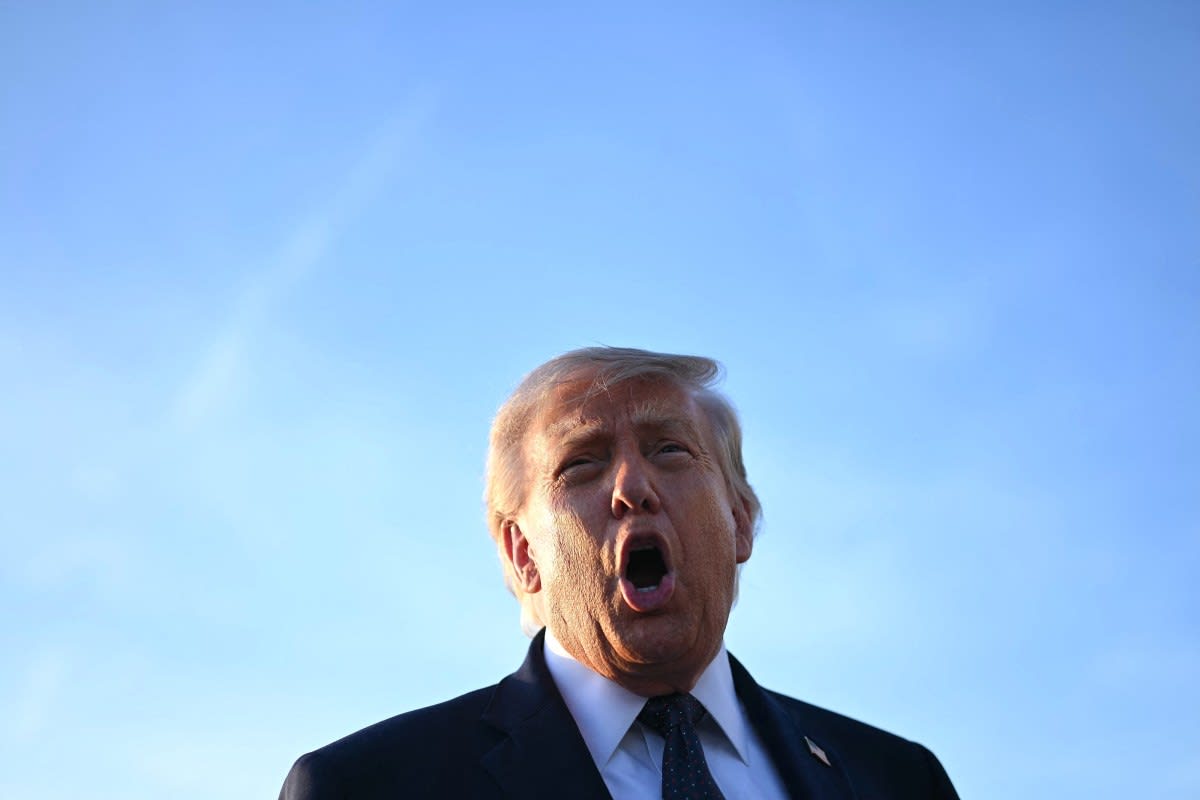
President Donald Trump has announced the formation of an 'AI Force' and the appointment of an 'AI Czar' to protect the technology from what he labels as political hoaxes. He is also seeking to rebrand 'Artificial Intelligence' to terms like 'Superior Intelligence' through social media polling.
The Emergence of the 'AI Force'
President Donald Trump has formally announced his intent to establish an 'AI Force,' a new administrative initiative designed to protect the development and deployment of artificial intelligence. Drawing parallels to the creation of the Space Force during his first term, Trump framed this move as a necessary measure to shield the sector from what he describes as the 'decimation' or 'destruction' of the technology. To oversee this mission, he intends to appoint an 'AI Czar,' signaling a move toward centralized executive control over the nation's AI strategy.
Politicizing Technological Discourse
Central to this announcement is the President’s assertion that current concerns regarding AI safety and the environmental impact of data centers are politically motivated. Trump explicitly categorized the backlash against AI as a 'hoax' orchestrated by the 'Radical Left Dumocrats,' framing the regulatory debate not as a matter of technical or ethical concern, but as a partisan struggle. By positioning AI development as a front in a wider cultural and political battle, the administration is effectively polarizing the discourse surrounding emerging technologies.
Rebranding the Future of Intelligence
In a move characteristic of his approach to branding and messaging, President Trump has questioned the linguistic efficacy of the term 'Artificial Intelligence.' Through his platform Truth Social, he has initiated a public poll inviting followers to vote on alternative monikers, including 'Superior Intelligence,' 'Extreme Intelligence,' and 'Supreme Intelligence.' This attempt to rebrand the technology suggests an effort to move away from the current academic and industry nomenclature toward a narrative that emphasizes strength and dominance.
Historical Context and Institutional Strategy
By invoking the success of the Space Force—the first new branch of the U.S. Armed Forces in over 70 years—the President is attempting to validate the 'AI Force' as a proven model of institutional expansion. Historically, the creation of the Space Force was met with both skepticism and eventual acceptance as a vital component of national security. Whether an 'AI Force' can similarly transition from a rhetorical campaign tool into a functional government entity remains a key question, particularly given the technical complexity of AI compared to traditional military domains.
Broader Implications for Industry and Regulation
The decision to lash out at critics of data centers and AI safety protocols suggests a policy trajectory that prioritizes rapid, unrestricted development over regulatory oversight. For the tech industry, this signals a potential shift away from the collaborative safety frameworks currently being discussed in academic and private sectors. If the administration succeeds in establishing an 'AI Czar' with broad oversight, it may fundamentally alter the landscape for how tech companies interact with the federal government, potentially sidelining traditional regulatory bodies in favor of a direct, executive-led mandate.
Conclusion: A New Frontier in Policy
Ultimately, the President’s announcements represent a significant escalation in the intersection of national politics and technological policy. By framing the protection of AI as a matter of national priority and branding it with a new, stronger identity, the administration is setting the stage for a contentious debate. As the 'AI Force' moves from concept to potential policy, the nation will likely see a stark divide between those who view these measures as necessary for American technological leadership and those who view them as a politicized approach to complex societal challenges.