'Oh it's a she': Trump stops speech to address someone in the crowd
Source Entity
PRISHA ROY
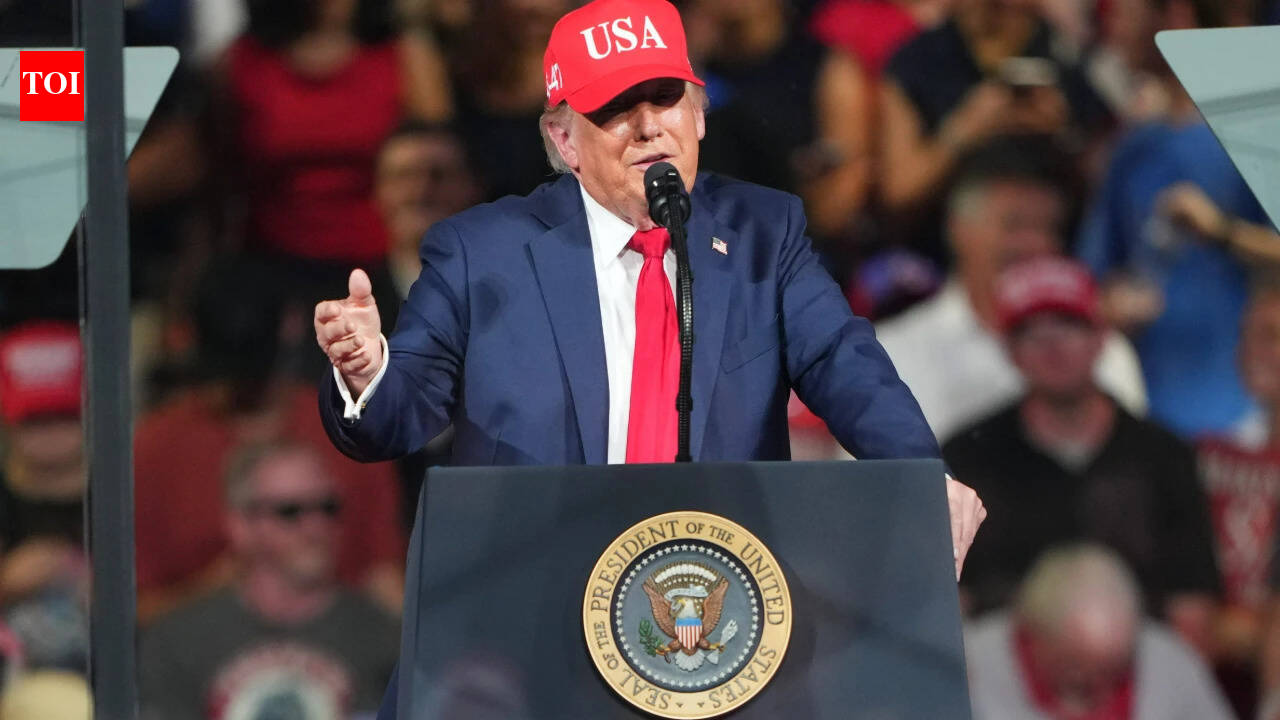
During a campaign rally in Gastonia, North Carolina, Donald Trump paused his speech to address a female protester. He engaged in a brief, unscripted exchange before continuing his support for Michael Whatley.
Campaign Dynamics and Unscripted Moments
During a recent campaign rally held at the Gastonia Municipal Airport in North Carolina, former President Donald Trump experienced an unscripted interruption that momentarily shifted the focus of his address. As he was speaking to the crowd, a woman began to interrupt, prompting Trump to pause his prepared remarks. This event highlights the high-energy, often unpredictable nature of large-scale political rallies, where speakers must navigate real-time interactions with attendees and protesters to maintain control of the event's narrative flow.
The Interaction: A Gender-Based Observation
Upon hearing the disturbance, Trump initially signaled to security and the crowd, assuming the interrupter was male, remarking, “Let me see his face.” However, upon realizing the individual was a woman, he shifted his tone, exclaiming, “Oh, oh, it’s a ‘she.’ Hello!” This transition serves as a quintessential example of how Trump utilizes spontaneous, conversational asides to engage directly with the audience, effectively turning a moment of disruption into a focal point of his rally performance.
Narratives and Rhetorical Patterns
Following the identification of the protester, Trump improvised a narrative regarding her intentions, stating, “She’s going home to mama — who’s watching right now. Her mother is watching right now on television, furious at the daughter.” By incorporating this “mom” line—a rhetorical device he has utilized in past campaign settings—Trump attempted to frame the protester’s actions in a relatable, domestic context. This tactic is often employed by political figures to diminish the perceived threat or gravity of a protest by personalizing it through a relatable, albeit speculative, family dynamic.
The Strategic Context of the Gastonia Rally
Beyond the distraction of the protest, the primary objective of the Gastonia event was to bolster support for Michael Whatley. Trump’s presence at the municipal airport underscores the strategic importance of North Carolina as a key battleground state. By focusing on local endorsements and regional political figures like Whatley, the campaign aims to solidify its base and mobilize grassroots support in a state where every rally appearance is designed to maximize media exposure and voter turnout.
Broader Implications for Political Discourse
This incident illustrates the thin line between campaign messaging and performance art in modern American politics. In an era where viral clips dominate social media, these unscripted exchanges are rarely viewed in isolation. Instead, they become part of the broader digital discourse, often distracting from or, conversely, amplifying the underlying policy messages a candidate intends to deliver. For the Trump campaign, such moments are frequently used to demonstrate authenticity and a willingness to engage with dissenters directly.
Future Trends in Rally Management
As election cycles continue to intensify, the management of rallies will remain a critical component of campaign strategy. We can expect to see continued reliance on these types of human-interest interactions to keep audiences engaged during long speeches. While the focus remains on electoral outcomes and the promotion of candidates like Michael Whatley, the ability to handle interruptions with immediate, often humorous or dismissive commentary will remain a signature component of the Trump campaign style.