Today News Headlines for School Assembly, August 20, 2026: Trump continues to claim Strait of Hormuz as ‘US territory’
Source Entity
The Indian Express
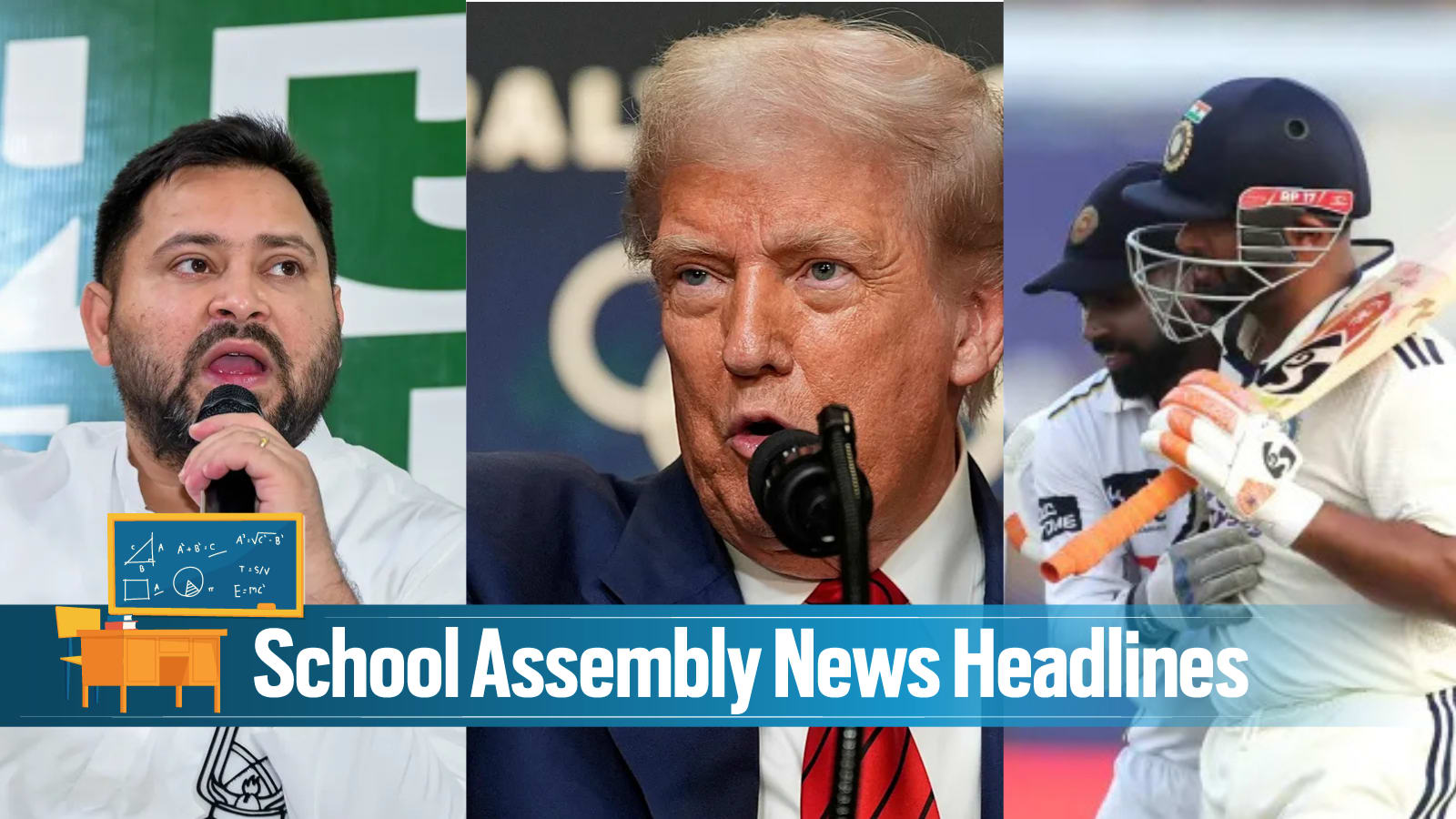
Tejashwi Yadav has been detained in Bihar amid protests against police tactics, while southern India faces a coastal surge alert. Simultaneously, President Trump has escalated geopolitical tensions by claiming sovereignty over the Strait of Hormuz.
Political Unrest and Regional Tensions: A Multi-Front Update
Detention of Tejashwi Yadav in Bihar
The political climate in Bihar has intensified following the detention of Rashtriya Janata Dal (RJD) leader Tejashwi Yadav. Yadav was apprehended by Bihar police near the Income Tax office while traveling to the Lok Bhawan. This action was taken in response to his leadership of a protest concerning the controversial use of AK-47 assault rifles by law enforcement during a student-led demonstration in Siwan last month. The use of such weaponry against student protestors has sparked a significant debate regarding the boundaries of police conduct and the proportionality of force in civil unrest scenarios.
Implications of Police Tactics
The detention of a prominent opposition leader highlights a deepening rift between the state administration and opposition forces. By challenging the state's decision to deploy high-caliber firearms like the AK-47 to manage student dissent, Yadav has positioned himself at the center of a civil rights discourse. This incident serves as a flashpoint for broader anxieties regarding the militarization of domestic policing, suggesting that future student-led movements in the region may face increasingly rigid state responses.
Environmental Alerts in Southern India
Parallel to domestic political challenges, India is facing a significant environmental threat. The Indian National Centre for Ocean Information Services (INCOIS) has issued a directive to suspend all operational and tourism-related activities along the coastlines of Kerala, southern Tamil Nadu, and the Lakshadweep islands. This alert, effective for August 19-20, is due to an anticipated swell surge. The urgency of this directive underscores the vulnerability of India’s southern coastal infrastructure to sudden oceanic shifts.
Geopolitical Shifts in the Strait of Hormuz
On the global stage, US President Donald Trump has escalated diplomatic friction by asserting that the Strait of Hormuz is 'US territory.' By posting maps delineating these strategic international waterways as domestic domain, the administration is challenging established international maritime laws and sovereignty norms. This rhetoric represents a major shift in foreign policy, potentially destabilizing one of the world's most critical oil transit chokepoints.
Strategic Consequences
The combination of these events paints a complex picture of regional and international instability. While the Bihar protests reflect internal governance disputes, the situation in the Strait of Hormuz threatens to reshape global trade and security alliances. The convergence of climate-related disruptions in India and geopolitical brinkmanship in the Middle East suggests a period of heightened vigilance for both domestic security agencies and international observers alike.