What Trump 'Predicted' On Iran, Stocks And Oil Before US Midterms
Source Entity
NDTV News Search Records Found 1000
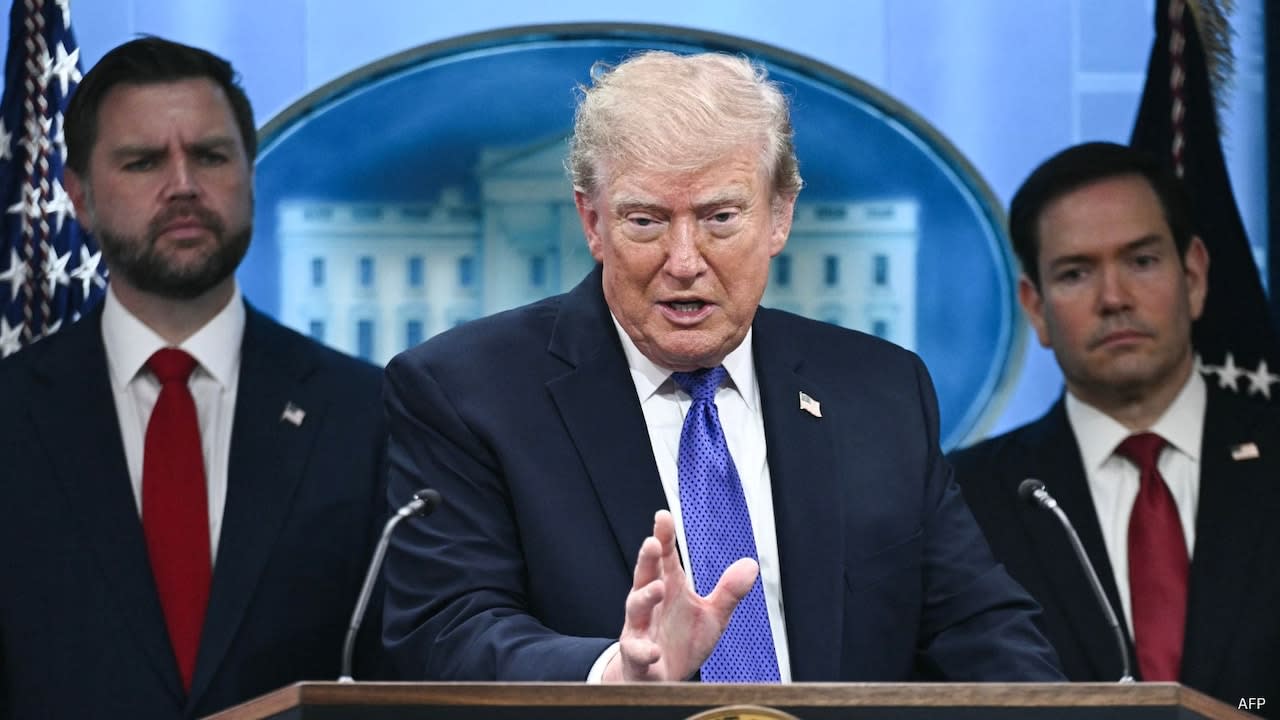
Former President Donald Trump has linked a recent surge in Iranian-backed drone and missile attacks to his perception of Democratic weakness. He suggests that Tehran feels emboldened by current U.S. leadership ahead of the midterm elections.
Assessing the Geopolitical Rhetoric of Donald Trump
Former President Donald Trump has recently intensified his rhetoric regarding the Islamic Republic of Iran, specifically connecting the current administration's foreign policy to a perceived escalation in regional instability. By framing the recent surge in drone and missile attacks as a direct byproduct of Democratic governance, Trump is positioning his critique as a central theme for the upcoming midterm elections. This narrative suggests that Tehran views the current U.S. leadership as inherently weak, thereby emboldening the regime to engage in more aggressive military posturing across the Middle East.
The Link Between Domestic Policy and Foreign Aggression
The core of Trump’s argument rests on the premise that global adversaries monitor domestic political climates to assess American resolve. By drawing a line between domestic midterm prospects and international security, Trump seeks to convince voters that the current administration's approach to Iran—characterized by diplomatic engagement rather than the 'maximum pressure' campaign utilized during his own tenure—has failed. This perspective underscores a fundamental divide in American foreign policy philosophy: the belief that deterrence is best achieved through overwhelming economic and military pressure versus the pursuit of multilateral agreements.
Analyzing the Surge in Drone and Missile Attacks
The reported surge in drone and missile attacks serves as the empirical anchor for Trump’s recent statements. These incidents represent a significant tactical shift in how Iranian-aligned forces exert influence in the region. By utilizing low-cost, high-impact technologies like drones, these actors can challenge regional security architectures without necessarily triggering a full-scale conventional war. Trump’s commentary suggests that these provocations are not isolated events but are instead a calibrated response to what he characterizes as an opportunity presented by the current U.S. political environment.
Historical Context and Strategic Implications
Historically, the relationship between the United States and Iran has been defined by cyclical periods of tension and limited negotiation. During the Trump administration, the withdrawal from the Joint Comprehensive Plan of Action (JCPOA) and the subsequent imposition of heavy sanctions were designed to force Iran back to the negotiating table. Trump’s current critique implies that the abandonment of these strategies has emboldened Tehran to resume activities that were previously suppressed. This debate is critical because it frames the midterm elections not just as a domestic referendum, but as a vote on the efficacy of American global standing.
Future Trends in U.S.-Iran Relations
Looking toward the future, the discourse surrounding Iran will likely remain a polarizing factor in American politics. If the narrative that 'Democrats are weak' gains traction, it could force a shift in how the current administration addresses Iranian provocations to avoid appearing vulnerable before the polls. Conversely, if the focus remains on economic and domestic issues, the impact of these geopolitical claims on the average voter may be dampened. Ultimately, the interplay between Iran’s regional maneuvers and U.S. domestic electoral cycles will continue to dictate the volatility of the Middle East for the foreseeable future.
Verification Required?