'We will be fair': Iran's dig at Trump as he announces 20% charge to pass Strait of Hormuz
Source Entity
Latest News: Today's Latest News Headlines from India & World | Hindustan Times | Hindustan Times
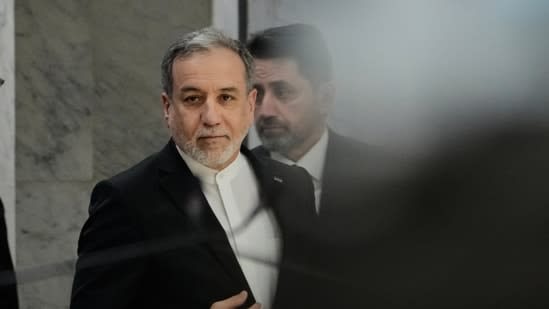
Araghchi's dig comes after Trump announced that the US will charge a 20 per cent fee to ensure the safety of vessels in the Strait of Hormuz.
Geopolitical Friction: The Impact of the Proposed Strait of Hormuz Safety Fee
The announcement by Donald Trump regarding a 20% charge for vessels passing through the Strait of Hormuz has sent shockwaves through the global energy market and diplomatic circles. By framing this fee as a necessity to "ensure the safety of vessels," the U.S. administration is effectively attempting to monetize the security apparatus it maintains in one of the world's most volatile maritime chokepoints. This move represents a shift toward a transactional approach to international security, where the protection of global trade routes is treated less as a collective diplomatic effort and more as a paid service provided by the United States.
The Strategic Weight of the Strait of Hormuz
To understand the gravity of this proposal, one must look at the geographical and economic significance of the Strait of Hormuz. As the only sea passage from the Persian Gulf to the open ocean, it is the primary artery for the transport of crude oil and liquefied natural gas (LNG) from Iran, Iraq, Kuwait, Saudi Arabia, and the UAE. Any financial or physical disruption in this corridor has an immediate ripple effect on global Brent crude prices. By introducing a 20% fee, the U.S. is not merely seeking revenue but is asserting a dominant level of control over the transit of goods, potentially leveraging the fee as a tool of economic statecraft to pressure regional actors.
Decoding Iran's 'Fair' Response
Iran's response, delivered via Araghchi, was succinct yet loaded with diplomatic ambiguity. The statement "We will be fair" is a classic example of strategic ambiguity. In the context of Iranian diplomacy, "fairness" often implies a policy of reciprocity or proportional retaliation. This suggests that if the U.S. imposes a financial burden on shipping, Iran may consider counter-measures, which could range from imposing its own transit levies to increasing military presence or conducting "security exercises" that could physically impede traffic. The tension here lies in the definition of fairness: while the U.S. sees the fee as fair payment for security, Iran likely views it as an illegal toll on international waters.
Historical Context of U.S.-Iran Maritime Tension
This latest development is the most recent chapter in a long history of maritime brinkmanship between Washington and Tehran. From the "Maximum Pressure" campaigns of the past to the seizure of tankers and the use of naval mines, the Strait of Hormuz has frequently been used as a pawn in larger political games. Historically, Iran has threatened to close the Strait entirely in response to sanctions, knowing that such a move would trigger a global economic crisis. Trump's proposal flips this script by attempting to tax the very vulnerability that Iran usually exploits, essentially betting that the world's reliance on the Strait is so absolute that shipping companies will pay the fee to avoid the risk of instability.
Broader Economic and Legal Implications
From a legal standpoint, the imposition of such a fee challenges the United Nations Convention on the Law of the Sea (UNCLOS) and the principle of "transit passage," which allows vessels to pass through straits used for international navigation without hindrance. If implemented, this could lead to a legal crisis at the International Maritime Organization (IMO). Economically, a 20% surcharge would likely be passed directly to consumers, contributing to inflationary pressures on fuel and plastics globally. Shipping conglomerates would face a dilemma: pay the U.S. fee for guaranteed safety or risk navigating a region where Iran feels emboldened to act "fairly" in retaliation.
Future Trends and Predictions
Looking forward, this proposal is likely to catalyze a period of heightened naval activity in the Persian Gulf. We can expect an increase in the deployment of U.S. carrier strike groups to enforce the fee, met by an increase in Iranian fast-attack craft and drone surveillance. If the fee becomes a reality, it may push regional powers like Saudi Arabia or the UAE to seek alternative pipeline routes to bypass the Strait entirely, accelerating the long-term strategic shift away from this chokepoint. Ultimately, the situation remains a high-stakes game of chicken where a single miscalculation in the name of "fairness" or "safety" could ignite a direct military confrontation.
Summary
The clash over the proposed 20% safety fee in the Strait of Hormuz highlights the fragile intersection of global commerce and superpower rivalry. While the U.S. seeks to monetize security and exert control, Iran's veiled warning of a "fair" response signals a readiness for proportional escalation. The outcome will likely determine the future of maritime law and the stability of global energy prices for years to come.
Verification Required?