Trump shares image calling Hormuz 'new US territory'; Iran says strait 'closed'
Source Entity
TOI WORLD DESK
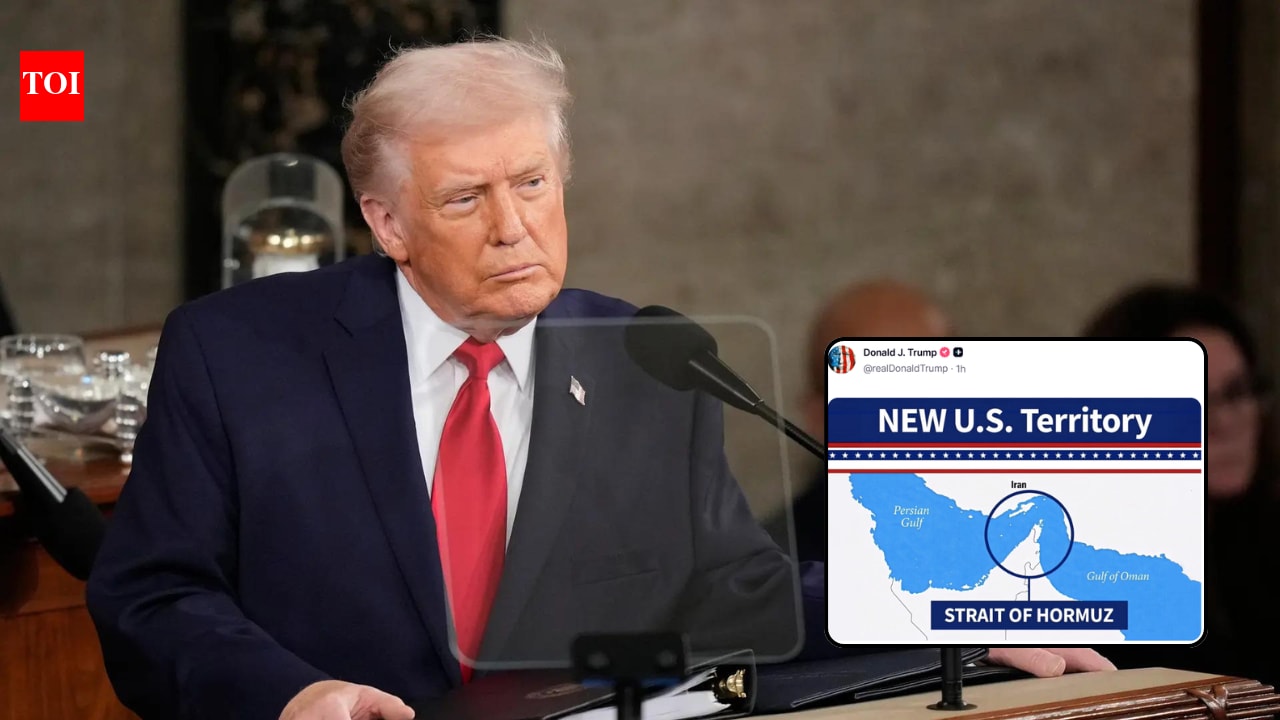
Donald Trump has repeatedly shared an image on Truth Social designating the Strait of Hormuz as 'new US territory.' Iran has responded by declaring the vital waterway closed until the US changes its behavior and fulfills its commitments.
The Escalating Rhetoric Over the Strait of Hormuz
Recent developments have seen a significant escalation in geopolitical tensions between the United States and Iran, centered on the strategically vital Strait of Hormuz. Former President Donald Trump has utilized his social media platform, Truth Social, to repeatedly share an image labeling the strait as “NEW US Territory.” This inflammatory rhetoric, which mirrors comments made during an August 14 speech at a Long Island police academy, signals a hardening stance that challenges the international legal status of one of the world's most critical oil chokepoints.
The Strategic Significance of the Strait
The Strait of Hormuz is not merely a geographic passage; it is the global economy's jugular vein. By repeatedly asserting that this area should be considered U.S. territory, Trump is signaling a shift toward a more aggressive maritime containment strategy. Historically, the U.S. has maintained a naval presence in the region to ensure the free flow of commerce, but the claim of territoriality represents a departure from traditional international maritime law, which protects the right of innocent passage through such straits.
Iran’s Counter-Stance and the Closure Threat
In response to these provocations, Iran has adopted a defiant posture. Mohsen Rezaei, the secretary of Iran’s supreme national security council, has stated unequivocally that the strait remains closed and will not be reopened until the United States changes its behavior and fulfills its international commitments. This deadlock reflects a long-standing pattern of brinkmanship where both nations leverage the threat of economic disruption to gain domestic political capital and international leverage.
Historical Context of US-Iran Maritime Standoffs
The history of the Strait of Hormuz is defined by periodic threats of closure, usually triggered by sanctions or regional military posturing. However, the current discourse is distinct in its overt use of social media to redefine the sovereignty of international waters. This digital diplomacy, or lack thereof, complicates the ability of traditional diplomatic channels to de-escalate tensions, as the rhetoric is aimed directly at a domestic base rather than at diplomatic counterparts.
Future Implications and Global Stability
The continued standoff suggests a high probability of increased naval volatility in the Persian Gulf. Should the rhetoric transition into operational policy, global energy markets could face unprecedented instability. The reliance on this chokepoint for the transit of a massive percentage of the world’s liquid natural gas and oil means that any perceived closure—or the threat thereof—triggers immediate market fluctuations and security concerns among regional allies.
Conclusion
As the U.S. and Iran remain locked in this cycle of claims and counter-claims, the situation at the Strait of Hormuz serves as a barometer for broader bilateral relations. The repetition of the “new US territory” narrative by Trump, contrasted with Iran’s declaration of a closed waterway, underscores a dangerous impasse. Without a pivot toward substantive negotiation, the region remains at risk of accidental conflict, with global economic consequences remaining a persistent threat.