Iran's president tells Trump it will never 'bend the knee'
Source Entity
BBC News
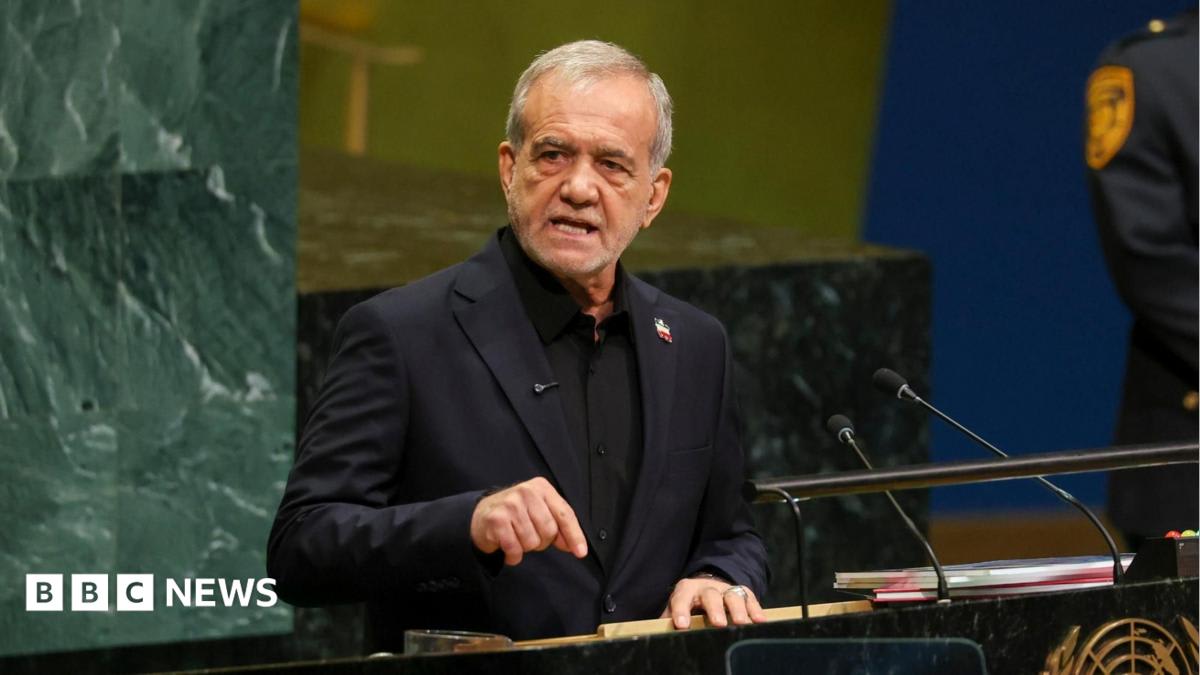
At the UNGA, President Trump presented a binary choice for Iran: a diplomatic deal or total annihilation. This rhetoric highlights his dual-track strategy of balancing aggressive military posturing with the promise of future negotiations.
The Iran Dilemma: Between Diplomacy and Destruction
At the recent United Nations General Assembly (UNGA) in New York, President Donald Trump framed his administration’s policy toward Iran as a stark, binary choice: a comprehensive deal or the potential for total "annihilation." This rhetoric, broadcast on the global stage, underscores a high-stakes diplomatic strategy that seeks to leverage military threat to force Iran back to the negotiating table. By positioning himself as a leader ready to employ either extreme—military force or economic and diplomatic reintegration—Trump is attempting to redefine the parameters of US-Iran relations.
The Strategic Gamble of 'Deal or Annihilation'
The core of Trump's message rests on the promise that a deal could allow Iran to rebuild and emerge as a significant power in the Middle East, provided it adheres to US demands regarding its nuclear program. However, this is juxtaposed against a threat of existential destruction. This "good cop, bad cop" approach is designed to signal to the international community that the US is not interested in perpetual conflict, but will not tolerate nuclear proliferation. The walkout of the Iranian delegation during his address reflects the deep-seated hostility and the lack of immediate trust between the two nations.
Impact on Global Geopolitics
The UNGA speech was not limited to Iran; it also served as a platform for Trump to discuss his broader geopolitical agenda, including the Russia-Ukraine conflict. By linking these disparate crises, the President is crafting a narrative where he acts as the primary mediator for the world's most intractable wars. Trump’s assertion that he can facilitate a quick resolution to the Russia-Ukraine conflict, while simultaneously managing the Iranian "big decision," aims to project an image of a decisive, deal-making executive who favors pragmatic outcomes over ideological entrenchment.
The Domestic and International Context
Timing is a critical component of this strategy, with the President suggesting that significant movement on an Iran deal might be deferred until after the November midterm elections. This indicates that his foreign policy maneuvering is intrinsically linked to domestic political cycles. By maintaining a posture of strength and threatening annihilation, he aims to satisfy a domestic base that favors a hardline stance against Tehran, while keeping the door open for a potential diplomatic victory that could be touted as a major achievement of his administration.
Future Implications and Regional Stability
The international community remains wary of the volatility inherent in such rhetoric. While Trump claims that Iran has signaled a degree of openness to negotiations, the threat of "annihilation" creates an environment of extreme pressure that could easily backfire, leading to unintended escalation. As diplomatic efforts continue behind the scenes, the world watches to see if this aggressive negotiation tactic will yield a path toward regional stability or push the Middle East closer to a catastrophic confrontation.
Conclusion
President Trump’s UNGA address represents a defining moment for his foreign policy. By framing the Iran situation as a choice between rebuilding a nation and its destruction, he has set the stage for a period of intense diplomatic maneuvering. Whether this will culminate in a landmark agreement or a deepening of the current conflict remains the most pressing question in contemporary global politics.
Multiple Citing Sources