Opinion: Opinion | The Last Bet? What Trump's 'Mother Of All Bombs' Could Actually Do To Iran
Source Entity
NDTV News Search Records Found 1000
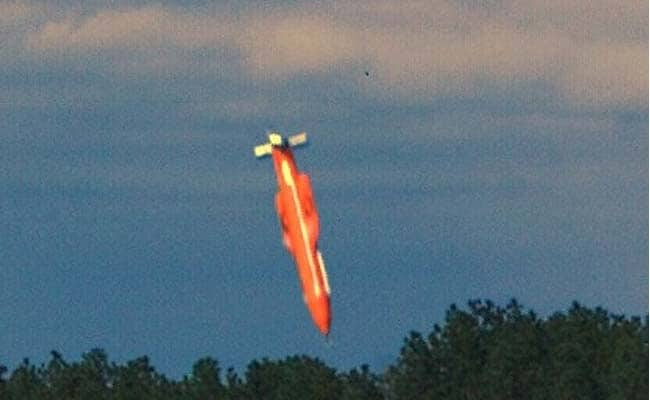
This analysis examines the strategic limitations of using a Massive Ordnance Air Blast (MOAB) against Iran. It compares the weapon's conventional capabilities to historical nuclear precedents to evaluate its potential impact on national surrender.
Strategic Considerations of Conventional Escalation
The proposition that a Massive Ordnance Air Blast (MOAB), or GBU-43/B, could function as a modern-day equivalent to the atomic bombs dropped on Hiroshima and Nagasaki represents a fundamental misunderstanding of both conventional ordnance and historical military outcomes. While the MOAB is the most powerful non-nuclear weapon in the United States arsenal, designed primarily for psychological effect and the destruction of complex tunnel systems or hardened surface targets, it lacks the strategic devastation required to force a sovereign nation into immediate capitulation.
The Technological Disparity
Unlike nuclear weapons, which utilize fission or fusion to release massive amounts of thermal, blast, and radiation energy, the MOAB relies on conventional high explosives. Its primary utility lies in its ability to clear expansive areas of vegetation or penetrate subterranean networks. Comparing this to the atomic bombings of World War II ignores the fact that the latter resulted in the total annihilation of urban infrastructure and posed an existential threat to the Japanese state that a single conventional blast cannot replicate against a country of Iran’s geographical and military scale.
Historical Context of Surrender
Historical precedents suggest that surrender is rarely the byproduct of a single conventional strike. The end of World War II was the result of a total mobilization of industrial and military power, culminating in the atomic bombings which provided a singular, catastrophic inflection point. Applying this logic to the current geopolitical climate in the Middle East fails to account for the decentralized nature of modern military command structures and the political resilience often displayed by states under external pressure.
Strategic Implications for the Middle East
Using such a weapon would likely trigger an immediate and unpredictable escalation rather than a swift resolution. The deployment of a MOAB on Iranian soil would represent a significant escalation in the use of force, potentially unifying domestic support within the targeted nation and complicating diplomatic channels. Unlike the strategic air campaigns of the 20th century, modern conflicts are increasingly defined by asymmetric warfare and proxy engagements, where a single 'decisive' strike often yields diminishing returns.
Future Trends in Conflict Resolution
Looking forward, the trend in international security is moving away from the reliance on singular 'silver bullet' weapons. Experts agree that coercive diplomacy and multi-domain military pressure are the primary tools for state-level interactions. Reliance on high-yield conventional explosives as a shortcut to political victory risks miscalculating the adversary's threshold for retaliation, thereby destabilizing regional security architectures and hindering long-term efforts toward de-escalation.
Verification Required?