Trump confirms Netanyahu's US visit next week amid regional tensions
Source Entity
TOI WORLD DESK
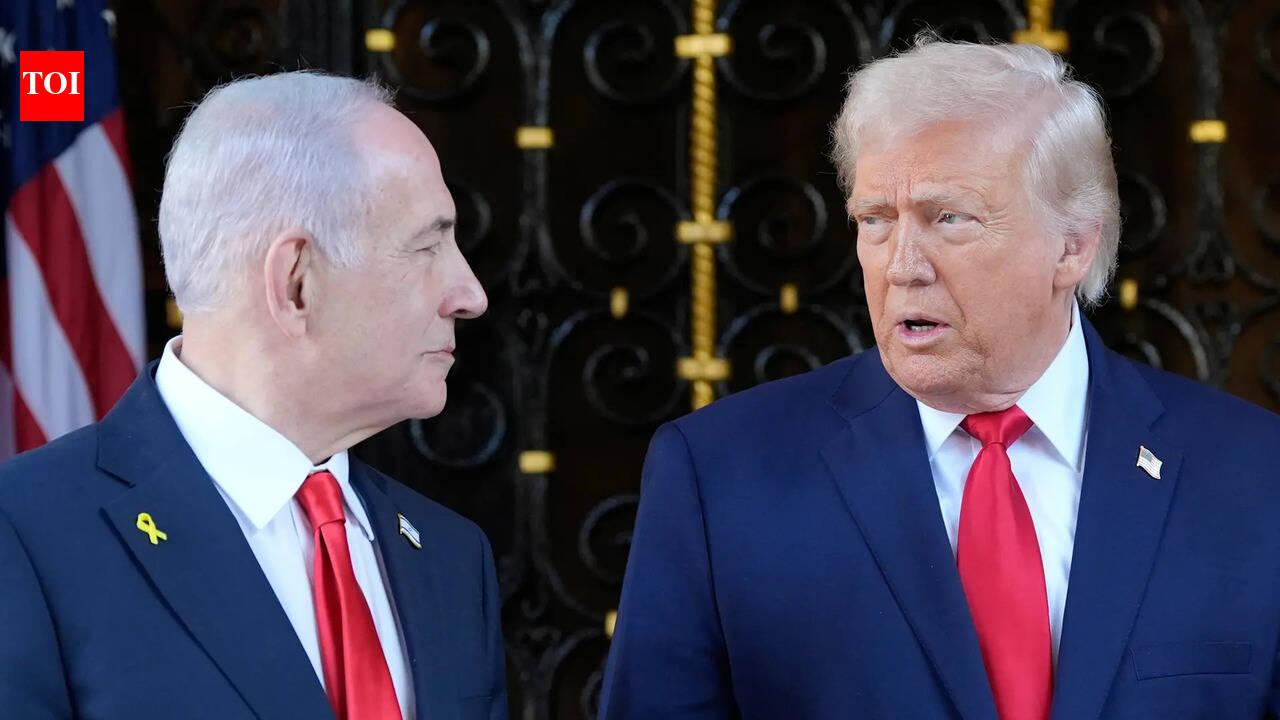
President Donald Trump announced that Israeli Prime Minister Benjamin Netanyahu will visit the U.S. next week. The meeting follows the collapse of a recent ceasefire agreement and ongoing military tensions between the U.S., Israel, and Iran.
Diplomatic Shifts Amidst Escalating Conflict
President Donald Trump officially confirmed during the White House Correspondents' Association Dinner on Friday that Israeli Prime Minister Benjamin Netanyahu is scheduled to visit the United States next week. This high-level diplomatic engagement follows a series of recent communications between the two leaders, specifically a phone conversation held several weeks ago. During this call, Netanyahu extended his congratulations on the United States' 250th anniversary, underscoring the enduring alliance between the two nations even as the geopolitical landscape in the Middle East undergoes a period of significant volatility.
The Collapse of the Memorandum of Understanding
The timing of this visit is critical, as it coincides with a marked deterioration in regional stability. Earlier this month, a ceasefire agreement—formalized through a Memorandum of Understanding (MoU) between Washington and Tehran—collapsed, effectively nullifying weeks of intensive diplomatic negotiations. The failure of this agreement has led to a rapid escalation in hostilities, with American forces actively engaging in military operations against targets within Iran, further complicating the already precarious US-Israeli-Iranian triangle.
Strategic Implications of the Upcoming Meeting
This upcoming meeting serves as a pivotal moment for both administrations to recalibrate their strategic objectives regarding the conflict with Iran. With the previous framework for peace now void, the two leaders are expected to discuss a new path forward. The decision to host the Prime Minister in Washington suggests an urgency to harmonize military and diplomatic strategies, particularly as American forces continue to conduct strikes in response to the breakdown of the MoU. This meeting will likely determine the intensity and scope of future military operations and the potential for any renewed de-escalation efforts.
Historical Context of US-Israeli Relations
The relationship between the United States and Israel has long been a cornerstone of American foreign policy in the Middle East. Netanyahu’s emphasis on the "close relationship" between the two countries during his recent call with President Trump highlights a desire to maintain a unified front in the face of regional threats. By meeting at this juncture, both leaders are signaling to international observers that their bilateral coordination remains the primary mechanism for addressing the current security crisis.
Future Trends and Regional Outlook
As the situation on the ground remains fluid, the outcomes of the meeting between Trump and Netanyahu will set the tone for the coming months. If the current military trajectory continues, the region may face prolonged instability. However, the move to meet in person indicates that the window for high-level diplomacy has not completely closed. Observers will be watching closely to see if the two leaders can move beyond the current military focus to establish a sustainable framework that replaces the failed MoU, or if the conflict will continue to expand in the absence of a viable diplomatic alternative.