Trump orders Smithsonian to post warnings about 'inaccurate' US history
Source Entity
BBC News
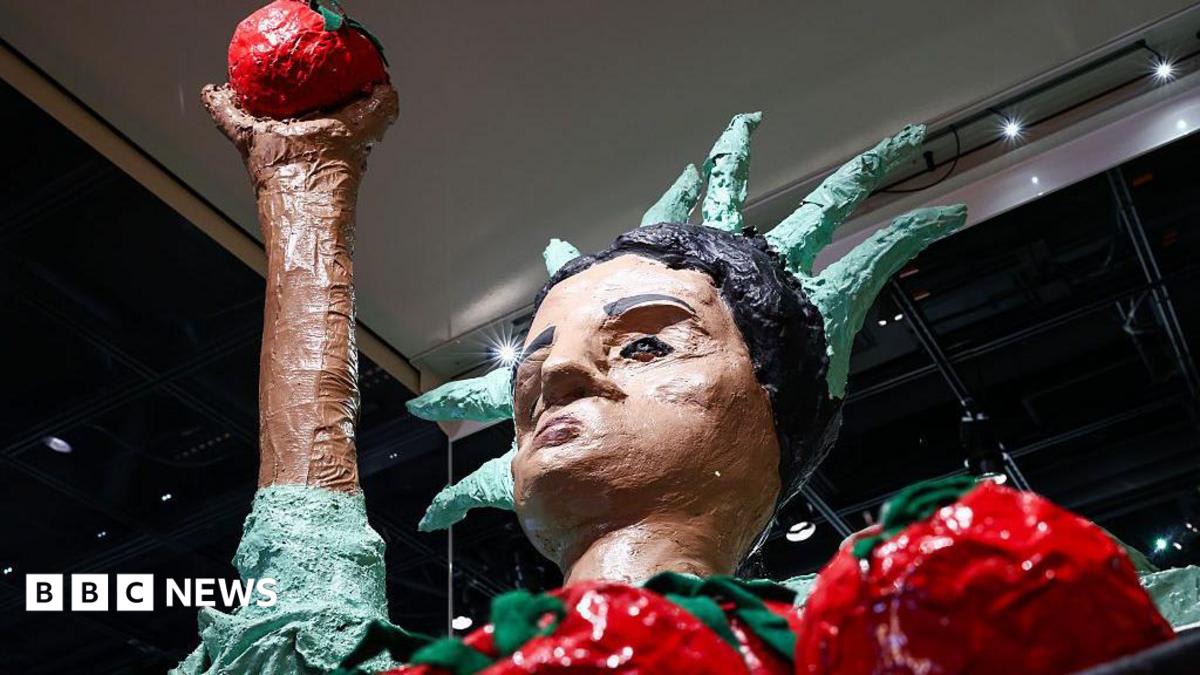
President Trump has issued an order requiring the Smithsonian National Museum of American History to post warnings regarding what his administration deems 'inaccurate' historical exhibits. The directive seeks to address alleged anti-American bias within the institution and direct visitors to alternative historical narratives.
The Smithsonian Controversy: A Clash Over Historical Narrative
President Donald Trump has issued a formal directive targeting the Smithsonian National Museum of American History, mandating the installation of warning signs at the museum’s entrance. This order, titled 'Restoring Trust in the Smithsonian Institution,' represents a significant intervention by the executive branch into the curatorial independence of one of the world's most prominent research and cultural organizations. By labeling specific exhibits as 'inaccurate,' the administration is positioning the federal government as the arbiter of historical truth, challenging the academic autonomy that has traditionally defined the Smithsonian.
Accusations of Institutional Bias
At the core of this directive is the administration's long-standing contention that the Smithsonian, alongside various other academic and cultural institutions, harbors an inherent anti-American bias. The administration argues that the museum’s current leadership has failed to appropriately celebrate the legacy of America’s founding figures. This move reflects a broader ideological struggle over how national identity and history are taught and preserved within public spaces, suggesting that the administration views the museum’s current interpretive framework as a departure from patriotic historical narratives.
The Mechanics of the Directive
Under this new mandate, the Department of Interior is tasked with the implementation of these warning notices. Beyond merely labeling exhibits, the order requires the department to actively steer visitors toward sources that the administration deems to contain 'accurate information regarding America’s history.' This creates a dual-layered approach to historical oversight: first, casting doubt on existing curatorial standards, and second, providing a government-sanctioned alternative for visitors to consume.
Historical Context and Institutional Independence
The Smithsonian Institution, while a federal entity, has historically operated with a significant degree of scholarly independence. The institution’s mission to increase and diffuse knowledge has generally been guided by academic peer review and historical consensus rather than executive decree. By intervening in this manner, the Trump administration is testing the boundaries of political influence on cultural heritage sites. This move sets a precedent that could alter how future administrations interact with national museums, potentially shifting them from centers of academic inquiry to platforms for political messaging.
Broader Implications for Cultural Institutions
The lack of an immediate response from the Smithsonian highlights the precarious position of cultural leadership when caught in the crosshairs of federal policy. If museums are forced to adopt political labeling, it risks undermining the public trust that these institutions rely upon to function as reliable sources of history. The tension between the administration's desire for a celebratory national narrative and the museum's commitment to critical historical analysis suggests a deepening divide in the American public sphere regarding the interpretation of the past.
Conclusion: The Future of Curatorial Authority
Ultimately, this executive order marks a pivotal moment in the relationship between the state and its national museums. Whether this directive leads to a long-term shift in how American history is displayed or serves as a temporary flashpoint in a larger culture war remains to be seen. However, it is clear that the effort to 'restore trust' in the Smithsonian is less about museum management and more about a fundamental disagreement over who has the authority to define the American story.