What did Trump say about friendship with Lindsey Graham? ‘We started a little bit rough, but then…'
Source Entity
Latest News: Todays Latest News Headlines from India & World | Hindustan Times | Hindustan Times
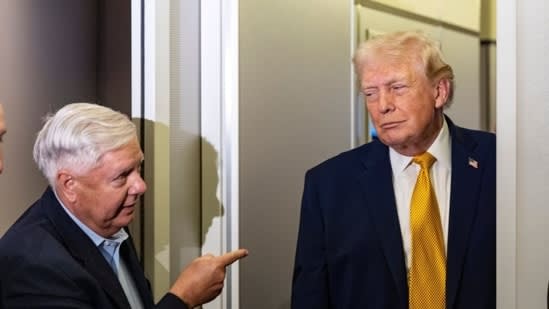
Former President Donald Trump honored the late Senator Lindsey Graham as a close friend following his death at age 71. However, Trump also faced public scrutiny after viral footage appeared to show him struggling to stay awake during the funeral service.
The Evolution of a Political Alliance
The passing of Senator Lindsey Graham, a long-serving South Carolina Republican and prominent foreign policy hawk, marks the end of one of the most notable political transformations in modern American history. Donald Trump’s recent reflections on their relationship highlight a journey that began with intense friction during the 2016 Republican primary. Trump characterized their initial interactions as "rough," a sentiment that accurately reflects the sharp ideological and personal clashes that defined the early stages of their political association.
From Rivals to Confidants
Over the course of their shared time in the political spotlight, the dynamic between Trump and Graham underwent a profound shift. Trump’s description of Graham as someone who eventually became "like a member of the family" underscores the depth of the alliance that formed after those early competitive years. This transition from vocal adversary to staunch ally was a defining feature of the Republican Party's evolution during the Trump presidency, as Graham became a key legislative partner and defender of the former president’s agenda on Capitol Hill.
The Funeral and Public Scrutiny
Despite the somber nature of the tribute paid at the Washington National Cathedral, the event became the subject of intense digital discourse. Following the service, viral footage circulated on social media platforms, appearing to show Donald Trump struggling to maintain alertness while seated in the front row. This moment of perceived fatigue sparked a wave of public reactions, drawing attention away from the eulogies and toward the physical presence of the former president during the proceedings.
Contextualizing the Legacy
Senator Graham’s death, attributed to an aortic dissection at the age of 71, has left a significant void in the Republican establishment. As a legislator who wielded considerable influence over defense and foreign policy, his departure forces a reckoning for a party that relied heavily on his bridge-building capabilities. The attention surrounding Trump's behavior at the funeral serves as a modern example of how high-profile public events are now filtered through the lens of viral media, where individual moments often overshadow the broader context of the ceremony.
Broader Implications for GOP Leadership
The relationship between Trump and Graham represents a broader trend within the GOP, where former opponents have frequently realigned to consolidate power and influence. As the party looks toward the future, the loss of a figure like Graham—who could navigate the complexities of both traditional conservatism and the populist movement—presents a strategic challenge. The public interest in the funeral's viral moments reflects the ongoing fascination with the personal dynamics of political leaders, even during moments of national mourning.
Concluding Reflections
Ultimately, the narrative surrounding the death of Lindsey Graham is two-fold: it is a story of a complex, evolving political partnership that shaped modern American governance, and it is a case study in how modern media cycles interact with sensitive public events. While Trump’s personal tribute emphasized the warmth of their final years together, the viral reactions to his presence at the funeral suggest that the public’s gaze remains fixed on the personal behaviors of political figures, regardless of the solemnity of the setting.
Verification Required?