40 years ago July 29, 1986: BJP bandh in Delhi
Source Entity
The Indian Express
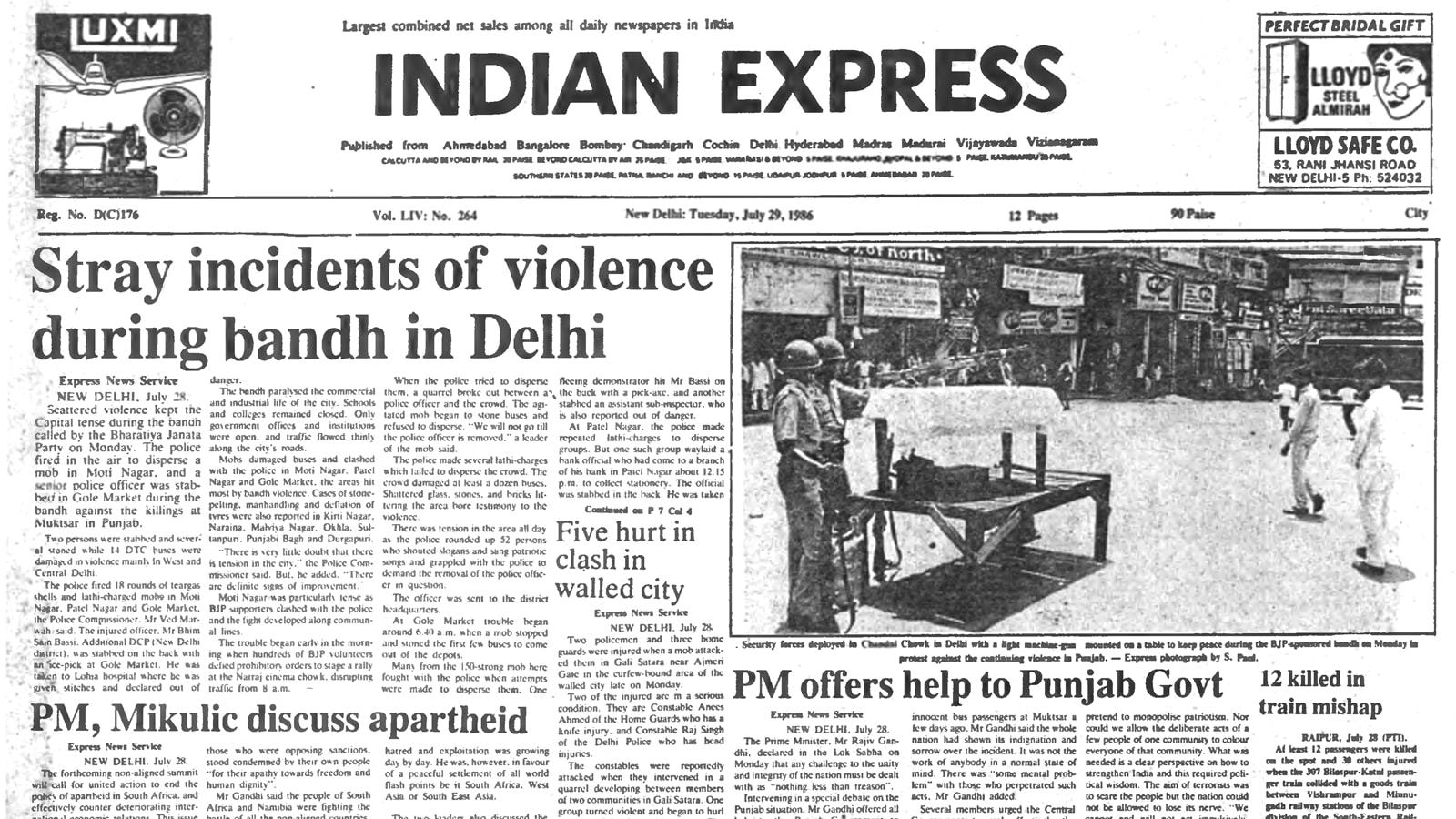
Historical reports from July 1986 detail a tense BJP-led bandh in Delhi sparked by Punjab violence, alongside international diplomatic efforts regarding apartheid and border concerns with China. These events reflect the complex domestic and geopolitical landscape of India during the mid-1980s.
The Volatile Summer of 1986: A Retrospective Analysis
On July 29, 1986, the national capital of India experienced a day of significant unrest as the Bharatiya Janata Party (BJP) organized a bandh to protest the tragic killings in Muktsar, Punjab. The atmosphere in Delhi was marked by widespread tension, with reports of scattered violence, stabbings, and damage to public infrastructure. The severity of the situation necessitated police intervention, including firing into the air in Moti Nagar to control agitated mobs, while a senior police officer was notably stabbed in the Gole Market area.
Domestic Unrest and the Punjab Conflict
The protests were a direct manifestation of the deep-seated grievances and security challenges facing India in the 1980s, particularly regarding the insurgency in Punjab. The Muktsar killings, which served as the catalyst for the BJP's call for a strike, underscored the precarious law and order situation of the era. The damage to 14 Delhi Transport Corporation (DTC) buses and the physical attacks on law enforcement personnel highlight the intensity of the political climate and the polarized state of public discourse during that period.
Geopolitical Challenges: Apartheid and Diplomacy
While domestic tensions gripped the capital, the Indian government was simultaneously navigating complex international waters. Prime Minister Rajiv Gandhi engaged in critical discussions with Yugoslav Prime Minister Branko Mikulic in New Delhi, focusing on the upcoming Non-Aligned Movement (NAM) summit. Central to these talks was the global push to end apartheid in South Africa, a cornerstone of India’s foreign policy during the 20th century, and the need to address deteriorating international economic conditions that threatened the stability of developing nations.
Border Security and External Threats
Beyond domestic strife and diplomatic maneuvering, the government faced persistent external security challenges. Reports from the time indicated that Chinese intruders had constructed a helipad in a disputed territory, highlighting the ongoing friction along the Sino-Indian border. This development served as a reminder of the long-standing territorial disputes that have historically strained relations between the two Asian powers, requiring constant vigilance from the Indian defense apparatus.
Conclusion: A Convergence of Crises
The events of July 1986 represent a microcosm of the multifaceted challenges that defined the mid-1980s for India. From the internal agitation caused by the Punjab crisis to the active participation in global anti-apartheid movements and the management of border incursions, the nation was navigating a period of intense pressure. Analyzing these events provides essential context for understanding the evolution of Indian domestic policy, its commitment to international solidarity, and the persistent nature of its regional security architecture.