Trump: New tariffs 'doing the same thing' as the ones struck down by Supreme Court
Source Entity
US Top News and Analysis
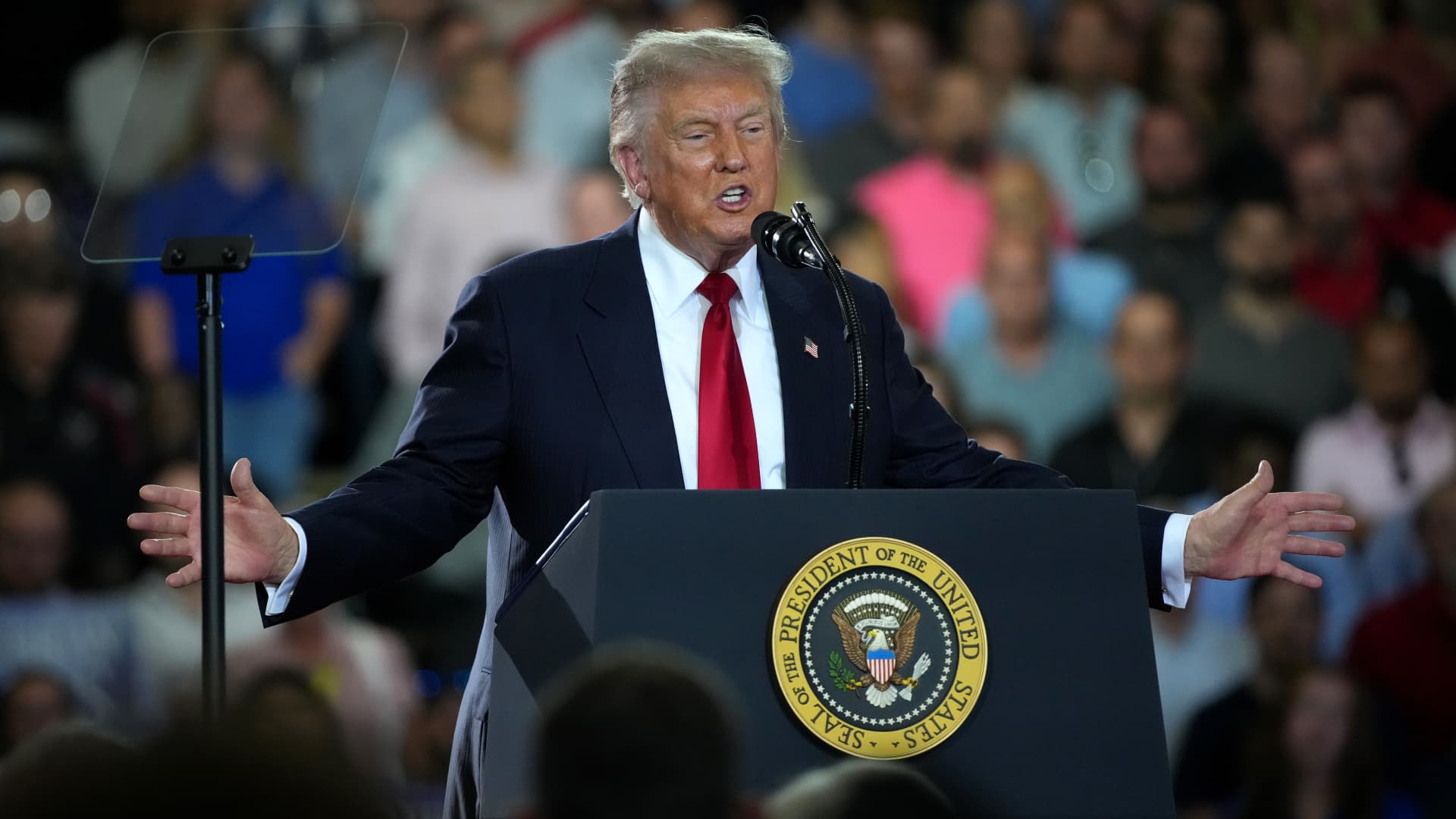
President Trump has indicated he is circumventing a Supreme Court ruling by utilizing alternative statutes to implement new tariffs. This move has triggered legal challenges and heightened economic concerns ahead of the 2026 midterm elections.
The Legal and Economic Implications of Trump's Tariff Strategy
President Donald Trump’s recent admission that his administration is pursuing new tariffs, which are "functionally the same" as those previously invalidated by the Supreme Court, marks a significant escalation in the ongoing conflict between executive authority and judicial oversight. By acknowledging that he is utilizing a "more cumbersome" legal path to achieve the same objectives as his struck-down policies, the President has openly signaled an intent to bypass judicial constraints through administrative maneuvering.
The Shift in Legal Strategy
The core of the current controversy lies in the administration's pivot to different statutory frameworks to justify trade barriers. Critics, including legal experts and plaintiffs in recent federal lawsuits, argue that this tactical shift is merely a pretext. The underlying premise of these lawsuits is that changing the cited statute does not alter the fundamental legal reality of the policy; if the objective and economic impact remain identical to the previously rejected tariffs, the administration may be operating in a legal gray area that invites further litigation.
Impact on the 2026 Midterm Landscape
This legal maneuvering comes at a sensitive time for the American political landscape, with affordability and inflation emerging as central pillars of the 2026 midterm elections. Tariffs are notoriously complex economic tools, often passed down to consumers in the form of higher prices. As voters grapple with cost-of-living concerns, the administration’s insistence on maintaining a global tariff regime—despite judicial pushback—could become a focal point of partisan debate, highlighting a divide between the President’s protectionist vision and the concerns of the electorate.
Judicial and Executive Tensions
The tension between the White House and the judiciary is palpable, as evidenced by the President’s public frustration with the Supreme Court’s "very close decision" earlier this year. This friction underscores a broader historical pattern where presidents test the limits of executive power in trade regulation. When the judiciary intervenes, the executive branch is forced to navigate complex administrative law to re-implement policies, often resulting in prolonged uncertainty for businesses and global trading partners.
Future Trends and Economic Uncertainty
Moving forward, the reliance on "more cumbersome" methods to enforce tariffs suggests that the administration is prepared for a protracted legal battle. This approach creates an environment of regulatory volatility, where trade rules are subject to constant shifting based on court rulings rather than long-term policy stability. As the 2026 midterms approach, the economic impact of these tariffs will likely be scrutinized by both policymakers and the public, potentially forcing the administration to defend its trade agenda against both legal challenges and economic data that may contradict its stated goals.
Conclusion
In summary, the administration's decision to resurrect its tariff regime through alternative statutes represents a bold challenge to the judiciary. Whether this strategy will hold up under the scrutiny of federal courts remains to be seen, but the political consequences are already manifesting as a key issue in the upcoming election cycle. The sustainability of this policy will depend on whether the administration can effectively decouple its current legal justifications from the findings of illegality that previously derailed its efforts.