Trump vows to investigate EU over fining of US tech companies
Source Entity
BBC News
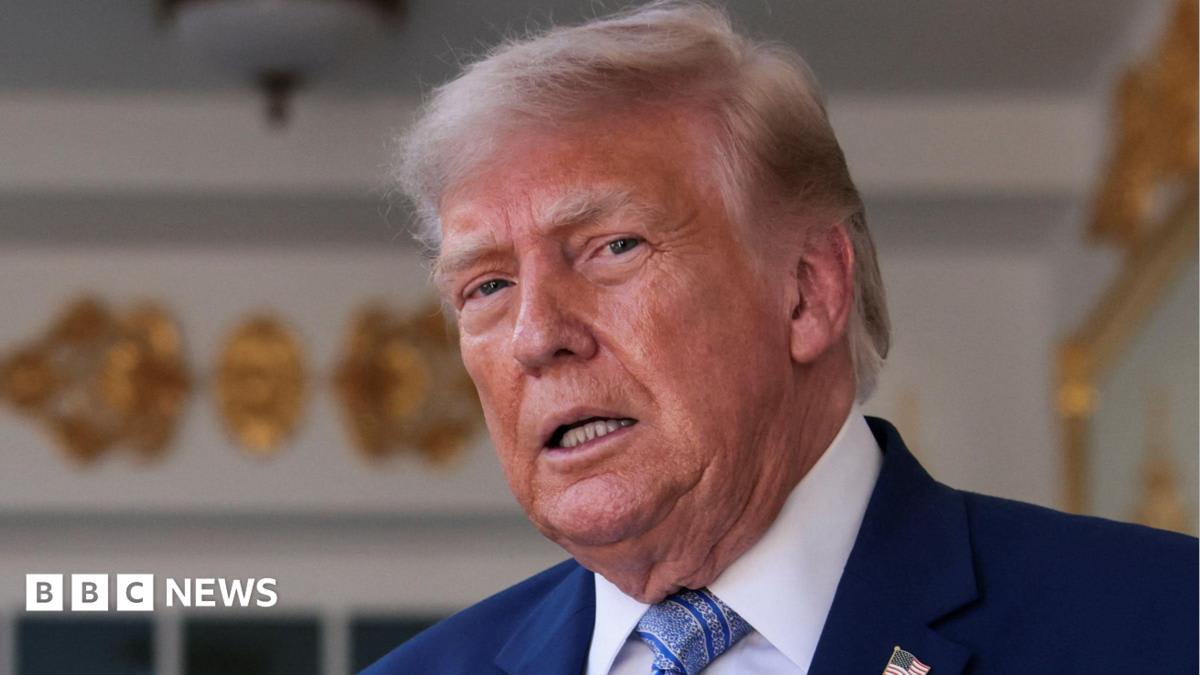
President Donald Trump has threatened to impose substantial tariffs on the European Union in retaliation for antitrust fines levied against major US tech firms. The administration plans to launch a formal trade probe, aiming to reverse penalties totaling billions of dollars against companies like Google, Apple, Meta, and Amazon.
The Escalating Transatlantic Tech Trade Dispute
President Donald Trump has signaled a significant shift in transatlantic economic relations by threatening to impose "substantial" tariffs on the European Union. This aggressive stance follows the European Commission’s recent decision to fine Google approximately €890 million ($1 billion) for anti-competitive practices. The President’s rhetoric, delivered via Truth Social, frames these regulatory actions not as standard antitrust enforcement, but as a systematic campaign by the EU to target and exploit American corporations.
Targeting the Regulatory Framework
At the heart of this conflict is the European Union’s rigorous application of competition law. President Trump has explicitly demanded that these fines—which he claims total over $18 billion for Google alone, alongside significant penalties for Apple, Meta, and Amazon—be "entirely reversed." By categorizing the United States as not being a "PIGGYBANK" for Europe, the administration is signaling a departure from traditional diplomatic resolution, opting instead for a policy of economic retaliation to protect US corporate interests.
The Mechanics of Retaliation
To enforce this position, the administration intends to launch a formal trade investigation into the European Union. This probe is intended to serve as a precursor to the implementation of new, punitive tariffs. This strategy suggests that the White House views European antitrust rulings as non-tariff trade barriers that undermine the commercial success of American tech giants. By linking regulatory fines to trade policy, the administration is effectively weaponizing tariffs as a mechanism to override foreign judicial and administrative decisions.
Historical Context and Recent Developments
This friction is notable given that, as recently as July 2025, President Trump and European Commission President Ursula von der Leyen had announced a trade deal in Turnberry, Scotland. The rapid transition from a cooperative trade framework to an adversarial stance underscores the volatility of modern US-EU economic relations. The current tension is exacerbated by the sheer scale of the financial penalties involved, which the US administration now characterizes as discriminatory targeting of "GREAT American Companies."
Future Trends and Global Implications
Looking ahead, this development suggests a period of heightened uncertainty for multinational corporations operating across the Atlantic. If the US proceeds with these tariffs, it could trigger a broader trade war, forcing European regulators to choose between maintaining their sovereignty in digital market oversight and avoiding significant economic damage. The outcome of this probe will likely set a major precedent for how sovereign nations negotiate the limits of digital regulation versus the protection of domestic tech champions in an increasingly globalized economy.
Multiple Citing Sources