'Possible target for a nice big fat shot': Trump threatens strike on key Iran N-site
Source Entity
TOI WORLD DESK
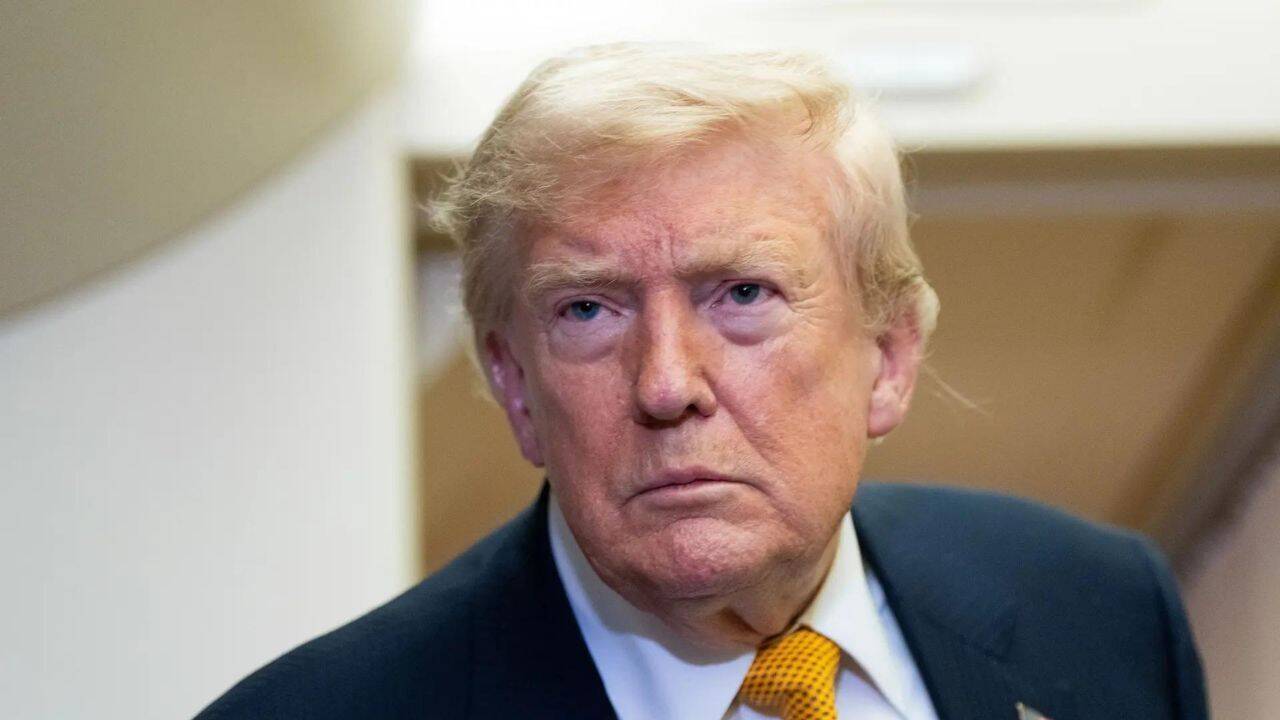
President Trump indicated American forces might soon strike Iran's Pickaxe Mountain site. He stated the US closely monitors the heavily fortified location with advanced surveillance. Recent US strikes against Iran are described as retaliation for targeting commercial vessels. The naval blockade in the Strait of Hormuz has also been reinstated by the US Navy. Iran's nuclear situation is reportedly not progressing well, according to officials.
Escalation in the Gulf: The Threat to Pickaxe Mountain
The geopolitical landscape of the Middle East has entered a period of acute volatility following President Trump's explicit threats to target Iran's Pickaxe Mountain facility. By describing the site as a "possible target for a nice big fat shot," the US administration has signaled a shift from strategic deterrence to the active contemplation of a kinetic strike. This development marks a significant escalation in the long-standing shadow war between Washington and Tehran, moving the conflict from proxy engagements and cyber warfare toward the potential for a direct, large-scale military confrontation involving hardened nuclear infrastructure.
The Strategic Significance of Pickaxe Mountain
The focus on the Pickaxe Mountain site is not incidental; such facilities are typically designed as deeply buried, fortified complexes intended to shield nuclear research and enrichment capabilities from conventional aerial bombardment. The US assertion that they are monitoring the location with "advanced surveillance" suggests that the US intelligence community has achieved a high level of transparency regarding the facility's internal operations. By publicly naming the site, the US is employing a psychological warfare tactic, notifying Iran that its most secure assets are vulnerable and visible, thereby increasing the pressure on Tehran's leadership to alter its nuclear trajectory.
Maritime Conflict and the Strait of Hormuz
The catalyst for this current spike in tension is the reported targeting of commercial vessels, which the US views as an unacceptable breach of international maritime law. In response, the US Navy has reinstated a naval blockade in the Strait of Hormuz, one of the world's most critical oil chokepoints. This move is a high-stakes economic lever; by controlling the flow of oil through the Strait, the US can exert immense pressure on the Iranian economy. However, such a blockade also risks global economic instability, as any disruption in oil transit typically leads to immediate spikes in global energy prices, potentially drawing in other international stakeholders.
Intelligence on Iran's Nuclear Progress
Interestingly, the narrative is complicated by reports from officials suggesting that Iran's nuclear program is "not progressing well." This discrepancy—threatening a major strike while claiming the program is stalling—suggests a dual-track strategy. On one hand, the US may be attempting to prevent a potential breakthrough by striking before the program can recover. On the other, the public emphasis on the program's failure may be intended to undermine the Iranian government's domestic prestige and international standing, framing the nuclear ambition as a costly and futile endeavor.
Broader Implications and Future Trends
Looking forward, the situation presents a precarious "brinkmanship" scenario. If the US proceeds with a strike on Pickaxe Mountain, it likely triggers a symmetrical response from Iran, potentially targeting US bases in the region or further disrupting maritime trade. Conversely, if the threat remains a deterrent, it may force Iran back to the negotiating table under significantly more constrained terms. The reinstatement of the naval blockade indicates that the US is prepared for a prolonged period of attrition, utilizing a mix of economic strangulation and military threats to achieve its policy goals.
Summary
The current crisis is characterized by a convergence of maritime insecurity, nuclear anxiety, and aggressive rhetoric. The threat to the Pickaxe Mountain site, coupled with the blockade of the Strait of Hormuz, represents a comprehensive US strategy to neutralize Iranian influence and nuclear ambitions through a combination of military pressure and economic isolation. The outcome will depend on whether Tehran views these moves as a bluff or as a precursor to an inevitable strike.