‘US will beat the f*****g s**t out of them’: Trump warns Iran of major escalation
Source Entity
The Indian Express
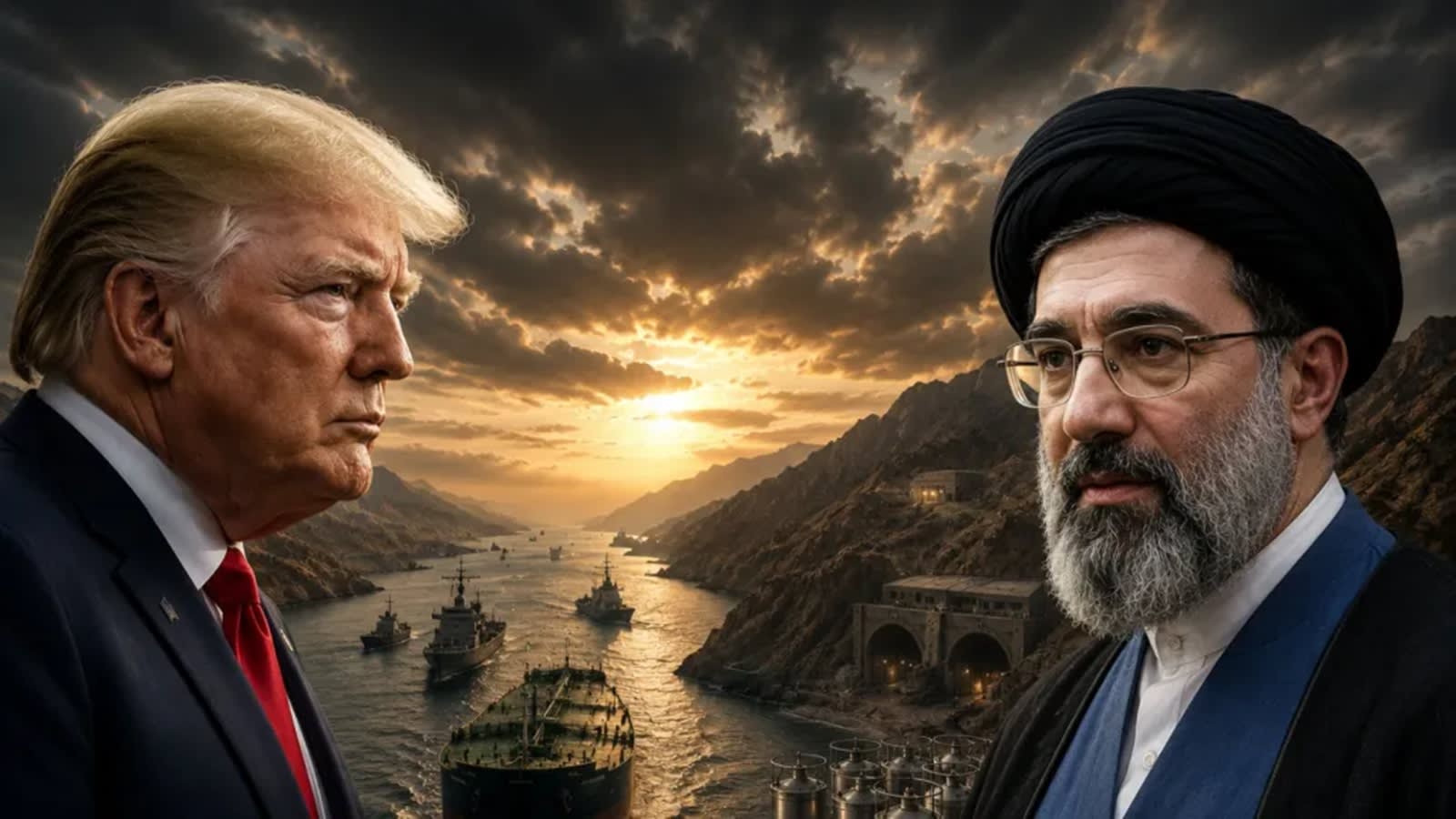
President Donald Trump has vowed a forceful military response against Iran following a failed ballistic missile attack on a US base in Jordan. While US forces successfully intercepted the incoming fire, the incident has triggered significant regional tensions and market volatility.
Escalation in the Middle East: A Detailed Analysis of the US-Iran Standoff
The Incident at the Jordan Base
Recent reports confirm that American military bases in Jordan were the targets of an attempted surprise missile strike orchestrated by Iran’s Islamic Revolutionary Guard Corps (IRGC). According to statements from US Central Command (CENTCOM), the attack involved multiple ballistic missiles intended to inflict damage on US forces stationed in the region. However, the military confirmed that all incoming projectiles were successfully intercepted, preventing casualties and damage to the base infrastructure. This event marks a sudden and violent conclusion to a period of relative calm in the region.
Presidential Rhetoric and Policy Implications
In the aftermath of the failed strike, President Donald Trump issued a stern warning during an interview with Fox News. Using forceful language, the President promised that the United States would retaliate with significant military power, stating that Iran would receive a "beating" for their actions. This rhetoric underscores a shift toward a more aggressive posture, signaling that the administration views this attempt not merely as a provocation, but as a direct act of hostility necessitating a "hard" military response.
The Role of Regional Alliances
Beyond the primary intercept, the conflict has widened to include broader regional dynamics. Reports indicate that US and Saudi forces conducted coordinated overnight strikes against Iran-backed militias. This suggests that the US strategy involves a multi-pronged approach, aiming to degrade the capabilities of proxy groups that operate in tandem with the Iranian state. By engaging these militias, the coalition is attempting to neutralize threats beyond the immediate missile launch sites.
Market Volatility and Global Stability
The sudden escalation between two major global powers has sent immediate shockwaves through international financial markets. Investors often react to geopolitical instability in the Middle East by moving toward "safe-haven" assets, given the region's critical role in global energy production and logistics. The uncertainty surrounding potential further retaliation by the US and the likelihood of a counter-response from Tehran creates a volatile environment for global trade.
Historical Context and Future Trends
Historically, the relationship between the US and Iran has been defined by cycles of brinkmanship. The IRGC’s decision to launch a direct ballistic missile attack represents a significant escalation from previous proxy-led skirmishes. Looking forward, the trajectory of this conflict will depend on the scale of the US response. If the administration follows through with the promised "hard" strikes, regional analysts anticipate a period of heightened security alerts and a potential hardening of alliances, as both nations navigate the thin line between targeted military action and full-scale regional confrontation.