Who is Uday Ruddarraju? Indian-origin techie becomes OpenAI's CTO of Compute
Source Entity
Latest News: Today's Latest News Headlines from India & World | Hindustan Times | Hindustan Times
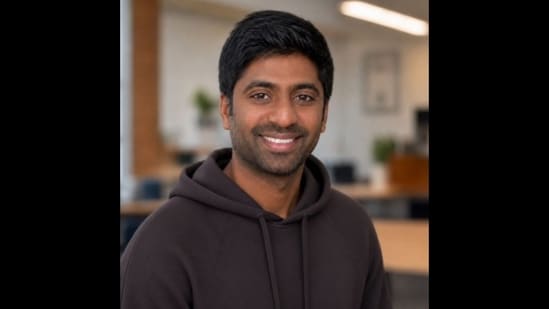
Indian-origin tech leader Uday Ruddarraju has been promoted to CTO of Compute at OpenAI after joining from Elon Musk's xAI. He will lead the critical infrastructure and systems work required to train frontier models like GPT-5.6.
Uday Ruddarraju's Ascent to CTO of Compute at OpenAI
OpenAI has announced the promotion of Uday Ruddarraju, an Indian-origin technology leader, to the strategic position of Chief Technology Officer (CTO) of Compute. This appointment marks a significant milestone in OpenAI's organizational structure as it continues to scale its technical capabilities to meet the demands of next-generation artificial intelligence. Ruddarraju, who joined the company approximately one year ago, has already demonstrated a high level of impact, leading the compute team in expanding capacity and optimizing the underlying systems necessary for high-scale AI training.
The Critical Role of Compute Infrastructure
The appointment of a dedicated CTO of Compute highlights the sheer scale of infrastructure required to sustain the current AI revolution. As Ruddarraju noted, the focus has been on bringing capacity online "quickly and reliably," which involves a complex orchestration of compute, networking, and storage. In the realm of frontier models, the bottleneck is often not just the algorithm, but the physical and virtual infrastructure capable of processing trillions of parameters. By focusing on deep systems work, Ruddarraju is tasked with ensuring that the hardware layer can keep pace with the ambitious software goals of OpenAI.
Talent Migration: From xAI to OpenAI
A particularly noteworthy aspect of Ruddarraju's career trajectory is his transition from Elon Musk's xAI. His departure in 2025 was not an isolated incident but part of a broader trend where senior infrastructure leaders migrated from xAI to OpenAI. This movement of talent suggests a highly competitive environment where the ability to attract and retain top-tier systems engineers is as crucial as the data itself. The shift of leadership from a Musk-led venture to OpenAI underscores the strategic battle for dominance in the AI space, specifically regarding the "compute" war.
Powering the Next Generation: GPT-5.6
The primary objective of Ruddarraju's efforts is the development of frontier models, specifically mentioning the training of GPT-5.6. Training such models requires an unprecedented level of synchronization between ML work and hardware performance. The "relentless" work described by Ruddarraju involves optimizing the interplay between storage and compute to prevent bottlenecks during the training process. This technical foundation is what will ultimately determine the intelligence and efficiency of the next iteration of OpenAI's flagship models.
Broader Implications for AI Scaling
Looking forward, the focus on "capacity" and "reliability" indicates that OpenAI is preparing for a phase of massive scaling. The ability to deploy compute resources rapidly allows for faster experimentation and iteration cycles. As AI models move toward more complex multimodal capabilities, the demand for specialized storage and high-speed networking will only increase. Ruddarraju's leadership will likely be defined by how effectively OpenAI can manage these resources while maintaining the stability of its training clusters.
Conclusion: A New Era of Specialized AI Leadership
In summary, Uday Ruddarraju's promotion to CTO of Compute is a clear signal that OpenAI views infrastructure as a primary strategic pillar. By integrating deep systems expertise with ML goals, OpenAI is positioning itself to overcome the physical limitations of AI scaling. As the industry moves toward GPT-5.6 and beyond, the role of the "Compute CTO" will become a blueprint for other AI giants, emphasizing that the path to AGI is paved with robust, scalable, and reliable hardware infrastructure.
Verification Required?