How a Swedish missile took down Russia's 500 kmph drone over Ukraine
Source Entity
AYUSH PANDEY
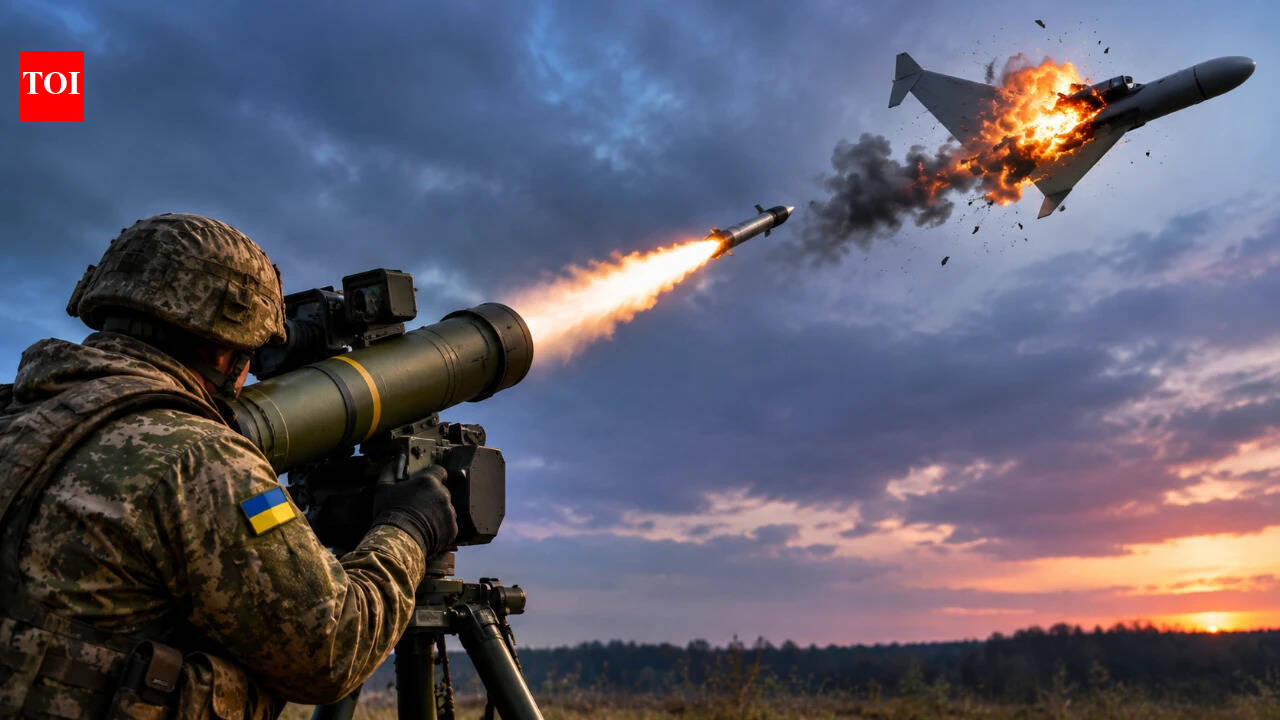
Ukraine has successfully intercepted a high-speed, jet-powered Russian Geran-5 drone using the Swedish-supplied RBS-70 air defense system. This encounter highlights a shift in drone warfare capabilities and the effectiveness of Western-supplied short-range air defense technology.
The Evolution of Drone Warfare: RBS-70 vs. Geran-5
The recent interception of a Russian jet-powered Geran-5 attack drone by Ukrainian forces using the Swedish RBS-70 air defense system represents a significant technological milestone in the ongoing conflict. As Russia pivots toward faster, more elusive aerial threats, Ukraine’s ability to adapt its defensive posture using Western-supplied hardware has become a critical factor in protecting its airspace. The Geran-5, capable of speeds exceeding 500 kmph, poses a much greater challenge to traditional anti-aircraft defenses than its slower, propeller-driven predecessors.
Understanding the Threat: The Geran-5
The Geran-5 drone is a notable upgrade in Russia’s loitering munition arsenal. By transitioning from traditional piston engines to jet propulsion, the drone achieves significantly higher speeds and a reported operational range of up to 950 km. This increased speed shrinks the reaction window for ground-based air defense crews, making traditional radar-guided systems susceptible to saturation. The deployment of such hardware suggests a strategic move by Russia to overwhelm Ukrainian detection networks and force the expenditure of more expensive interceptor missiles.
The Precision of the RBS-70
The Swedish RBS-70 system serves as a highly effective countermeasure in this high-speed environment. Unlike traditional radar-homing missiles that can be jammed or confused by sophisticated electronic warfare countermeasures, the RBS-70 utilizes a laser-beam riding guidance system. This means the operator keeps a laser designator on the target, and the missile follows the beam to the point of impact. This 'man-in-the-loop' approach makes the system remarkably resistant to jamming, providing a reliable solution for engaging fast-moving, low-altitude targets.
Strategic Implications of Swedish Support
Sweden’s continued military support for Ukraine has proven vital, particularly in the realm of ground-based air defense. By providing the RBS-70, Stockholm has enabled Ukrainian forces to establish a tiered defensive network that can address threats at various altitudes and speeds. This interoperability between NATO-standard hardware and Soviet-era infrastructure has been a cornerstone of Ukraine’s defensive resilience, allowing for a more layered approach to protecting urban centers like Kyiv.
Future Trends in Aerial Defense
The successful engagement of the Geran-5 suggests a future where the arms race between drone developers and air defense manufacturers will accelerate. As drones become faster and more autonomous, the reliance on human-operated, laser-guided systems like the RBS-70 will likely grow, as these systems offer a cost-effective way to neutralize high-value aerial threats. This event underscores that while the technology of attack continues to evolve, the tactical application of proven, resilient defense systems remains a decisive factor on the modern battlefield.