Ultraviolet Bird Photography
Source Entity
Hacker News
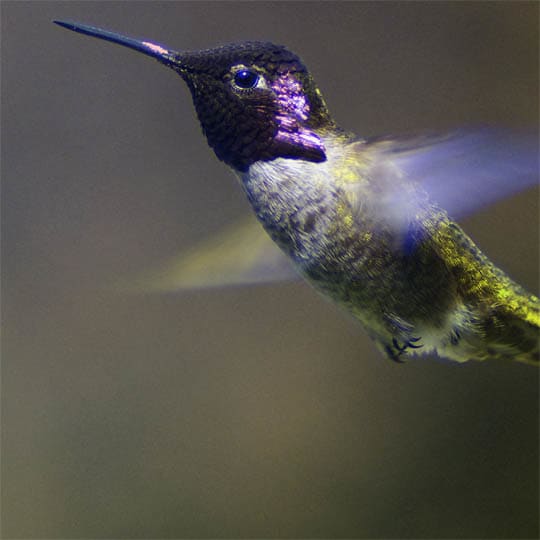
New ultraviolet photography reveals hidden color dimensions in bird feathers that are invisible to the human eye. These findings suggest that UV reflectance plays a critical role in species recognition and avian communication.
Unveiling the Hidden Spectrum of Avian Vision
Recent advancements in specialized ultraviolet (UV) photography have provided a groundbreaking glimpse into the visual world of birds, revealing a hidden dimension of color that remains entirely inaccessible to the human eye. By capturing light beyond the visible spectrum, researchers have demonstrated that birds, such as the Anna's hummingbird, possess iridescent display feathers that reflect both red and ultraviolet light. This discovery challenges our human-centric understanding of color, suggesting that the vibrant world observed by avian species is significantly more complex than previously imagined.
The Role of UV Reflectance in Species Recognition
The research highlights a fascinating evolutionary divergence in how different species utilize light. While the Anna's hummingbird utilizes UV reflectance as a prominent feature of its plumage, the ruby-throated hummingbird notably lacks this trait in its throat feathers. This absence of UV reflectance suggests that these patterns are not merely decorative but serve a functional biological purpose. Scientists hypothesize that the presence or absence of UV reflectance acts as a crucial sensory cue, allowing hummingbirds to distinguish between their own species and others during mating or territorial displays.
Comparative Analysis Across Species
Beyond hummingbirds, the use of UV photography has shed light on the plumage of various other birds, including flamingos and blackbirds. Flamingos, much like the Anna's hummingbird, exhibit significant UV reflectance, which manifests as a distinct purple hue when combined with red light in photographic processing. In stark contrast, the red plumage of certain blackbirds appears remarkably dark under UV light. This stark difference indicates that birds have evolved highly specific optical properties that serve as specialized signals within their respective ecological niches.
Technological Implications for Ornithology
The methodology employed in these observations—combining ultraviolet and visible light images—represents a significant leap forward in ornithological research. By creating composite images that simulate how birds might perceive their peers, researchers are better equipped to study avian behavior and evolution. This technology bridges the gap between human perception and the actual visual reality of the animal kingdom, providing a more accurate framework for interpreting bird behavior in the wild.
Evolutionary Significance and Future Trends
The evolutionary pressure to develop specific UV reflectance patterns underscores the importance of visual communication in bird survival. As we continue to refine the use of UV photography, we may uncover even deeper layers of complexity in how birds navigate their environments. Future research will likely focus on how these hidden colors influence mate selection, predator avoidance, and social hierarchies. This technological integration into biological studies serves as a reminder that the natural world is defined by sensory experiences far beyond our own limited human capabilities.