CEO of world's biggest robot firm admits that robots years away from ‘ChatGPT moment’
Source Entity
TOI TECH DESK
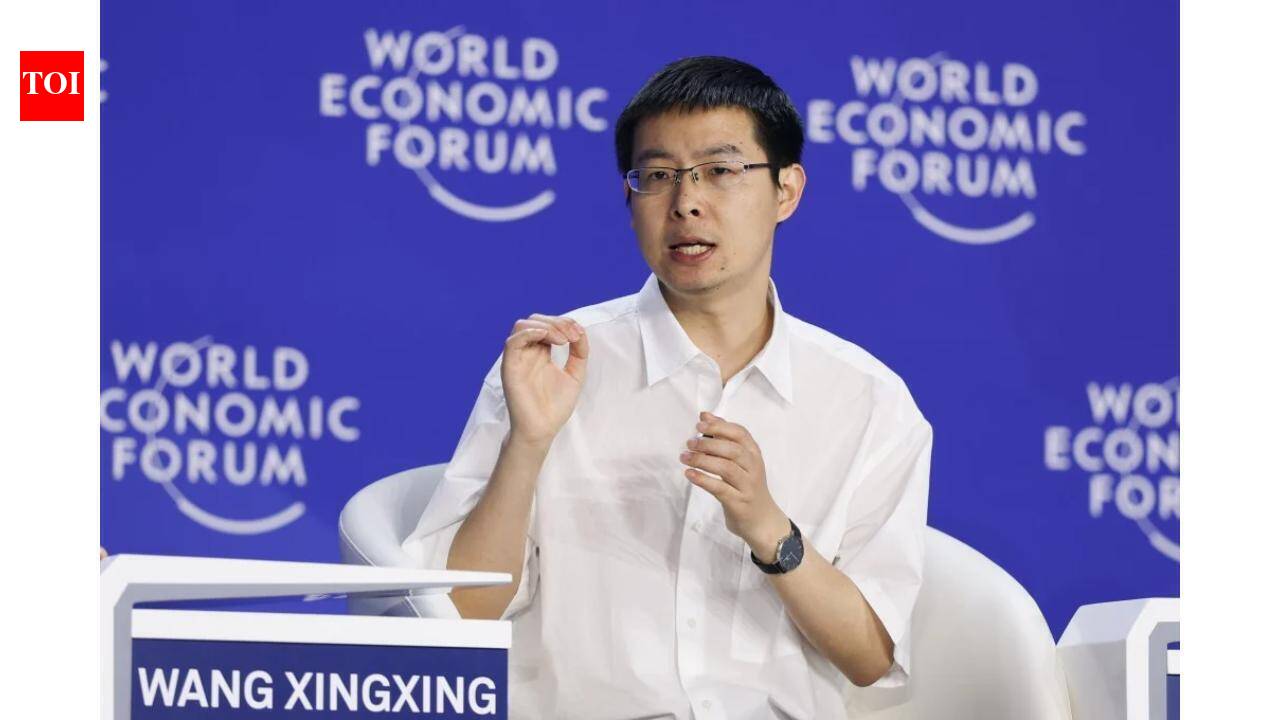
Unitree CEO Wang Xingxing predicts humanoid robots are 5-10 years away from a 'ChatGPT moment.' He emphasizes that true functionality requires robots to perform 80% of tasks via voice or text commands.
The Quest for the Robotics 'ChatGPT Moment'
At the recent World Robot Conference in Beijing, Wang Xingxing, the CEO of Unitree—the world’s largest manufacturer of humanoid robots—offered a sobering yet visionary outlook on the industry. While the public has been captivated by the rapid generative AI advancements seen in large language models, Wang clarified that the physical manifestation of this intelligence in robotics remains a significant hurdle. He explicitly noted that we are likely 5 to 10 years away from a "ChatGPT moment" for humanoid robotics, a timeline that underscores the immense complexity of bridging software intelligence with physical-world dexterity.
Defining the Threshold of Autonomy
For Wang, the "ChatGPT moment" is not merely about a robot performing a pre-programmed dance or walking on a flat surface. Instead, he defines functional maturity by a robot’s ability to interpret and execute tasks through natural language. The benchmark for this breakthrough is the capability for a robot to complete 80% of its assigned tasks via voice or text commands. Currently, humanoid robots require extensive retraining for even minor task adjustments, highlighting a lack of the generalized intelligence that characterizes modern AI chatbots.
The Hardware-Software Integration Gap
The primary challenge, as highlighted by Unitree’s leadership, lies in the integration of high-level reasoning with real-world physical interaction. While large language models can process vast amounts of data, they lack the sensory feedback loops required to navigate unpredictable environments. This gap necessitates further advancements in both robotic hardware, such as actuators and sensors, and the underlying AI models that govern movement and decision-making. Wang’s forecast of 2 to 10 years reflects the volatility of research and development in this sector.
Implications for the Robotics Industry
Unitree’s position as a market leader provides a unique vantage point on the maturation of humanoid technology. By signaling that the industry is still in a developmental phase, Wang is managing expectations amidst a global "hype cycle." This perspective is crucial for investors and developers alike, suggesting that while the trajectory is upward, the path to commercial, general-purpose robotics is a marathon rather than a sprint. The industry must move away from rigid, task-specific programming toward adaptive, command-based interaction.
Future Trends and Conclusion
Looking forward, the roadmap for humanoid robotics will likely focus on bridging the gap between digital intent and physical execution. As AI models become more multimodal—integrating vision, sound, and spatial awareness—we can expect the "80% task completion" threshold to become the industry standard for success. While the "ChatGPT moment" is not yet here, the focus on natural language control marks the beginning of a shift that will eventually allow robots to transition from controlled factory settings to more versatile, human-centric environments.