US announces visa restrictions targeting supporters of 'far-left terrorist' groups
Source Entity
Latest News: Today's Latest News Headlines from India & World | Hindustan Times | Hindustan Times
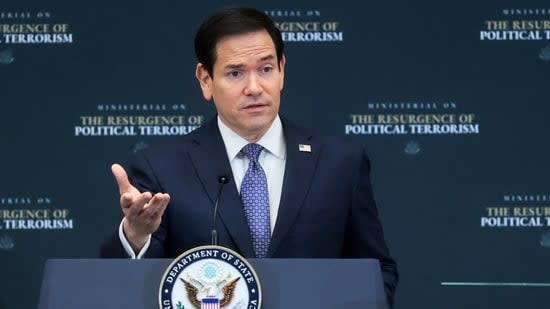
US Secretary of State Marco Rubio has announced new visa restrictions targeting foreign nationals who support or finance far-left terrorist groups. The policy aims to address a perceived gap in counterterrorism efforts by preventing individuals involved in political violence from entering the United States.
New US Visa Policy Targets Far-Left Extremism
The United States Department of State, under the direction of Secretary of State Marco Rubio, has officially announced a new visa restriction policy designed to bar foreign nationals associated with what the administration defines as "far-left terrorist" and aligned groups from entering the country. This policy represents a significant shift in U.S. national security strategy, moving to address what officials describe as a previously overlooked area of concern within the broader spectrum of political violence.
Defining the Strategic Shift
According to the official announcement, the measure is intended to disrupt the networks that finance, recruit for, or facilitate activities linked to far-left extremist organizations. Secretary Rubio has emphasized that the U.S. government views individuals who incite or aid these groups as "enemies of our civilization," marking a robust rhetorical and policy-driven stance against political violence. This initiative is part of a broader, structured effort by the Trump administration to establish a framework specifically targeting the operational capabilities of these networks.
Addressing the 'Counterterrorism Blind Spot'
Secretary Rubio noted that for many years, U.S. counterterrorism doctrine has primarily focused on traditional threats, often leaving a "blind spot" regarding extremist violence stemming from the political left. By formalizing this new restriction, the State Department aims to ensure that foreign nationals who employ intimidation, coordinated campaigns, and criminal acts—such as bombings—to influence political outcomes are systematically denied access to the United States.
Implementation and National Security Framework
The policy is rooted in the implementation of National Security Presidential Memorandum-7. The State Department highlighted that these far-left groups often utilize sophisticated, organized networks to advance extreme political visions through terror. By restricting visa access, the government intends to weaken the international support systems that allow these groups to operate and exert influence across borders.
Broader Implications for Foreign Relations
The introduction of these restrictions signals a tightening of U.S. immigration and border security policies as they relate to political ideology and affiliation. By explicitly targeting "far-left" entities, the administration is signaling a zero-tolerance approach toward any foreign actors perceived to be destabilizing the domestic political process through violence. This development suggests that future visa vetting processes will likely incorporate more rigorous scrutiny regarding an applicant's potential ties to extremist political organizations.
Future Outlook and Conclusion
As the administration continues to build out this framework, the international community can expect a more aggressive posture regarding the monitoring of transnational extremist movements. By prioritizing the disruption of these networks, the U.S. is signaling a recalibration of its national security priorities to encompass a wider range of ideological threats. This policy change effectively places global actors on notice that support for political violence—regardless of the ideological spectrum—will carry direct consequences for their ability to interact with the United States.
Multiple Citing Sources
Verification Required?