After Zelensky boasts of strikes near Moscow, Putin answers with a hypersonic?
Source Entity
Latest News: Today's Latest News Headlines from India & World | Hindustan Times | Hindustan Times
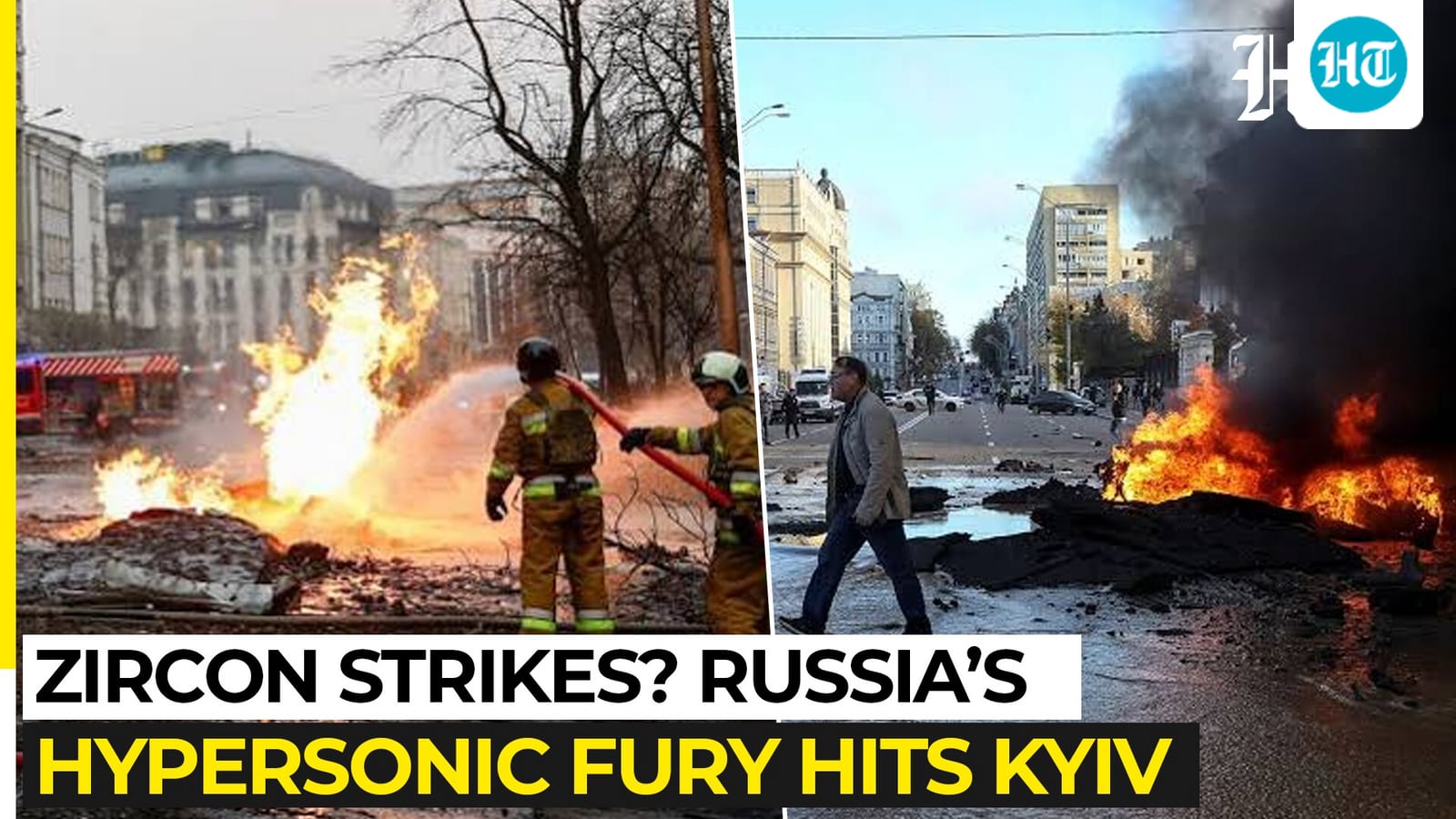
Russia launched a massive missile barrage against Kyiv on July 18, causing several injuries and significant infrastructure damage. The attack, which potentially utilized hypersonic Zircon missiles, follows Ukrainian claims of strikes near Moscow.
Escalation in the Skies: Analyzing the July 18 Missile Barrage on Kyiv
In the early hours of July 18, the conflict between Russia and Ukraine entered a heightened phase of aerial warfare as Russia launched a massive overnight missile barrage targeting the capital, Kyiv. This operation was characterized by powerful explosions that rocked the city and triggered air raid sirens across central and eastern Ukraine, signaling a broad and coordinated strike. The immediate human cost included at least seven injuries, while the physical toll manifested as fires and structural damage to residential buildings, commercial facilities, and various vehicles. Kyiv Mayor Vitali Klitschko confirmed the deployment of emergency crews across multiple districts to manage the aftermath, highlighting the widespread nature of the destruction.
The Cycle of Retaliation and Strategic Signaling
This surge in aggression appears to be a direct response to recent geopolitical shifts and battlefield claims. The timing of the attack is critical, occurring shortly after President Volodymyr Zelensky boasted of Ukrainian strikes conducted near Moscow. In the logic of modern asymmetric warfare, the Kremlin often utilizes large-scale missile strikes as a form of 'strategic signaling' to demonstrate its ability to penetrate Ukrainian defenses and inflict pain on the capital when its own territory is threatened. This tit-for-tat dynamic underscores a dangerous escalation cycle where long-range capabilities are used to exert psychological pressure on the opposing leadership.
The Technological Threat: The Zircon Hypersonic Factor
One of the most alarming aspects of this barrage was the report from monitoring channels alleging the use of Zircon hypersonic missiles. While these claims remain independently unverified, the mere possibility of their deployment shifts the tactical landscape. Hypersonic missiles, capable of traveling at speeds exceeding Mach 5 with maneuverable flight paths, are designed to bypass traditional air defense systems. If Russia is indeed integrating Zircons into its strikes against Kyiv, it indicates a shift toward using high-end, precision-strike weaponry to overwhelm Ukrainian interceptors, forcing Kyiv to rely more heavily on advanced Western air-defense systems.
Civilian Impact and Urban Attrition
The reports of damage to residential buildings and commercial facilities point to a continuing strategy of attrition targeting urban centers. The shattering of windows and the destruction of homes, as noted by city officials, extend the conflict's impact beyond military targets to the civilian population. By striking the heart of the capital, the Russian military seeks to disrupt the daily functioning of the Ukrainian state and demoralize the populace. The deployment of emergency services across multiple districts suggests that the barrage was not focused on a single point but was intended to saturate the city's defenses and create chaos.
Broader Regional Implications and Future Outlook
The fact that air raid sirens sounded across central and eastern Ukraine suggests that the Kyiv strike was part of a wider regional operation. This indicates that Russia is maintaining a high operational tempo across multiple fronts, ensuring that Ukrainian resources are stretched thin between the front lines and the defense of major cities. Looking forward, this pattern of escalation suggests that the war will increasingly be defined by long-range missile exchanges. As Ukraine continues to target Russian assets closer to Moscow, the Kremlin is likely to respond with more frequent and technologically advanced barrages, potentially increasing the reliance on hypersonic weaponry to achieve breakthroughs in air superiority.
Summary of the Current Phase
In conclusion, the July 18 attacks represent more than just a routine missile strike; they are a manifestation of an intensifying war of attrition. The combination of civilian casualties, infrastructure damage, and the potential introduction of hypersonic technology marks a volatile chapter in the conflict. As both nations refine their long-range strike capabilities, the risk of catastrophic urban damage increases, leaving the civilian populations of both Kyiv and Moscow in a state of perpetual vulnerability.
Verification Required?