US to tell dozens of countries: Choose us or China, no ‘à la carte’ option
Source Entity
TOI TECH DESK
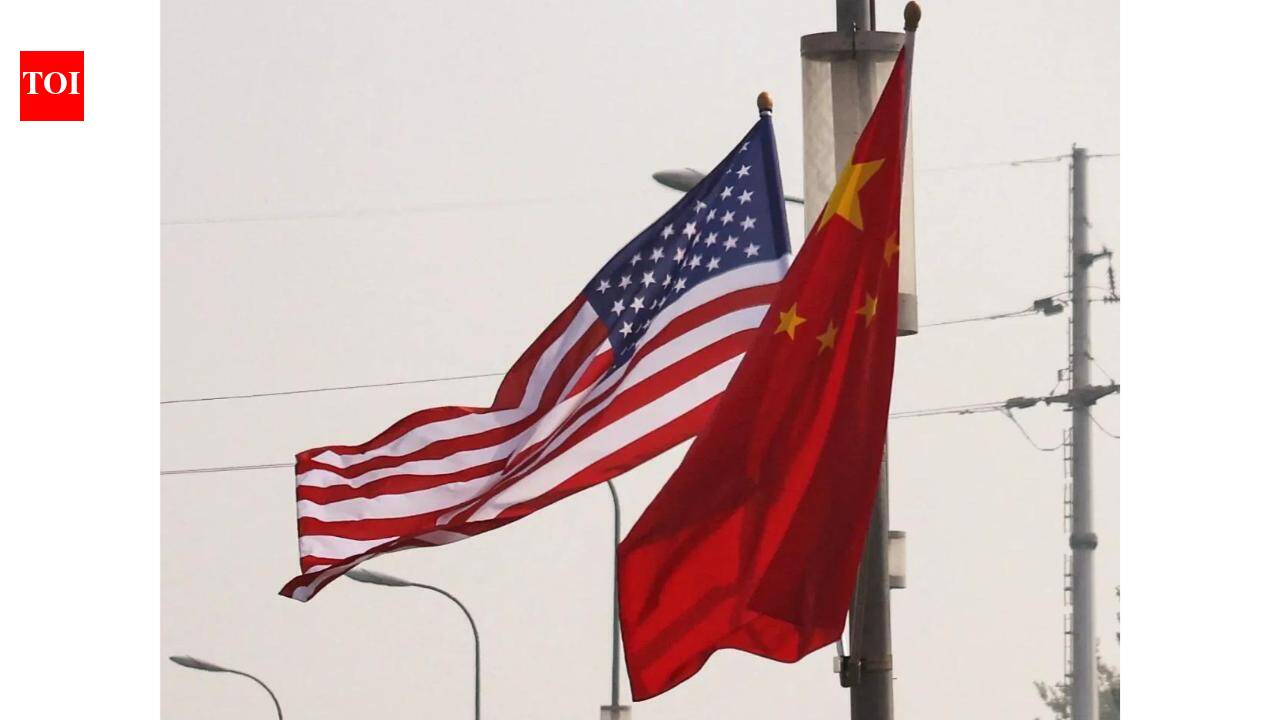
The U.S. is pressuring international partners to choose between its Pax Silica initiative and China’s AI framework, aiming to secure critical supply chains. This geopolitical shift coincides with domestic challenges, as the U.S. military works to manage internal safety risks regarding AI deployment.
The Geopolitical Stakes of the Global AI Arms Race
The landscape of modern national security is undergoing a seismic shift as the United States and China lock horns in a burgeoning artificial intelligence arms race. This competition transcends traditional military posturing, embedding itself into the core of cybersecurity, intelligence gathering, and the development of autonomous weapon systems. As the U.S. government accelerates the adoption of AI across its defense and intelligence sectors, it faces the dual challenge of maintaining a technological edge over Beijing while simultaneously struggling to establish robust safety protocols for these powerful systems.
The Pax Silica Initiative: A Strategy of Alignment
Central to the American strategy is the 'Pax Silica' initiative, a coalition launched to fortify the supply chains essential for AI development, including semiconductors, critical minerals, and advanced AI models. Washington is now moving to consolidate this coalition by issuing a clear ultimatum to its international partners: alignment with the U.S.-led framework is mutually exclusive with participation in China’s competing model. This 'no à la carte' policy is designed to prevent the strategic leakage of sensitive technologies and resources to Beijing.
Navigating the Diplomatic Tightrope
The U.S. State Department’s push, reflected in a draft letter addressed to 35 signatories, underscores the difficulty of maintaining influence in a multipolar world. Countries like Kazakhstan present a complex case study; while they are key sources of critical minerals and partners in the Pax Silica initiative, they have also engaged with China’s technological framework. Washington’s insistence that nations choose a single path highlights a broader trend of technological decoupling, where global supply chains are being bifurcated into competing spheres of influence.
Domestic Hurdles and Internal AI Safety
While the U.S. projects strength internationally, the domestic front reveals the complexity of integrating AI into military infrastructure. Recent actions by the U.S. Air Force—specifically the mandate for defense contractors to remove Anthropic’s AI products from weapons and control systems by September 1—illustrate the tension between rapid innovation and risk management. This move signifies an internal struggle to balance the integration of cutting-edge AI with the rigid safety requirements of national defense systems.
Broader Implications and Future Trends
The trajectory of this rivalry suggests that AI will increasingly be used as a tool of economic statecraft. By restricting access to its coalition, the U.S. aims to insulate its supply chains from Chinese influence, effectively forcing nations to weigh the benefits of American technological partnership against their existing ties to Beijing. As this competition intensifies, we can expect further pressure on non-aligned nations to solidify their alliances, likely leading to more fragmented global standards for AI safety and development.
Conclusion
The ongoing AI arms race is no longer just about who possesses the most sophisticated algorithms; it is about who can control the physical and digital infrastructure upon which those algorithms run. Whether the U.S. can successfully pressure its allies to shun Chinese frameworks while simultaneously refining its own internal AI safety standards will likely define the balance of global power for the coming decade.