Trump gives 'totally unacceptable' warning to Xi over China helping Iran
Source Entity
TRISHA MAHAJAN
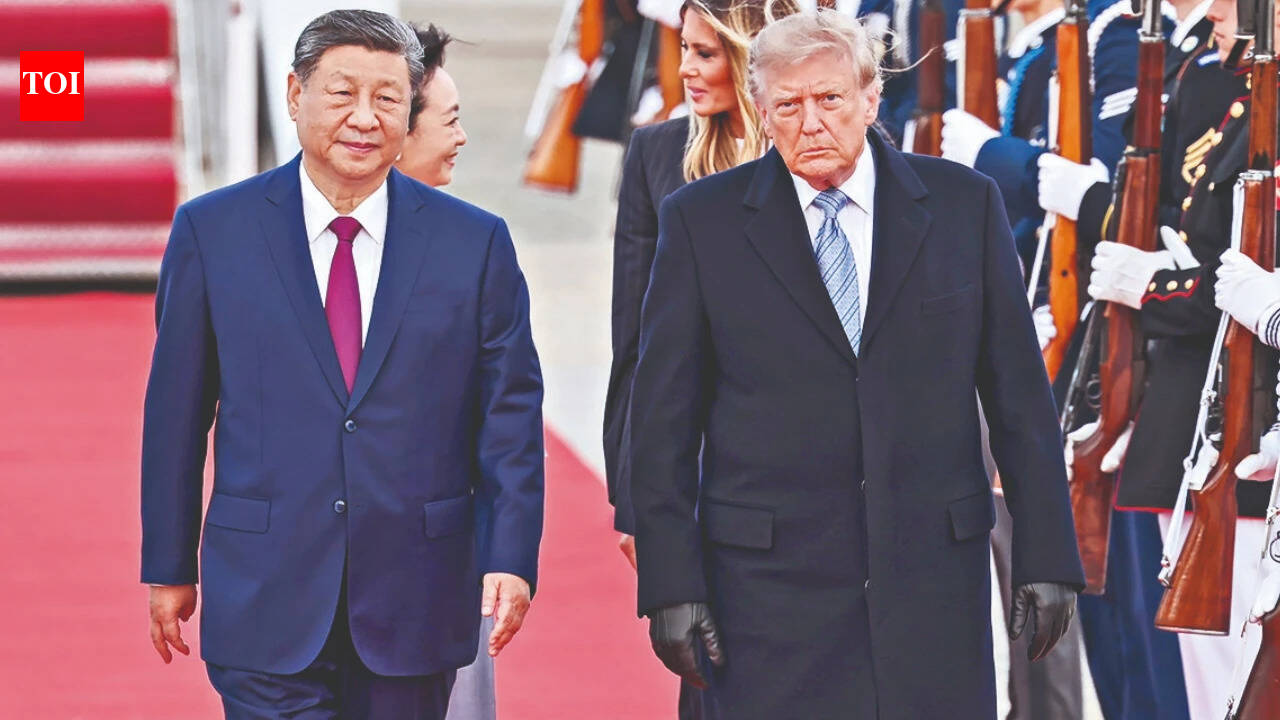
US-China relations are shifting as American businesses increase orders for Chinese goods ahead of a high-stakes summit. President Trump and President Xi Jinping held a state dinner featuring top tech leaders to discuss AI safety and diplomatic ties.
A New Chapter in US-China Diplomacy
The recent diplomatic engagement between U.S. President Donald Trump and Chinese President Xi Jinping marks a significant pivot in the geopolitical landscape. The summit, underscored by a high-profile state dinner in Washington, serves as a focal point for both economic recalibration and the urgent management of emerging technologies. By gathering the world's most influential figures, including leaders from Nvidia, SpaceX, Apple, and OpenAI, the administration signaled that the future of the global order is inextricably linked to the intersection of trade and artificial intelligence.
Economic Indicators and Market Positioning
Recent data from the China Beige Book, which surveyed 1,296 Chinese companies, reveals a surprising surge in export orders to the United States. This rebound, noted in late August and September, suggests that American corporations are actively hedging against potential volatility by front-loading supply chains. This shift in trade behavior indicates a strategic move by businesses to secure stability, bolstered by what the report describes as an improved relative tariff position for Chinese goods.
The Symbolism of Statecraft
Diplomatic tradition played a central role during the summit, exemplified by President Trump’s presentation of a bald eagle sculpture to President Xi. By characterizing the gift as an embodiment of the "free and soaring spirit of America," the gesture serves as a deliberate piece of political theater. Such exchanges, while seemingly ceremonial, are designed to set a tone of mutual respect and national pride, providing a softer backdrop to the rigorous negotiations occurring behind closed doors.
The AI Agenda: Geopolitics Meets Innovation
Perhaps the most critical outcome of the summit is the elevated focus on artificial intelligence. With existential risks associated with AI reaching a fever pitch, the presence of industry titans like Jensen Huang, Lisa Su, and Satya Nadella at the state dinner suggests that AI safety has become a primary pillar of the bilateral agenda. The inclusion of these leaders reflects a recognition that technology regulation is no longer merely a domestic policy issue but a global geopolitical necessity.
Future Trends and Global Implications
Looking ahead, the combination of recovering trade volumes and collaborative discourse on AI suggests a period of cautious stabilization. However, the reliance on private sector input to navigate these tensions implies that the future of U.S.-China relations will be increasingly dictated by the technological capabilities of private firms. As these two superpowers navigate the dual pressures of economic interdependency and existential technological competition, the outcomes of this summit will likely define the regulatory framework for global innovation for years to come.
Multiple Citing Sources