India, U.S. agreed on preferential market access for Indian goods in America: Goyal
Source Entity
India Latest News: Top National Headlines Today & Breaking News | The Hindu
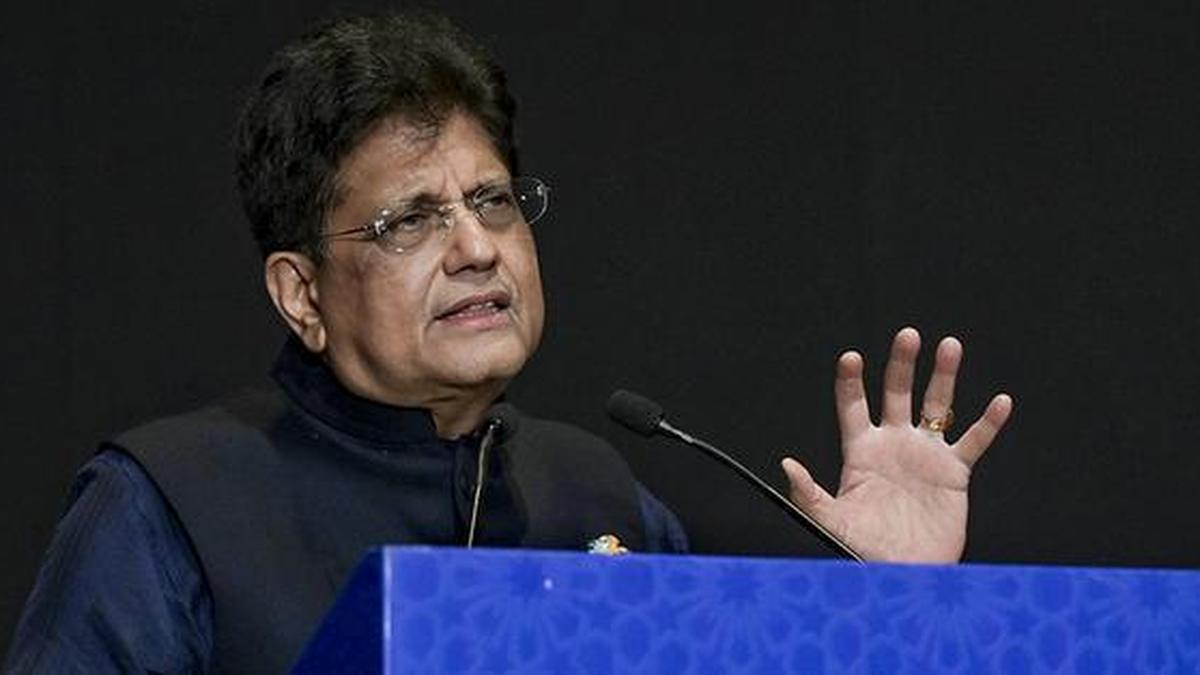
The U.S. has assured India of a comparative trade tariff advantage, marking a breakthrough for a potential interim deal by the end of the fiscal year. Meanwhile, AI expert Stuart Russell addressed the HT Leadership Summit, highlighting the rapid evolution and safety risks of AI systems.
U.S.-India Trade Breakthrough and the Evolving AI Landscape
A Strategic Shift in U.S.-India Trade Relations
In a development of significant geopolitical and economic importance, the United States has provided India with a formal assurance regarding a comparative tariff advantage over its competitors. This move serves as a cornerstone for the pending India-U.S. interim trade deal, which both nations are aiming to finalize by the conclusion of the current financial year. For Indian officials, this assurance was a non-negotiable prerequisite, directly aligning with the commitments outlined in the February 2026 joint statement between Prime Minister Narendra Modi and President Donald Trump.
The Importance of Comparative Advantage
For years, the Indian government has maintained a firm stance that any trade agreement must provide tangible economic benefits that distinguish India from its global manufacturing and export rivals. By securing this comparative advantage, India aims to bolster its domestic industries and integrate more deeply into the U.S. supply chain. This breakthrough reflects a maturing bilateral relationship where economic policy is increasingly being leveraged to support shared strategic objectives.
Security and Geopolitical Context
Beyond purely commercial interests, the dialogue between the two nations remains deeply rooted in security cooperation. Secretary of State Antony Blinken has underscored the necessity for the U.S. to respect India’s right to self-defense while emphasizing a collective zero-tolerance policy toward terrorism. This underscores that the ongoing trade negotiations do not exist in a vacuum; they are part of a broader, multi-faceted partnership that balances economic integration with regional security stability.
AI Governance and Corporate Influence
While trade deals dominate the fiscal agenda, the rapid advancement of artificial intelligence continues to dominate the discourse on future economic stability. At the HT Leadership Summit 2026, UC Berkeley professor and AI expert Stuart Russell highlighted the immense risks associated with the development of increasingly powerful AI systems. His commentary, which included a lighthearted anecdote about Nvidia CEO Jensen Huang, served to underscore the growing influence of major hardware providers in the AI ecosystem.
Assessing Risks in the Age of Intelligent Systems
Russell’s focus on the risks of AI reflects a growing global consensus that innovation must be tempered with rigorous safety protocols. As Nvidia’s role in powering these systems continues to grow, the 'snowballing' nature of the company’s influence has become a focal point for researchers and policymakers alike. The intersection of this technological surge and the push for favorable trade terms illustrates the dual challenge facing modern governments: fostering innovation while ensuring economic and national security.
Future Outlook and Conclusion
As both nations push toward the end-of-year deadline for the trade deal, the focus will remain on the technical implementation of the promised tariff structures. Simultaneously, the intellectual discourse provided by experts like Stuart Russell will continue to shape how global powers regulate the AI sector. The convergence of these two narratives—one focused on traditional trade diplomacy and the other on the existential challenges of frontier technology—defines the current state of the U.S.-India partnership as it navigates the complexities of the mid-2020s.
Multiple Citing Sources
Verification Required?