August Wrap: Loans return 0.93%, buoyed by rebound in software sector
Source Entity
Yahoo Finance
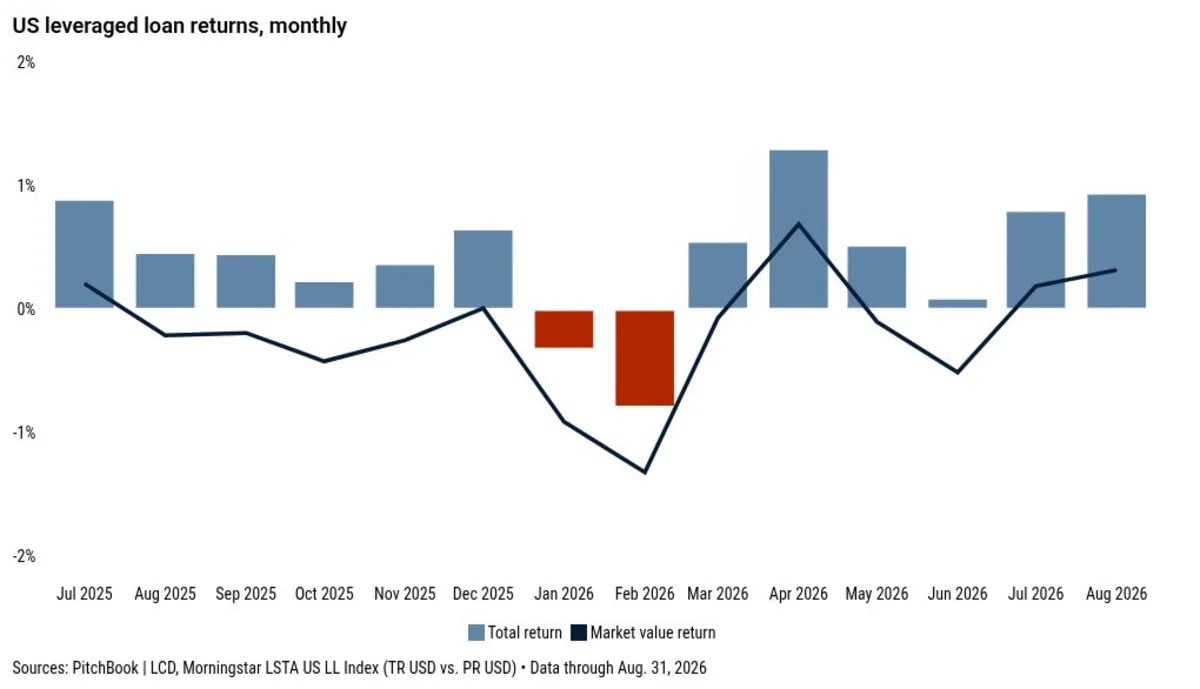
The US leveraged loan market showed resilience in August, with payment default rates dropping and software sector returns rebounding. While distress levels remain elevated, overall market performance exceeded July figures, signaling a cautious recovery.
Leveraged Loan Market Resilience: An August Overview
The US syndicated loan market demonstrated notable stability in August, as evidenced by the Morningstar LSTA US Leveraged Loan Index (LLI) performance. The payment default rate by amount fell to 0.87%, while the rate by issuer count dropped to 1.17%. This decline is largely attributed to the rolling off of two companies from the trailing 12-month window, providing a more favorable statistical outlook for the index.
The Role of Liability Management and Defaults
Despite the positive trend in default rates, the market remains active with risk management maneuvers. August saw two liability management exercises (LMEs) and one confirmed payment default. The dual-track default rate, which provides a more comprehensive view of issuer stress, remained nearly flat at 2.88%. This suggests that while outright payment defaults are decreasing, the underlying pressure on issuers persists, necessitating careful monitoring by investors.
Software Sector Recovery
A primary driver of the positive August performance was the rebound in the software sector, which returned 0.93% for the month. Performing software loan prices gained 127 basis points, reaching 87.73% of par. This surge was significant enough to pare the sector's year-to-date loss to 2.60%, helping it close the gap with the broader market. Software remains the only industry segment with a market-value weight above 1% that is currently in negative territory for the year.
Easing Distress Ratios
Market sentiment appears to be improving, as reflected by the 39-basis-point decrease in the distress ratio, which now stands at 6.50%. This easing is tied to a broad rebound in bid prices across the index. However, it is critical to note that distress remains elevated compared to historical averages. Currently, distressed or stressed paper—defined as loan issues priced below 90—accounts for 11.18% of the market.
Broader Implications and Future Trends
The overall index has gained 3.07% in 2026, indicating a consistent, albeit measured, growth trajectory. The divergence between the rebounding software sector and the persistent 11.18% share of distressed paper highlights a bifurcated market environment. Investors are likely to remain cautious, focusing on credit quality and the efficacy of ongoing liability management exercises as the primary tools for navigating these lingering distress levels.
Conclusion
In summary, the August data reveals a market in recovery, buoyed by specific sector strength and a reduction in immediate payment defaults. While the broader macroeconomic environment continues to exert pressure, the easing of the distress ratio suggests that market participants are regaining confidence. Moving forward, the industry's ability to manage the remaining 11.18% of distressed paper will be the defining factor in sustaining this positive momentum.