US draws a red line on PM Modi’s Iran meeting
Source Entity
CHIDANAND RAJGHATTA
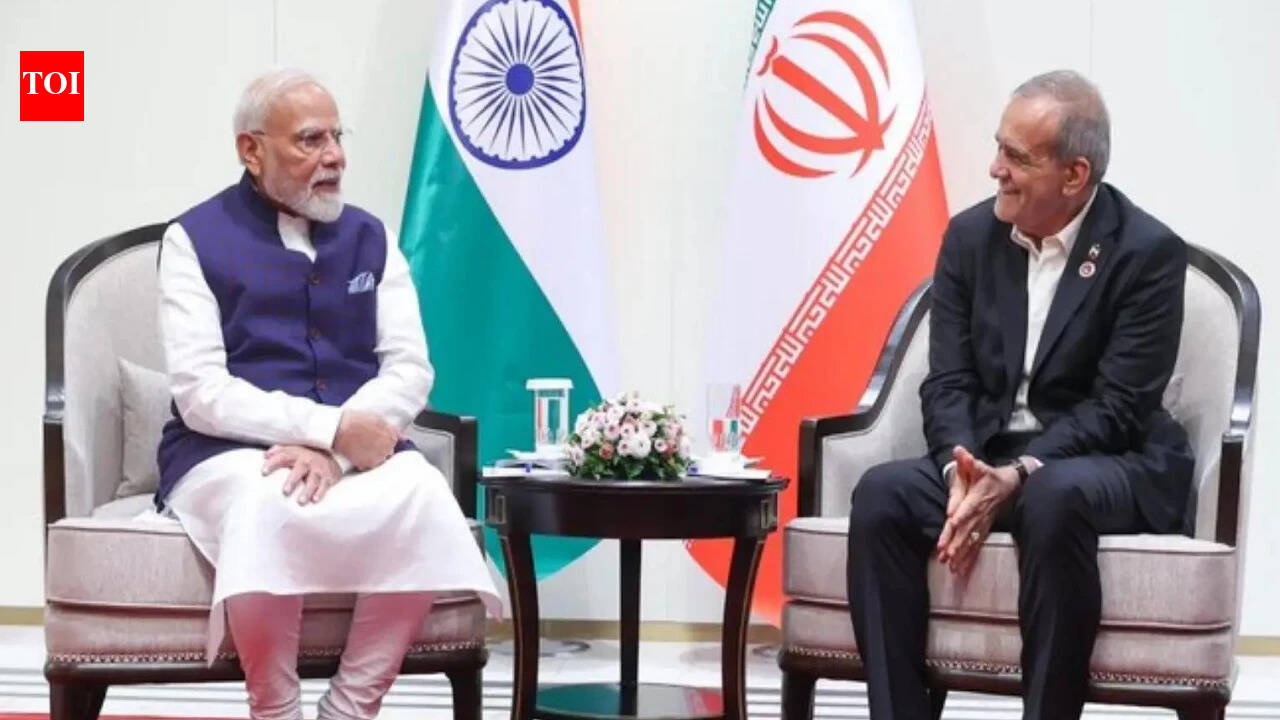
US Secretary of State Marco Rubio has issued a stern warning against countries facilitating Iran's economic recovery following Prime Minister Modi's meeting with President Pezeshkian. While acknowledging India's diplomatic autonomy, Washington emphasized that any assistance helping Tehran bypass sanctions could trigger secondary US penalties.
Diplomatic Tightrope: The US Reaction to India-Iran Engagement
Recent diplomatic interactions between Indian Prime Minister Narendra Modi and Iranian President Masoud Pezeshkian on the sidelines of the Shanghai Cooperation Organisation (SCO) summit in Bishkek have brought the complexities of India's multi-aligned foreign policy into sharp relief. While such summits are standard venues for bilateral discussions, the meeting has drawn immediate scrutiny from Washington, highlighting the persistent tension between India’s strategic autonomy and the United States' strict sanctions regime against Tehran.
The Washington Perspective: A Red Line on Sanctions
US Secretary of State Marco Rubio has characterized the US position as a 'red line' regarding Iran's economic activities. While Rubio acknowledged that there is no formal trade deal between India and Iran at this stage, his statements serve as a preemptive warning. The core of the US concern lies in the potential for any bilateral economic cooperation to provide Iran with the lifelines necessary to circumvent international sanctions. By framing the warning around the broader issue of helping Tehran generate revenue, the US is signaling that its patience for 'business as usual' with Iran is increasingly limited.
Balancing Strategic Interests
For New Delhi, the engagement with Tehran is rooted in long-standing interests, including maritime security and regional connectivity, such as the development of the Chabahar Port. These projects are viewed by India as essential for regional stability and economic integration. However, these objectives frequently collide with the US objective of isolating the Iranian regime. The meeting in Bishkek represents the delicate balance India must strike: maintaining a functional relationship with a key regional neighbor while navigating the geopolitical constraints imposed by its primary strategic partner, the United States.
The Mechanics of Secondary Sanctions
Secretary Rubio’s warning carries significant weight because it explicitly mentions the potential for secondary sanctions. These are not merely diplomatic rebukes but legal mechanisms designed to punish third-party countries that facilitate trade with entities under US embargoes. By issuing this public caution, the State Department is attempting to deter any movement toward a substantive trade deal that might be currently under discussion. This puts Indian policymakers in a position where they must weigh the tangible benefits of Iranian economic cooperation against the high cost of potentially violating US sanctions.
Future Trends in Indo-US Relations
As the West Asia conflict continues to evolve, the pressure on nations to pick sides will likely intensify. The US is increasingly utilizing its economic tools to pressure Iran, and it expects its strategic partners, including India, to align their economic policies accordingly. Future trends suggest that India will continue to assert its right to independent diplomacy, but the threshold for what the US considers 'acceptable' cooperation with Iran is narrowing. This friction is likely to become a recurring theme in high-level Indo-US dialogues, as both nations attempt to manage their divergent interests in the Middle East and Central Asia.
Conclusion
The meeting between Prime Minister Modi and President Pezeshkian serves as a reminder of the volatile intersection between regional necessity and global power politics. While the SCO summit provided a platform for dialogue, the subsequent reaction from Washington underscores that India's path toward regional influence is paved with geopolitical obstacles. Moving forward, New Delhi will need to employ sophisticated diplomatic maneuvering to ensure that its pursuit of maritime and trade security does not inadvertently trigger the very sanctions the United States has vowed to enforce.