The entire Vatican City fits into one-eighth of Central Park but it has 9 miles of museums, the biggest church ever built and its own football team
Source Entity
Latest News: Todays Latest News Headlines from India & World | Hindustan Times | Hindustan Times
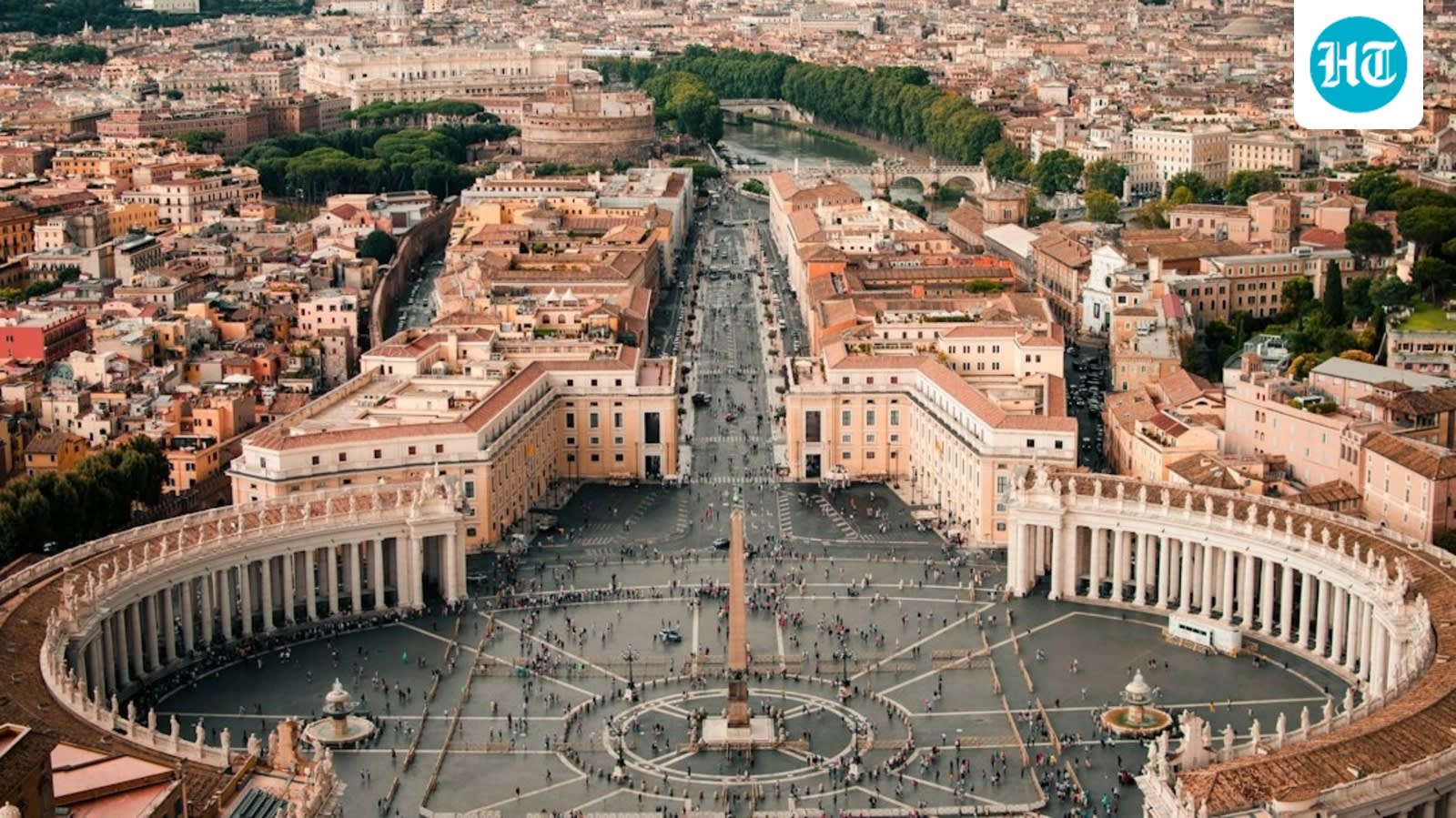
Vatican City is a unique sovereign state that occupies only 100 acres within Rome while maintaining its own distinct national institutions. Its citizenship is uniquely merit-based rather than birth-based, and it holds the distinction of being the only country that is entirely a UNESCO World Heritage Site.
The Sovereign Paradox: An Analysis of Vatican City
Vatican City represents one of the most unique geopolitical anomalies in the modern world. Encircled entirely by the city of Rome, this tiny sovereign state spans approximately 100 acres—a footprint so compact that it fits into just one-eighth of New York City’s Central Park. Despite its diminutive physical size, the Vatican exerts profound global influence, serving as the spiritual center for over a billion Catholics and maintaining a status as the only entire nation designated as a UNESCO World Heritage Site.
Institutional Independence and Infrastructure
Beyond its spiritual significance, the Vatican functions as a fully realized state. It maintains its own national symbols, including a distinct flag, an anthem, and a bespoke postage system. The infrastructure is equally dense, housing nine miles of museum galleries and St. Peter’s Basilica, which remains the largest church ever constructed. Interestingly, the state even supports a national football team, highlighting its effort to maintain the trappings of a traditional nation-state within its two-mile border.
The Unique Nature of Citizenship
Perhaps the most unusual aspect of the Vatican is its approach to citizenship. Unlike traditional nations where citizenship is acquired through birth or naturalization processes tied to residency, Vatican citizenship is strictly functional. One cannot be born a citizen of the Holy See; rather, citizenship is granted solely through appointment to specific roles within the administration of the Holy See. This creates a rare legal framework where citizenship is tied entirely to employment, and the loss of that employment results in an automatic reversion to Italian citizenship.
The Statistical Contradiction
Data regarding the Vatican often presents paradoxical findings. For instance, despite its small population and sacred nature, it has been cited as having the highest crime rate in the world. This is primarily attributed to high volumes of petty theft occurring within St. Peter’s Square, where the massive influx of tourists creates a target-rich environment for opportunistic crime. This highlights the friction between the Vatican's role as a global pilgrimage site and its status as a sovereign entity.
Future Implications and Global Status
As the world becomes increasingly interconnected, the Vatican remains a study in traditional sovereignty versus modern utility. Its reliance on surrounding Italian infrastructure while maintaining strict, appointment-based citizenship ensures that it remains an exclusive, administrative-led state. Future trends will likely continue to center on how the Holy See balances its role as a monumental historical repository with the logistical challenges of managing a high-density, high-tourism environment in the heart of a modern European capital.
Verification Required?