Vijay government’s Rs 1.73 lakh crore investment promise and the test of delivery
Source Entity
Arun Janardhanan
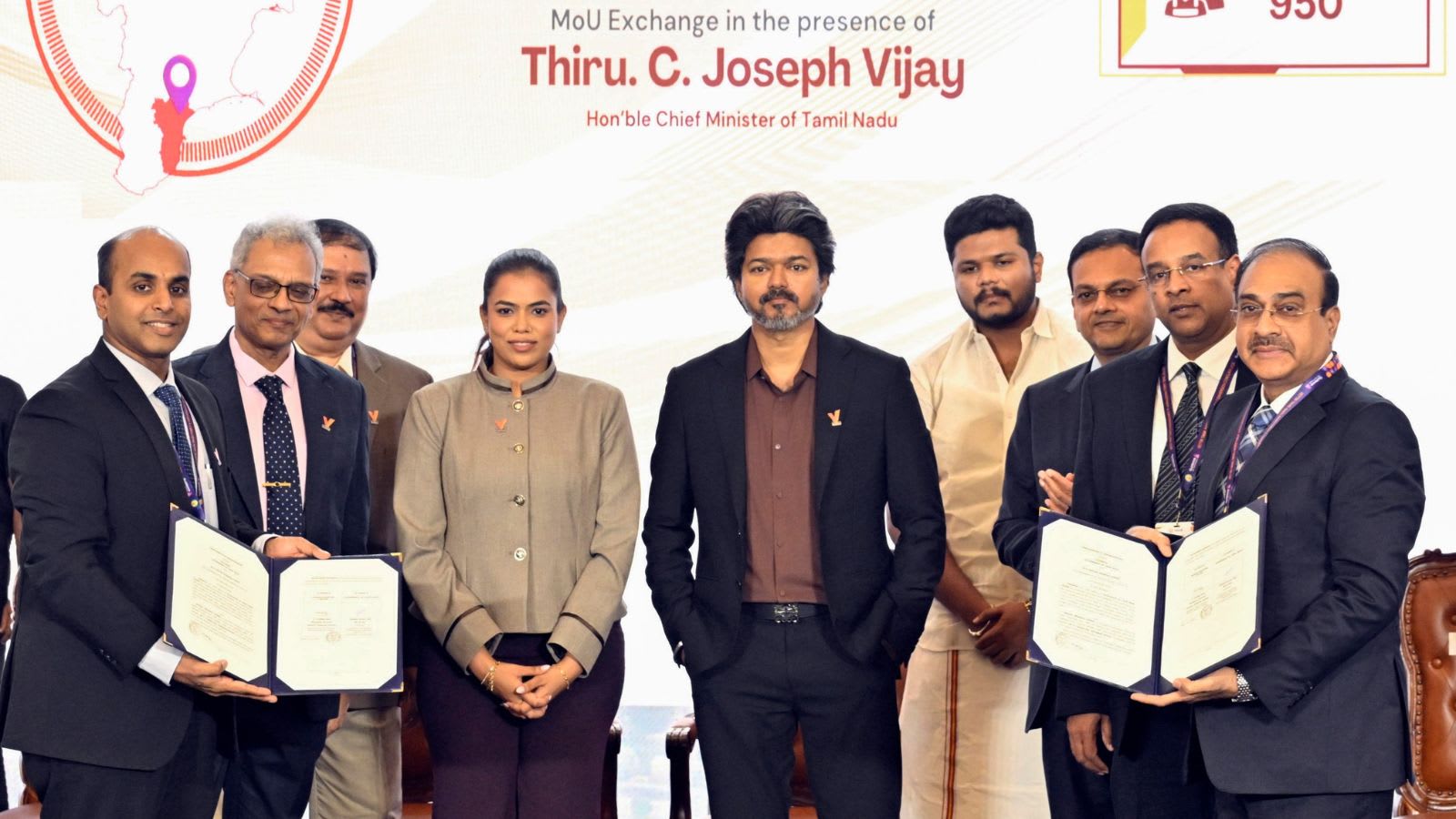
The C Joseph Vijay-led Tamil Nadu government has signed 78 MoUs worth Rs 58,214 crore, aiming to move beyond political rhetoric toward tangible industrial delivery. Industries Minister S Keerthana emphasized a shift from future-tense promises to concrete post-conclave execution.
Bridging the Gap: The TVK Government’s Economic Strategy
In a significant move marking its 200th day in power, the Tamilaga Vettri Kazhagam (TVK) government, led by C Joseph Vijay, has signaled a departure from traditional political rhetoric regarding industrial investment. By signing 78 memoranda of understanding (MoUs) totaling Rs 58,214 crore, the administration is attempting to anchor its economic agenda in measurable performance rather than speculative future-tense promises.
The 'Grammatical Convenience' of Politics
Industries Minister S Keerthana provided a candid critique of the political status quo, noting that investment conclaves have historically relied on the 'future tense' to generate positive headlines without immediate accountability. By acknowledging that such events often serve as convenient stage-setting for politicians, the current administration is attempting to rebrand the state’s approach to industrial growth. This shift suggests a deliberate effort to manage public expectations and establish a culture of follow-through.
Accountability Beyond the Cameras
Central to the Minister’s message at the Vettri Tamil Nadu Investment and Conversion Conclave is the concept of what happens after the media spotlight fades. The administration’s focus on the 'post-camera' phase of industrial development indicates a shift toward bureaucratic oversight and project monitoring. By prioritizing the actual realization of factory construction and job creation, the government is attempting to build credibility with the industrial sector and the electorate alike.
The Challenge of Delivery
While the Rs 1.73 lakh crore investment promise represents a massive ambition for the state, the current signing of Rs 58,214 crore in MoUs serves as the first tangible test of the government's delivery mechanism. Successfully converting these MoUs into operational infrastructure will require seamless coordination between state agencies, land acquisition departments, and the private sector. The 200-day mark serves as a critical juncture for the TVK administration to prove that it can navigate the complexities of industrial governance.
Future Trends and Economic Implications
If the Vijay-led government can maintain this focus on execution, it may set a new standard for industrial policy in Tamil Nadu. The long-term success of this initiative will likely be measured by the speed at which these 78 MoUs transition from paper agreements to active industrial units. Future trends will depend on whether the state can sustain this momentum and whether the promised employment figures materialize, thereby securing the administration's political and economic legacy.