Viking 1 at 50: Why scientists still debate whether Nasa Mars lander found signs of life
Source Entity
The Indian Express
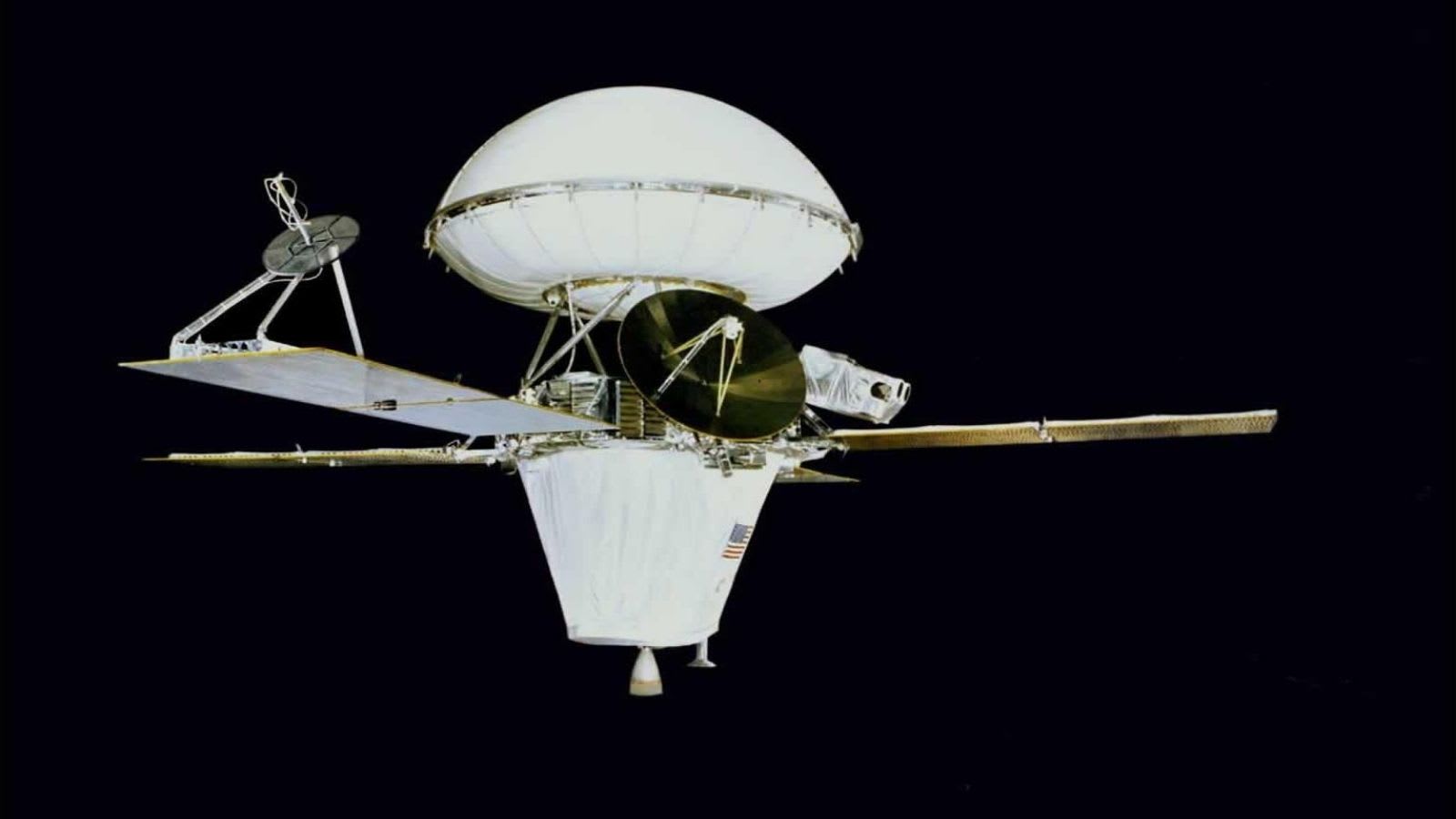
Fifty years after the historic Viking 1 mission to Mars, researchers remain divided over whether its biological experiments actually detected signs of microbial life. While officially inconclusive, the debate continues to shape modern planetary exploration strategies.
The Legacy of Viking 1: A Half-Century of Martian Mystery
Fifty years ago, on July 20, 1976, NASA’s Viking 1 lander etched its name into the history books by becoming the first spacecraft to successfully touch down on the Martian surface. Landing in the sprawling plains of Chryse Planitia, it was joined shortly thereafter by Viking 2 at Utopia Planitia. These twin missions represented a monumental leap in human engineering and our quest to understand our place in the cosmos, marking the first time humanity conducted in-situ biological experiments on another planet.
The Search for Life: Experiments in the Red Dust
The core objective of the Viking program was not merely to survey the geology of Mars, but to actively search for life. The landers were equipped with sophisticated biological experiments designed to analyze soil samples for metabolic signatures. These experiments—including the Gas Exchange, Labeled Release, and Pyrolytic Release experiments—were intended to provide definitive proof of microbial existence. For decades, the consensus was that these tests yielded no conclusive evidence of organic life, yet the complexity of the data has fueled a persistent scientific debate that refuses to fade.
Why the Debate Persists
The ambiguity surrounding the Viking results stems from the unique nature of the data collected. While official NASA reports generally concluded that the mission found no definitive signs of life, a persistent group of scientists argues that the results were misinterpreted. They point to specific anomalous readings that suggested metabolic activity, which were later dismissed by some as potential chemical reactions with the exotic Martian soil rather than biological processes. This fundamental disagreement highlights the immense difficulty of identifying life on a planet with a surface chemistry vastly different from Earth's.
Scientific Implications for Modern Astrobiology
The enduring mystery of the Viking experiments has significantly influenced how modern space agencies design subsequent missions. Because the Viking results were so difficult to interpret, the astrobiological community realized that detecting life requires a more holistic approach. Modern rovers, such as Curiosity and Perseverance, prioritize the search for 'biosignatures'—chemical patterns and geological formations that indicate past or present habitability—rather than relying solely on immediate metabolic detection.
Looking Toward the Future
As we celebrate the 50th anniversary of this historic mission, the Viking 1 lander remains a poignant symbol of the challenges inherent in space exploration. The debate over its findings serves as a reminder that science is an iterative process, where early ambiguity often paves the way for deeper, more sophisticated inquiry. Future missions, including planned sample-return efforts, will likely look back at the data from 1976 with new tools, potentially finally putting the question of Viking's discovery to rest.
Conclusion: A Foundation for Discovery
Regardless of whether the Viking missions found life, their contribution to planetary science is undeniable. They provided the first comprehensive look at the Martian surface and established the rigorous protocols we use today to explore the solar system. The ongoing debate surrounding the mission is not a sign of failure, but rather a testament to the high standard of proof required in the search for extraterrestrial life, ensuring that when humanity finally confirms life on another world, the evidence will be beyond reproach.