External intelligence agency and Intelligence Bureau form the first arm of offence and defence, says former RAW chief
Source Entity
India Latest News: Top National Headlines Today & Breaking News | The Hindu
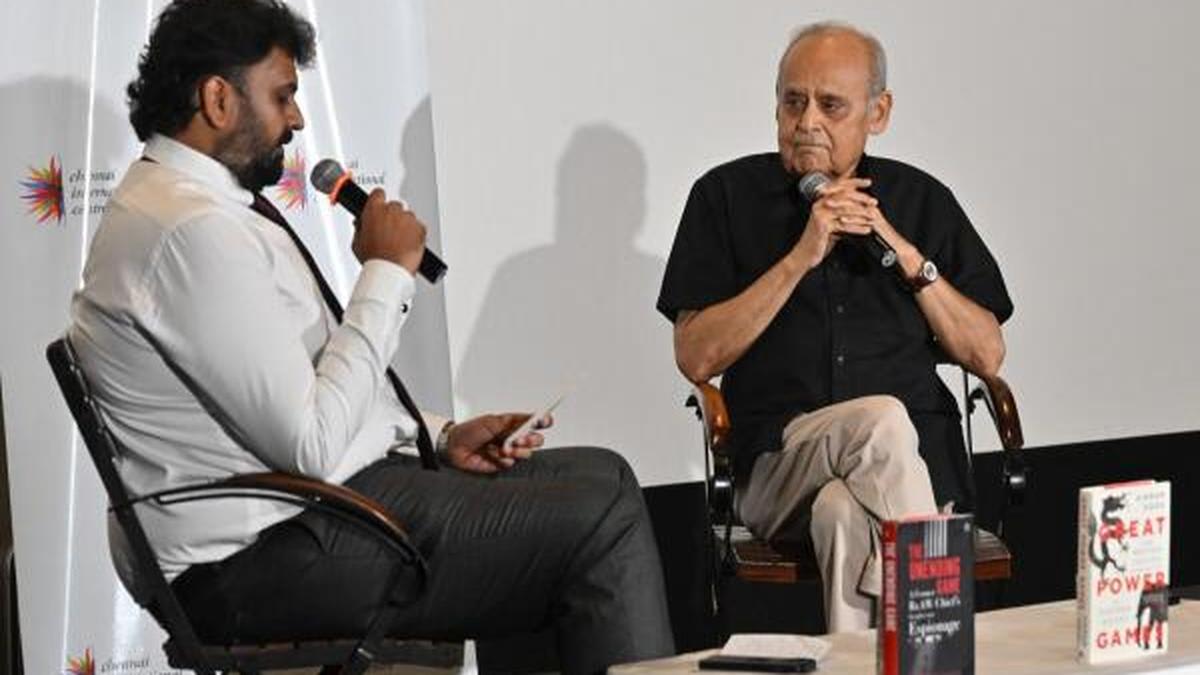
Former RAW Chief Vikram Sood emphasized the critical necessity for synergy between India's external and internal intelligence agencies. He highlighted that these organizations serve as the primary pillars of the nation's offensive and defensive capabilities in an increasingly volatile geopolitical landscape.
The Strategic Imperative of Intelligence Synergy
Former Research and Analysis Wing (RAW) Secretary Vikram Sood recently articulated a foundational doctrine for Indian national security, emphasizing the inextricable link between the country's external intelligence apparatus and the Intelligence Bureau (IB). Speaking at an event in Chennai hosted by the Chennai International Centre and the Deccan Centre for International Affairs, Sood categorized these agencies as the 'first arm of offence' and the 'first arm of defence,' respectively.
Defining the Roles of Offence and Defence
The distinction drawn by Sood between external intelligence—tasked with projecting influence and gathering critical data beyond national borders—and the IB—focused on the internal security architecture—is vital for understanding the mechanics of modern statecraft. In the context of 'Covert Wars and Great Power Games,' the external agency acts as the proactive mechanism to identify and mitigate threats before they reach Indian soil, while the IB serves as the reactive and preventative shield against domestic subversion and internal threats.
The Challenge of Rapid Geopolitical Shifts
Sood highlighted that the speed at which global events unfold creates an unprecedented burden on intelligence agencies. As the world becomes increasingly interconnected and volatile, the 'quality' and 'depth' of information required to make sound policy decisions have expanded exponentially. The modern intelligence officer must now navigate a landscape where the velocity of information movement often outpaces the traditional cycle of analysis and response.
The Threat of Disinformation
Beyond traditional espionage, the modern intelligence landscape is heavily influenced by the weaponization of information. Sood specifically noted the prevalence of disinformation as a significant challenge being 'thrown' at policymakers. In an era of digital information warfare, the ability of intelligence agencies to distinguish between verified intelligence and manufactured narratives is no longer an auxiliary task but a central component of national security strategy.
Future Trends and Collaborative Integration
Looking forward, the necessity for a seamless flow of intelligence between internal and external agencies will only intensify. As geopolitical boundaries blur, the silos that historically separated external intelligence from domestic monitoring must give way to a more integrated approach. The future of Indian security will likely depend on the institutional ability to synthesize diverse data streams, ensuring that the 'first arm' of offence and the 'first arm' of defence operate as a unified system rather than disparate entities.
Verification Required?