Weball: Play Katamari on Websites
Source Entity
Hacker News
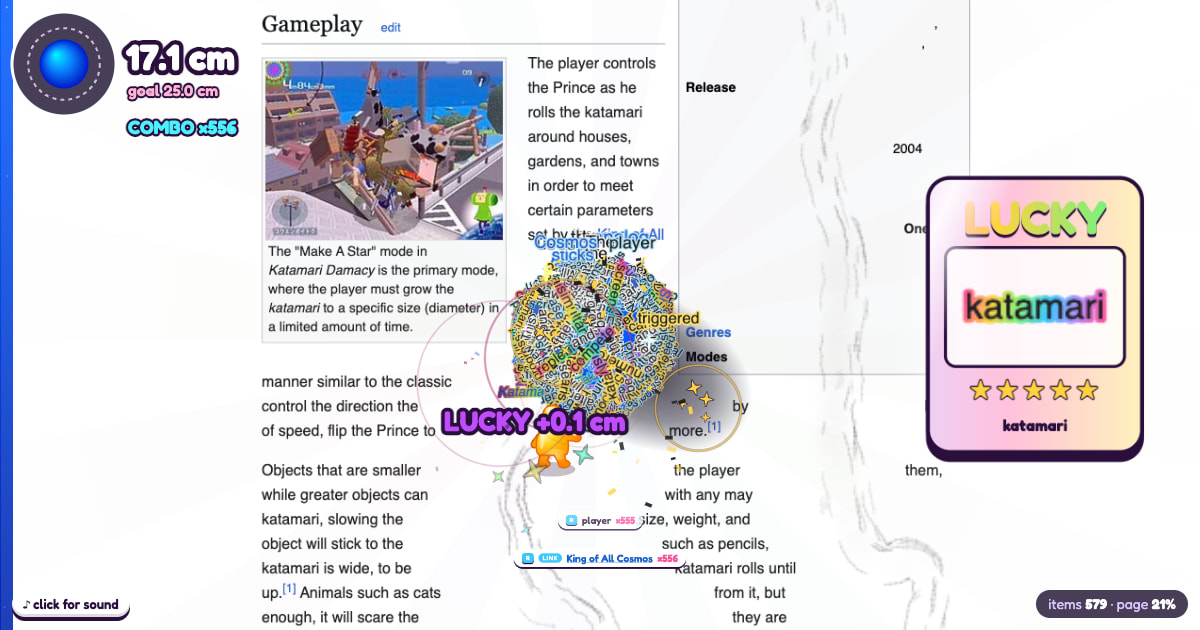
Weball is an interactive browser-based tool that allows users to play a Katamari-style game directly on any website. The project functions as a browser extension or script that turns web elements into collectible objects.
The Emergence of Weball: Interactive Browser Gaming
Weball has introduced a novel way to interact with the digital landscape by transforming standard web pages into playgrounds. Inspired by the cult-classic game Katamari Damacy, the tool allows users to roll a sphere across any website, collecting elements as they move. This project bridges the gap between passive content consumption and active, playful engagement, effectively turning the internet into a giant, interactive level.
How Weball Functions
The core mechanic of Weball is its ability to treat DOM elements—such as images, text boxes, and navigation bars—as collectible entities. As the player rolls the Katamari, the script dynamically manipulates the website's layout, 'picking up' these elements to increase the size of the sphere. This technical feat relies on injecting code that overrides standard page behavior, essentially turning a static document into a physics-based simulation.
Gamifying the User Experience
The development of Weball follows a broader trend in web development that prioritizes user interactivity and 'delight' as a core design principle. By gamifying the browsing experience, developers are exploring how users interact with information in non-traditional ways. The mention of unlocking levels suggests a progression system, which incentivizes users to test the game across various websites to see how different site structures affect the gameplay experience.
Technical Implications and Limitations
While innovative, tools like Weball face significant technical hurdles. Rendering interactive, physics-based elements on top of complex, dynamic websites can lead to performance issues or layout breakage. Because modern websites are built with complex CSS and JavaScript frameworks, the 'kicking' or 'rolling' effect must be carefully calibrated to ensure it doesn't crash the host page, demonstrating a high level of front-end engineering prowess by the creators.
Future Trends in Web Interaction
As browser capabilities continue to expand, we are likely to see more 'overlay' applications that change how we interface with the internet. Weball represents a playful intersection of web scraping, DOM manipulation, and game design. If this project gains traction, it could influence future design patterns where users can toggle 'play modes' on their favorite platforms, fundamentally changing the relationship between the user and the website.
Conclusion
Weball is a testament to the creative potential of browser-based technologies. By allowing users to roll a Katamari through their daily browsing, it offers a refreshing, albeit chaotic, perspective on the digital world. Whether viewed as a simple toy or a sophisticated technical experiment, it highlights the ongoing evolution of the browser from a document viewer into a platform for immersive, interactive experiences.