Software squeezes more data out of Webb Telescope for imaging exoplanets
Source Entity
John Timmer
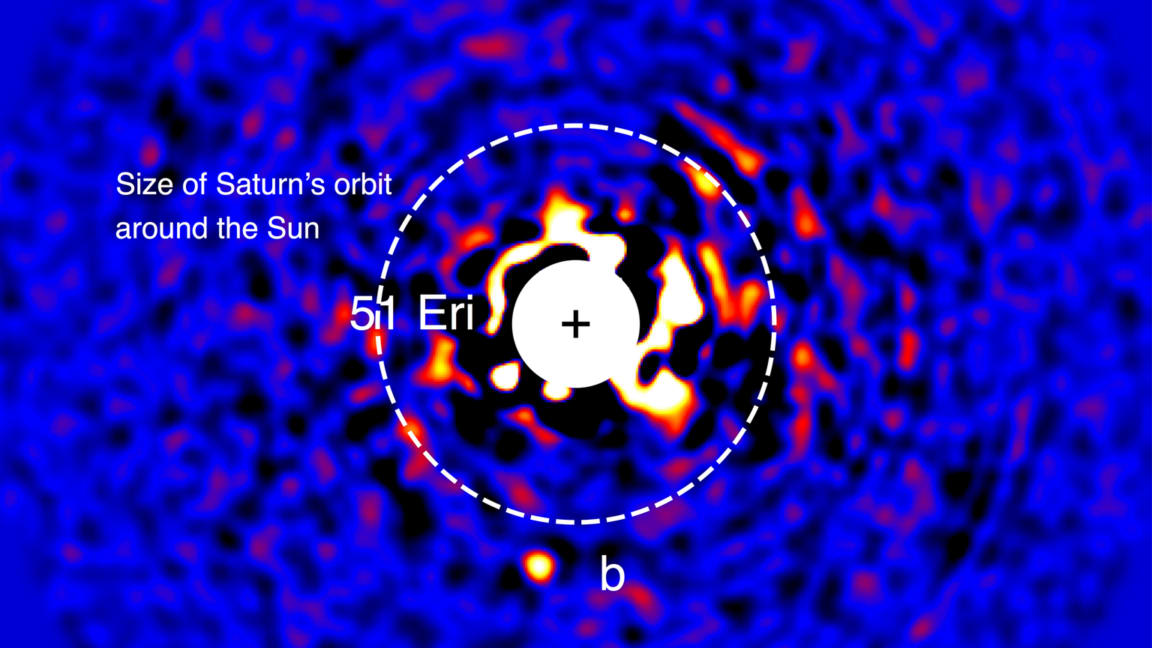
Researchers have developed new software to enhance the James Webb Space Telescope's ability to image exoplanets. By optimizing a physical model of the telescope, the software effectively reduces noise caused by configuration variations, improving data clarity.
Advancing Exoplanetary Observation with JWST
The James Webb Space Telescope (JWST) represents the pinnacle of modern space-based observation, yet the quest to characterize exoplanets remains fraught with technical obstacles. As the catalog of confirmed exoplanets continues to expand, the scientific community is shifting its focus from mere detection to detailed atmospheric and environmental analysis. This transition requires capturing remarkably faint light signals from planets that are often obscured by the overwhelming glare of their host stars.
The Challenge of Stellar Glare and Noise
Direct imaging and transmission spectroscopy are the primary methods for studying exoplanets. However, these techniques face a significant hurdle: the extreme brightness contrast between the host star and the planet. While coronagraphs have long been utilized to mask starlight, they are not perfect. Subtle, real-time variations in the telescope’s configuration and precise pointing between observations introduce noise that can swamp the faint signature of an orbiting world.
Software as a Precision Tool
To overcome these hardware-imposed limits, researchers have engineered a novel software package designed to optimize a physical model of the telescope. By accurately modeling the nuances of the telescope's state during observation, this software acts as a corrective filter. It effectively isolates and reduces the noise generated by mechanical and optical fluctuations, allowing for a clearer interpretation of the raw data collected by the telescope's sensors.
Implications for Atmospheric Research
This software innovation is a critical step toward characterizing the atmospheres of distant worlds. By improving the signal-to-noise ratio in direct imaging, scientists are better positioned to detect chemical signatures, such as water vapor, methane, or carbon dioxide, in exoplanetary atmospheres. These chemical fingerprints are essential for determining whether these planets possess conditions that could potentially support life.
Future Trends in Space Imaging
As we look toward the future of astronomical instrumentation, the integration of advanced software models with hardware will likely become standard. The ability to 'sift' through noise using computational models means that existing hardware can be pushed beyond its original design specifications. This software-centric approach effectively increases the scientific return on investment for the JWST, extending its operational utility and deepening our understanding of the cosmos.