Trump returns to White House Correspondents' dinner months after shooting forced delay
Source Entity
TOI WORLD DESK
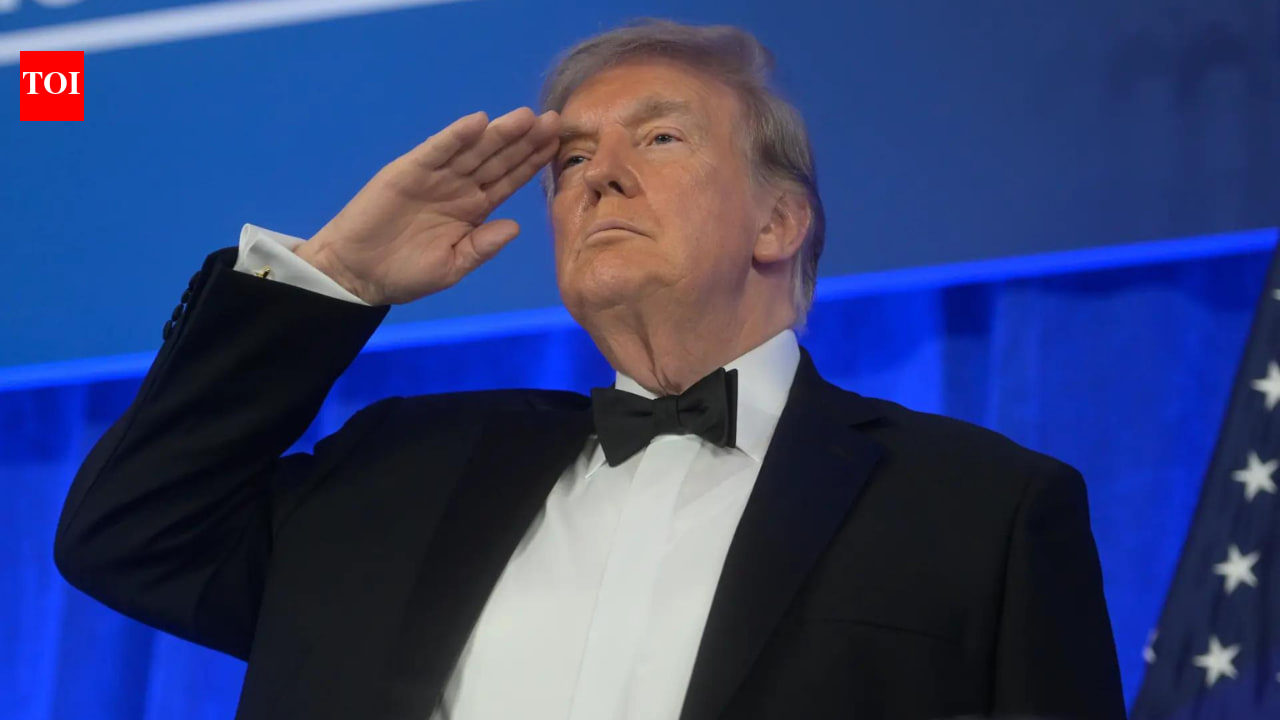
The White House Correspondents' Dinner was held at the Waldorf Astoria following a three-month delay caused by an attempted assassination in April. Despite the event's goal of celebrating press freedom, President Trump utilized the platform to criticize major news outlets.
A Rescheduled Tradition Amidst Security Concerns
The White House Correspondents' Association (WHCA) dinner, a staple of Washington D.C.'s political and social calendar, took place on July 24 at the Waldorf Astoria. This iteration of the event was uniquely significant, as it occurred exactly three months after the original April gathering was abruptly canceled due to a security breach involving an attempted assassination of President Donald Trump. The relocation of the venue from the traditional Washington Hilton to the Waldorf Astoria on Pennsylvania Avenue underscores the profound impact that the earlier violence had on the logistics and planning of the evening.
Overcoming the Shadow of Violence
The atmosphere at the event was defined by a tension between the celebration of democratic ideals and the lingering trauma of the April incident. WHCA President Weijia Jiang of CBS News explicitly addressed this during her remarks, stating a commitment to refusing to allow an act of violence to dictate the narrative of the press corps. The decision to reschedule the event was framed as an act of institutional resilience, ensuring that the scholarships and honors traditionally associated with the dinner could still be awarded despite the disruption.
The President’s Rhetorical Confrontation
Despite the underlying theme of press freedom, the evening was marked by a sharp departure from the traditional lighthearted roast. President Trump, who attended the event, used the platform to re-engage in his ongoing conflict with mainstream media. By addressing journalists from organizations he has previously sued or publicly sparred with—including The New York Times, CNN, and the Wall Street Journal—the President maintained his confrontational stance. He specifically accused attendees of suffering from "Trump Derangement Syndrome" and reiterated his "fake news" narrative.
The Broader Implications for Press Relations
This event serves as a microcosm of the current state of U.S. political discourse. The fact that the President attended an event designed to honor the very institutions he frequently labels as "enemies of the people" highlights the persistent, albeit strained, relationship between the executive branch and the press. The event functioned less as a rapprochement and more as an extension of the ongoing culture wars, where the proximity of the President and the press corps did not lead to a thawing of relations but rather served as a stage for further ideological conflict.
Historical Context and Future Trends
Historically, the WHCA dinner has evolved from a relatively modest gathering into a high-profile media spectacle. The integration of heightened security measures at the Waldorf Astoria marks a permanent shift in how such events will be managed moving forward. As the media landscape continues to fragment, the reliance on such traditional events to bridge the gap between the government and the fourth estate appears increasingly fragile. The events of July 24 suggest that while the tradition of the dinner remains, the expectation of a unified or celebratory atmosphere has been replaced by the reality of deep-seated political polarization.
Conclusion
The rescheduled dinner was a testament to the persistence of the WHCA, yet it served as a vivid reminder of the volatility currently characterizing American politics. By successfully moving the event to a new venue and ensuring its completion, the association proved its commitment to the journalistic community. However, the President’s pointed remarks ensure that the dinner will be remembered not for its intended spirit of unity, but as another chapter in the contentious relationship between the current administration and the press.
Multiple Citing Sources