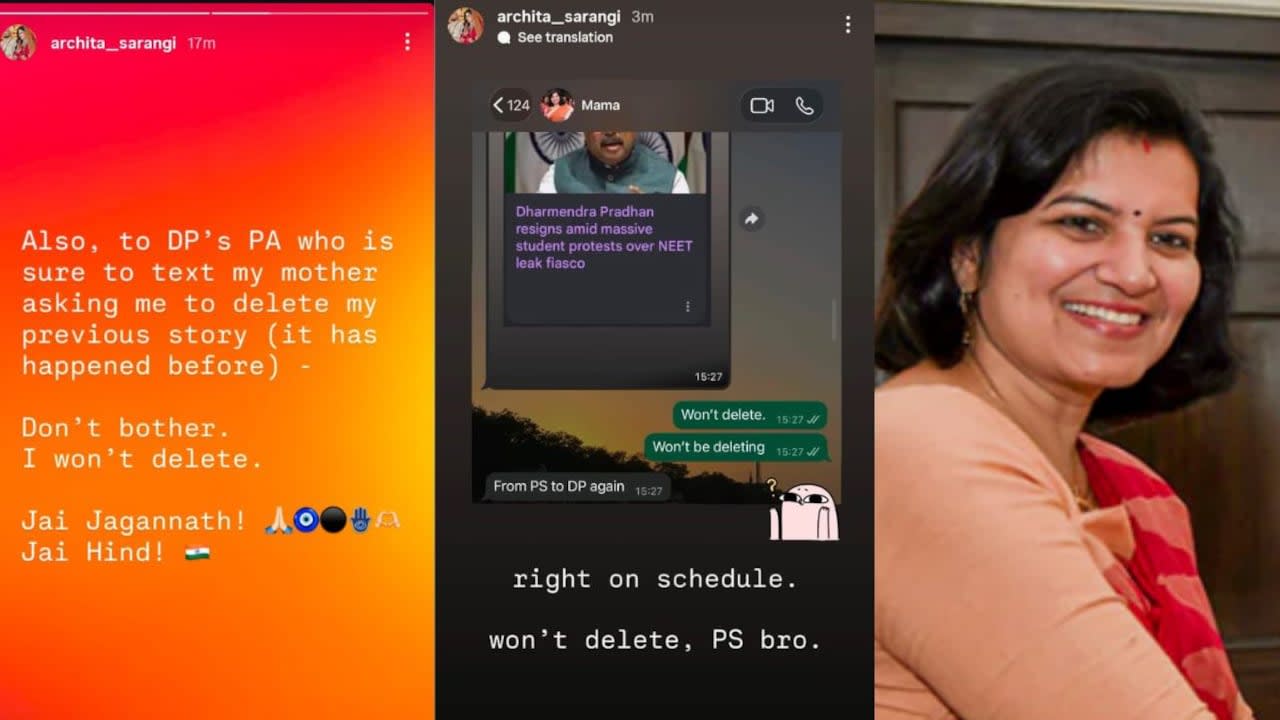
"Won't Delete": BJP MP's Daughter's Viral Post On Dharmendra Pradhan
Source Entity
NDTV News Search Records Found 1000
Student organizations are intensifying protests across India against alleged examination malpractices and the National Testing Agency. Concurrently, activists like Sonam Wangchuk continue to draw national attention through hunger strikes, highlighting growing public dissatisfaction.
The Growing Tide of Student Dissent in India
Recent developments across India indicate a mounting wave of public frustration regarding the integrity of national examination systems. The protests staged by the Naujawan Bharat Sabha (NBS) and the Disha Students’ Organisation near the GVMC office serve as a visceral reaction to alleged paper leaks and systemic examination scams. By echoing the grievances of students who previously gathered at Jantar Mantar, these organizations are signaling that the agitation is no longer confined to the national capital but is evolving into a decentralized, nationwide movement demanding administrative accountability.
The Demand for Ministerial Accountability
The discourse surrounding these protests has moved beyond mere procedural complaints, directly targeting the leadership of the Union Ministry of Education. The call by Disha Students’ Organisation member Avinash for the resignation of Union Education Minister Dharmendra Pradhan underscores a deepening crisis of confidence. This demand is not merely symbolic; it represents a fundamental challenge to the current oversight mechanisms governing India's high-stakes competitive examinations, placing the Minister at the center of a volatile political storm.
Structural Critiques of the NTA
The National Testing Agency (NTA), the body responsible for conducting major entrance exams, has become the primary target of this dissent. Naujawan Bharat Sabha member Sujan’s explicit demand for the abolition of the NTA reflects a widespread belief among protesters that the current institutional framework is incapable of ensuring fair play. By calling for the dismantling of the agency, these student groups are advocating for a total overhaul of the examination infrastructure, suggesting that superficial reforms are no longer viewed as sufficient by the affected student body.
Solidarity and the Role of Activism
Beyond student organizations, the broader landscape of Indian activism is witnessing a convergence of grievances. The call for Dharmendra Pradhan to engage directly with protesters at Jantar Mantar, as voiced by CJP founder Abhijeet Dipke, highlights the growing demand for transparency and direct dialogue between the government and the public. This push for accountability is mirrored in the actions of figures like Sonam Wangchuk, whose recent hunger strikes demonstrate the use of personal sacrifice as a tool for highlighting systemic policy concerns and government inaction.
Future Implications and Political Pressure
As these movements gain momentum, the government faces increasing pressure to address the underlying causes of student unrest. The intersection of local protests with high-profile national activism suggests a period of prolonged instability for the Ministry of Education. If the government fails to satisfy demands for institutional reform and accountability, the trend of recurring protests is likely to persist, further complicating the political landscape and potentially forcing a restructuring of how national examinations are administered in the future.
Multiple Citing Sources
Verification Required?