Why your local LLM feels dumber than it is
Source Entity
Hacker News
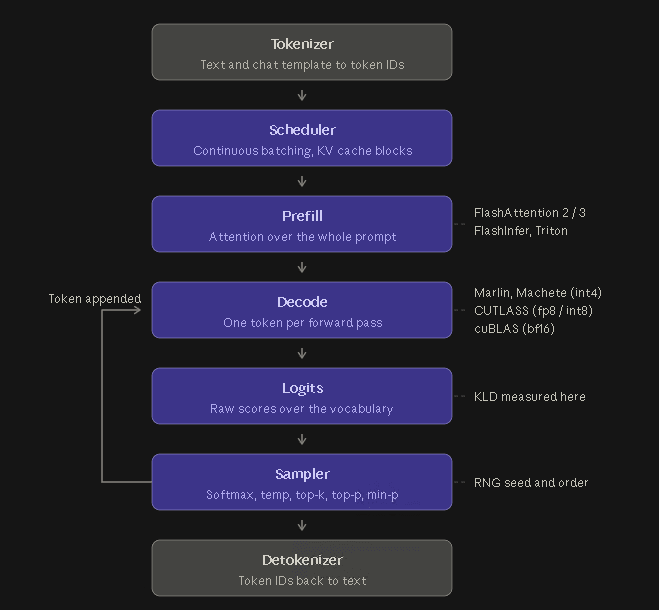
Local Large Language Model performance often suffers due to quantization and implementation discrepancies compared to original developer benchmarks. This analysis explores how hardware and software constraints impact the perceived intelligence of models running on personal devices.
The Gap Between Benchmark Claims and Local Reality
In the rapidly evolving ecosystem of generative artificial intelligence, a common frustration has emerged among enthusiasts: the disparity between the high-performance benchmarks touted by developers and the underwhelming results observed when running Large Language Models (LLMs) locally. While a model may be hailed as revolutionary on social platforms like Reddit or Discord, the user experience upon downloading it often falls short. This phenomenon is rarely a reflection of the model’s inherent architecture, but rather the result of complex implementation-specific hazards.
The Role of Quantization and Hardware Constraints
One of the primary drivers of this performance gap is the necessity of quantization. To make massive models fit onto consumer-grade hardware, developers use techniques to reduce the precision of the model's weights. While these methods are essential for accessibility, they inherently degrade the model's performance compared to the 'reference implementation'—the high-compute, full-precision environment where the model was originally trained and validated. When a user runs a highly compressed GGUF file in a local environment, they are effectively running a degraded version of the original intelligence.
Dissecting the Reference Implementation
To understand why a local model feels 'dumber,' one must compare it to the reference implementation. Research labs typically utilize enterprise-grade hardware and highly optimized, proprietary software stacks that are vastly different from the typical local setup. These environments are designed to minimize latency and maximize accuracy, often utilizing distributed computing that individual users cannot replicate. When users attempt to run these models on home hardware, the software stack—such as Ollama or other local inference engines—introduces its own overhead and compatibility layers that can influence the output.
Implementation Hazards and Inference
Beyond hardware, the software layer presents significant challenges. The way an inference engine handles prompts, context windows, and token generation can drastically alter the behavior of an LLM. Subtle differences in how a model is loaded into memory or how parameters are passed to the GPU can lead to 'dumbed-down' responses. These implementation-specific hazards mean that a model is not just a static file of weights; it is a dynamic system whose output is inextricably linked to the environment in which it is executed.
The Future of Local AI Accessibility
As the field matures, bridging this gap will require better standardization of inference techniques. While the current state of local LLMs involves significant trade-offs between precision and performance, the trend is moving toward more efficient quantization techniques that retain higher fidelity. For the average user, the takeaway is that 'perceived intelligence' is a metric of the entire system, not just the model file itself. Acknowledging these technical hurdles is the first step toward optimizing local AI for real-world utility rather than just theoretical benchmark success.