Russia using North Korean missiles to strike Ukraine, Zelensky says
Source Entity
BBC News
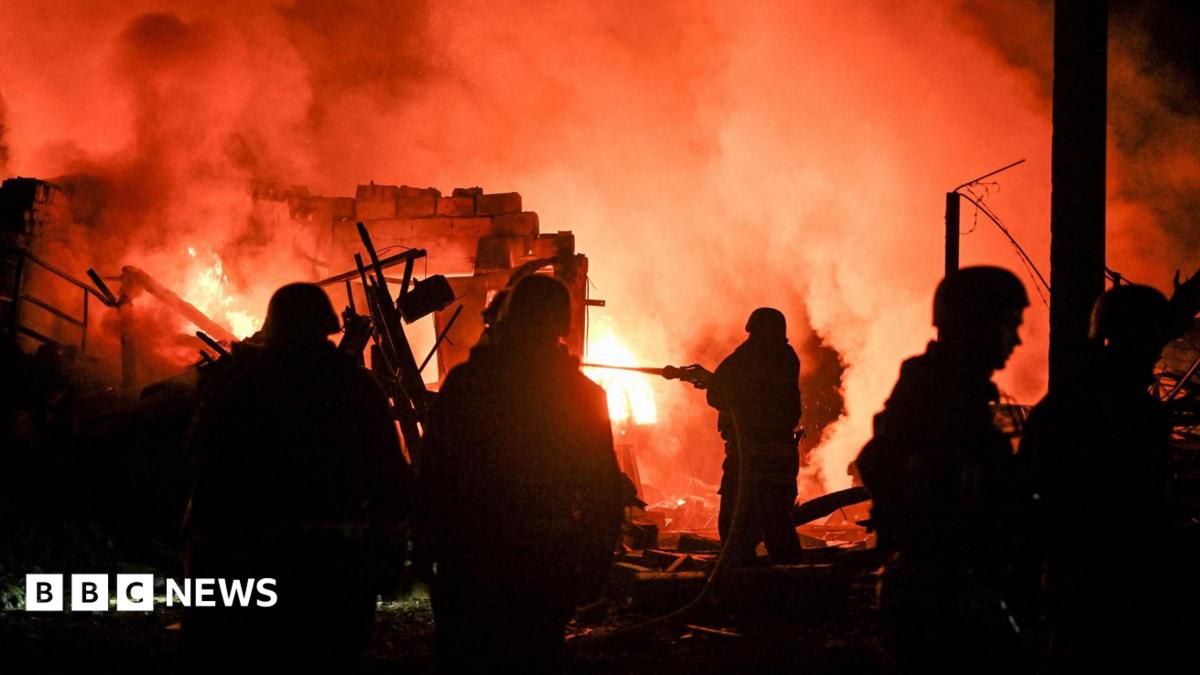
President Zelenskyy has accused Russia of escalating the conflict by deploying North Korean ballistic missiles in fatal strikes on Zaporizhzhia. Simultaneously, both nations have engaged in intensified long-range drone and missile exchanges, placing significant strain on Ukraine's air defense capabilities.
Escalation and Strategic Shifts in the Ukraine Conflict
Recent reports indicate a significant and dangerous evolution in the ongoing war between Russia and Ukraine. Ukrainian President Volodymyr Zelenskyy has officially warned that Russia is preparing for a major escalation, citing the integration of North Korean military hardware into Russian strike operations. This development, highlighted by the recent devastating ballistic missile strike on Zaporizhzhia—which resulted in at least six deaths and nineteen injuries—marks a deepening of the military cooperation between Moscow and Pyongyang.
The North Korean Factor
The utilization of North Korean ballistic missiles represents a tactical pivot that complicates the battlefield for Kyiv. By sourcing munitions from external allies, Russia is attempting to sustain its offensive capabilities despite ongoing international sanctions and domestic production constraints. Zelenskyy’s assertion that Russia can no longer wage war without such external support highlights the fragility of Russia's internal defense supply chain and underscores the importance of the global community’s role in enforcing and expanding sanctions to limit these illicit transfers.
Intensification of Aerial Warfare
Beyond ground-based ballistic missiles, Russia is reportedly intensifying its aerial campaigns, with officials warning of potential salvos reaching up to 200 missiles and drones in singular attacks. This "swarm warfare" strategy, reminiscent of tactics observed in other regional conflicts, is designed to overwhelm Ukrainian air defense systems. The increased deployment of jet-powered Shahed-type drones further exacerbates this pressure, forcing Ukraine to make difficult decisions regarding the distribution of its limited interceptor assets.
Tit-for-Tat Strikes and Economic Targets
In response to these incursions, Ukraine has continued its strategy of long-range asymmetric warfare. Notably, Ukrainian drone strikes have targeted critical infrastructure deep within Russian territory, including warehouses belonging to the retail giant Wildberries—often described as Russia's version of Amazon. These strikes, alongside recent drone attacks in the republic of Tatarstan over 1,100 km from the border, demonstrate Ukraine's intent to bring the economic and psychological costs of the war directly to the Russian interior.
Broader Implications and Future Trends
The conflict has entered a phase of high-intensity attrition. The reliance on long-range drone strikes by Ukraine and massive missile salvos by Russia suggests that both sides are prioritizing the degradation of the other’s logistical and economic backbone. As air defenses become the most critical component of survival for Ukrainian cities, the international community’s willingness to provide advanced defensive systems will likely determine the trajectory of the conflict in the coming months.
Conclusion
The situation remains volatile, with both nations locked in a cycle of escalation. The introduction of North Korean technology into the Russian arsenal and the expansion of Ukrainian deep-strike operations against Russian economic hubs indicate that the war is not slowing down. As President Zelenskyy calls for increased support from partners, the focus for the international community remains on balancing the need for defensive aid against the risk of further regional instability.