4.1bn-year-old pink Mars rock found in Sahara holds clues to ancient water
Source Entity
TOI SCIENCE DESK
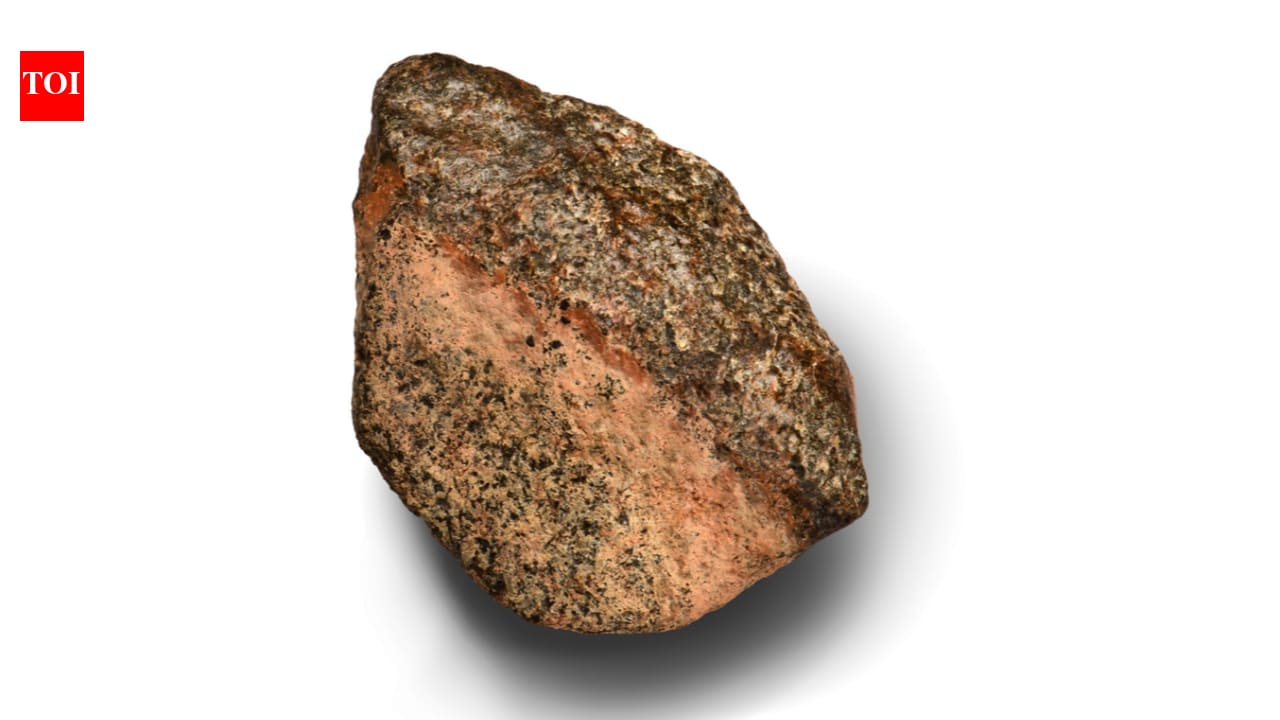
Scientists have identified a 4.1-billion-year-old Martian meteorite, Teghaza 001, discovered in the Sahara Desert. Isotopic analysis reveals evidence of ancient water activity, offering new insights into Mars' early environmental history.
The Martian Time Capsule: Unlocking the Secrets of Teghaza 001
Recent scientific investigations have confirmed that a meteorite discovered in the vast expanse of the Sahara Desert, designated as Teghaza 001, is a rare geological artifact from Mars. Dating back approximately 4.1 billion years, this pink-hued rock serves as a primordial time capsule, offering researchers an unprecedented window into the formative years of the Red Planet. By utilizing advanced isotopic studies, scientists have verified its extraterrestrial origin, distinguishing it from terrestrial debris and positioning it as a cornerstone for current planetary research.
Geological Evidence of Ancient Water
The most significant revelation provided by Teghaza 001 is the clear evidence of water activity embedded within its mineral structure. While Mars is currently a cold, arid desert, this specimen suggests that 4.1 billion years ago, the planet hosted a dynamic and complex water cycle. The presence of specific minerals within the rock indicates that volcanic processes were occurring in tandem with aqueous interactions, hinting at a much more hospitable environment during the planet's infancy than previously understood.
Understanding the Martian Volcanic History
Beyond its implications for water, the meteorite provides critical data regarding the volcanic evolution of Mars. The rock's composition suggests a period of intense geological activity that shaped the planet's crust. By analyzing the cooling patterns and mineral crystallization found within the sample, researchers are reconstructing the volcanic history of the region from which it originated. This analysis helps bridge the gap between theoretical models of Martian tectonics and physical evidence retrieved from the field.
The Mystery of the Origin Point
Despite the wealth of information gathered from Teghaza 001, scientists remain uncertain about its exact birthplace on the Martian surface. Martian meteorites are typically ejected from the planet following high-energy impact events, which makes tracing their specific point of origin a significant challenge. While the general chemical signature points to a Martian origin, pinpointing the specific crater or volcanic province remains a work in progress for planetary geologists.
Broader Implications for Planetary Science
This discovery reinforces the importance of NASA-funded studies in uncovering the history of our solar system. By studying rocks like Teghaza 001, scientists are not only learning about Mars but are also refining the methodologies used to identify signs of habitability on other worlds. As we continue to explore the Red Planet through rover missions and sample return programs, the data extracted from this Sahara-found specimen serves as a vital benchmark for interpreting future findings.
Conclusion: A Legacy of Discovery
The identification of this 4.1-billion-year-old rock represents a major success in space science. It highlights how terrestrial discoveries can provide essential context for extraterrestrial exploration. As researchers continue to delve into the chemical secrets of Teghaza 001, they are steadily unraveling the complex, water-rich past of Mars, potentially changing our understanding of how life-supporting conditions emerge on rocky planets.